Episode Transcript
[00:00:02] Speaker A: Dude, bro.
[00:00:04] Speaker B: Yeah, I had to class it up. My buddy's here.
[00:00:08] Speaker A: I know. Like, I look like an absolute bum right now. Oh, hey. Welcome to Indiana Success Happy Hour. Ryan Quinlan here from Daniels real estate and first home indie on YouTube.
[00:00:19] Speaker B: And Brad Nick from Nest Mortgage Group and tasting tequila with Brad.
[00:00:23] Speaker A: All right. And the fancy gentleman to my right. Feel free to tell the folks who you are, everybody.
[00:00:28] Speaker C: I'm Wade Foreman, founder of Taylor Society Bespoke House.
[00:00:32] Speaker A: Well, all right. Like I said, I look like an absolute bomb here.
[00:00:36] Speaker B: I should have got you.
[00:00:37] Speaker A: Wade is suited up. Brad went to a purple jacket and. Well, at least I wore a collared shirt.
[00:00:43] Speaker B: You did.
[00:00:43] Speaker C: Yeah, I guess there's that.
[00:00:46] Speaker A: All right, Brad, let's start with. Honestly, you've even brought a slick model.
[00:00:51] Speaker B: Okay, look, with a slick. When my buddy Wade comes, like Wade is, he's gonna be humble and just talk about the Taylor Society. Very successful and he's very young. I. I believe all of my kids are older than Wade. And I've been impressed with him from the day that I met him. So I didn't want him to drink the normal tequila that he drinks. I wanted him to have something special. So we're going to have Costco Wiens 5525. This is their 70th anniversary.
There's only a few bottles of these. You can't buy them. You have to get them at Costco Wien in Adanao. And I think you'll love it. It's a tequila that's been aged in American oak and finished in PX Jemez cherry barrels. And it'll give you the taste of the tequila that you have been drinking.
And this tequila sold for $70 a bottle.
[00:01:42] Speaker C: It's a good price.
[00:01:43] Speaker A: Yeah. There you go.
[00:01:45] Speaker C: Love a good story.
[00:01:46] Speaker A: I'm rocking a transient artisan ales beer. It's called Spring Lager, Dry Hop, German Helles, which I do like me a Helles beer.
[00:01:55] Speaker B: You do?
[00:01:56] Speaker A: You talk about that? I do. I don't even know what the hell is that. I have no freaking idea.
[00:02:00] Speaker C: That's hella beer.
[00:02:01] Speaker A: Here's the downside with. With coming on the show with me, Wade. I don't know.
I like what I drink.
[00:02:08] Speaker B: I drink what I like.
[00:02:09] Speaker A: And Hellas is a beer.
[00:02:11] Speaker B: I know. Like, I don't know why I do
[00:02:13] Speaker A: not have the taste bud buds that Brad has. I have taste pals, and sometimes they
[00:02:17] Speaker B: don't get along, so I didn't even go into that. It's a Vallez Agave. That's stone oven cooked for 72.
[00:02:24] Speaker A: So anyway, here we are with my hellless beer out of Michigan. So cheers and to you.
[00:02:31] Speaker B: Cheers, Wade.
[00:02:32] Speaker A: And cheers to all of you. Thanks for being here.
All right, that's your first taste of that, I believe.
Get a quick first impression.
[00:02:44] Speaker C: It's really good.
[00:02:45] Speaker A: Well, all right.
[00:02:46] Speaker C: That's what I like tasting though, because I'm not that fluent at tequila. But I would say based on the additive tequilas I'm used to drinking, it's definitely got a different like profile. A little more kind of smoky, oaky kind of feel.
[00:03:02] Speaker B: Yeah, this it is this. This will switch you over, make me
[00:03:06] Speaker C: a, a sucker for the non additive
[00:03:08] Speaker B: and I'll save you a whole bunch of money.
[00:03:11] Speaker C: That is true. Like, yeah, that's because I definitely like enjoy the extra nie hos and it. A lot of the models can get, I mean crazy. 2, 3, 400. Yeah, they can, you know, for things. So it's nice every once in a while and I have to bring the bank, you know, with and pull down
[00:03:25] Speaker B: a great extra on yeho. That's 50 bucks. Yeah, that tastes amazing and has on the same characteristics. It's just learning those differences. We got to get a class over at Taylor Society.
[00:03:36] Speaker A: Well, there you go.
[00:03:37] Speaker B: All right, I know what Taylor Society is.
[00:03:39] Speaker A: Here's where I need to start. I'm sorry, I'm gonna fire this.
[00:03:42] Speaker B: Off you go.
[00:03:43] Speaker A: I've seen this word a lot. Bespoke. Could you please explain what that even means?
[00:03:48] Speaker C: Yeah, I think it gets thrown around a little bit too loosely in our industry because now really kind of every industry, it's bespoke this, bespoke that. But really, at the end of the day, what that means is you're, you're making a garment, you know, car, a watch, whatever it is, jewelry, something specifically for that client. It's to their specs, so it's made for them specifically, not for anyone else.
Done by scratch. And then the main thing is it's done by hand. That's kind of the key. Okay. So if you've got kind of made for somebody for them only, not made for anyone else. And then the hand work involved those kind of.
[00:04:22] Speaker A: See that's where I think the beast spokes gets thrown around too much because I've seen like, you know, the mail order clothing things where, you know, you have someone who's going to shop for you and you get your, your specific box every month.
[00:04:34] Speaker C: Right.
[00:04:34] Speaker A: Like they ain't hand making those things.
[00:04:36] Speaker C: No. And so I think that's like the, the big thing Is a lot of companies will kind of sell on, oh, we're doing bespoke this and bespoke that. Maybe what they're doing is still like a custom product.
[00:04:46] Speaker B: Yeah.
[00:04:47] Speaker C: But the level, I think, of detail and quality and the intent kind of behind creating whatever it was just kind of wasn't there. That's. That's kind of the final, like, piece of the puzzle. It's okay. Really, really good, but it's not the perfection, you know, that you be able to smoke.
[00:05:02] Speaker A: Were you all bespoke before bespoke became popular?
[00:05:05] Speaker C: We were not. I would say we. We actually started doing custom. That was how our. How our business started. It's really how most people do in our industry.
And it was something that we really wanted to be able to offer a bespoke product. But to. To do that in our world, uh, it takes kind of a couple things. You have one, you have to have a cutter. So cutters, who makes patterns for a garment. Any kind of architecture of like a home, for example, it's kind of building the infrastructure of it. You got to have somebody who does that. And you also have. Have the tailors that are qualified to make a garment, you know, by hand and. And doing the pressing and the finishing and all those things. We started doing custom, and we. About two years ago, we're able to finally offer a fully bespoke product. So. So now we're one of 15 in the country that offers that. And so that's grown our business, and now we're traveling a lot more, meeting with guys all over the country. And so it's been really exciting to kind of grow into that new market.
[00:05:58] Speaker B: We just finished the Indy 500, which is pretty exciting. Yep. And you have. I think what is being really talked about is like, the master's jack at the Indy 500.
[00:06:07] Speaker A: So.
[00:06:08] Speaker B: So talk a little bit about the jacket.
[00:06:09] Speaker C: Super cool project. So about. I think it was maybe three years ago they started. Every winner, former window winner of the Indy 500 and also current, would receive this blue jacket. It's got basically like the Indianapolis Motor Speedway patch on it. And then the interior, which I think is kind of the coolest thing, actually has, like, photos of the races. So like, all the way back to 70s and 80s with some of those drivers that are still living. Like, they have, you know, original photos, unlike the.
[00:06:37] Speaker B: Yeah, this one doesn't have it, but I have a letter.
[00:06:39] Speaker C: Letter, which is really cool.
Um, and so every year with the new, you know, race winner, if. If that's the case in a New garden kind of went back to back and allow now first, you know, time.
So that was cool. You know, kind of working and seeing kind of the, the historical, you know, change in cars across the years and how that looks, you know, was. Was really cool. So that's really special. And then they also have a patch that says whatever year they've won. And so for the guys that have multiple years that they've won, you know, multiple years in there, that's kind of the, you know, the ultimate kind of brag. Does a couple of different years and
[00:07:13] Speaker A: does a repeat winner or at least someone who's won it more than once, maybe not back to back.
Do they get a new jacket then? Or do you just update the liner?
[00:07:21] Speaker C: Update the liner and then new patch for whatever their. Their years would be. Um, so new garden was, you know, I think unique. I think there's maybe only a couple other people that maybe won back to back before. And he was close almost from a triple. I think he finished top five or something, something like that. So.
Yeah, but it's been a really, really fun project.
Got to meet a lot of interested people and drivers and hear their stories and like, hear them reminisce about, you know, the, the, the days when they were driving is cool.
Nice to experience.
[00:07:50] Speaker B: So what did that come about? How did that even happen?
[00:07:52] Speaker C: Yeah, so the track management team had worked with another company to kind of get the project started and just weren't having a good experience. It was somebody that Roger Pinsky was connected with with and so they were looking for somebody and so they gave us a call and we just kind of stumbled into the project and it's kind of turned into taking over it and, and fixing all the problems that they had previously and now kind of working with all new. New drivers and old drivers, new garments. So it's been just kind of something that we stumbled into and it's very cool. Been a fun, you know, project.
[00:08:25] Speaker A: Really cool.
[00:08:25] Speaker B: And outside of that is probably just realtors and mortgage blokes that you do
[00:08:28] Speaker C: loan or those jackets for. Yeah. So especially our niche.
[00:08:32] Speaker B: So one of the things that I think is so cool about knowing you and following your. Your Instagram and your social media is seeing athletes do walk ins and going, ah, that dude swear to Taylor society. So who are some of the athletes that you can mention that actually unwear the stuff that you make?
[00:08:49] Speaker C: I would say our. Our probably number one athlete that we do the most with is Alec Pierce. Um, and so that's really cool to see his progression in the NFL just signed a, you know, big contract and was super. Oh, his suits. Now
[00:09:04] Speaker A: when he went in and signed his contract, he probably had.
[00:09:09] Speaker B: That was.
[00:09:09] Speaker A: Yeah, that was.
I saw the social media for that. That's super cool.
[00:09:13] Speaker C: Yeah. So by the way, Alec, we'd love
[00:09:15] Speaker A: to have you on the show, just
[00:09:16] Speaker B: so you know, you're about to really geek out. I am starting off well.
[00:09:21] Speaker A: Continue.
[00:09:22] Speaker C: Yeah. So Alex, good client of ours, we've done some stuff. Stuff for some other Colts players that we. We have some NDAs.
[00:09:31] Speaker A: Okay.
[00:09:31] Speaker C: A lot of. A lot of Colts players. We've done some stuff for Browns player.
We've done a Giants player, Tyrone Tracy from.
And then we actually did. For a couple years, we were doing first round graphics.
Yeah, yeah, yeah. Okay. We did some first round draft picks. So we did like Chop Robinson, who's on the Miami Dolphins now.
We did Graham Barton who was the first round pick for the Buccaneers. He's their center.
And let's see, I think there's maybe one other draft. Yeah, Blake and all, but we did that as well. So we did some draft players, which is cool to see them walk across the stage. You know, our garments too.
[00:10:09] Speaker A: And draft night in the NFL is a big deal.
[00:10:11] Speaker B: You have some NBA guys too, right?
[00:10:13] Speaker C: We've done a few NBA players. Yeah. Scott Pollard, so former NBA player, a few other.
Few other active players on some other teams around. So it's been. Yeah, it's really cool to work with those guys.
Usually they want to do something a little bit more fun. I think our day to day, you know, is kind of Indiana business guy and so getting to do something that's a little bit more fun or refreshing or out there unique, you know, it's makes. Makes what we do, you know, interested and fun.
[00:10:40] Speaker A: So in terms of interesting and fun, what's your role? Like, are you the sales guy? Do you help design? Like, where do you fit into all that?
[00:10:49] Speaker C: Yeah, it's kind of a mix of everything. I mean, I think one of the things is any kind of business owner knows, like you kind of wear a lot of hats. But our main thing is really to just be like consultant for our clients. And so that's not every guy might need, you know, 15 garments at his wardrobe. He might be, you know, whatever it is, he's a landscaper and you know, his dress up is going out, you know, wearing a nice polo to dinner. That's awesome. We just want to make sure that guy service.
And so I think as a consultant, the big thing is like figuring out what is that Client's life, lifestyle, who are they in front of, how do they wear their garments? Are they hard on their garments? You know, climates, do they travel, all those things.
And so I think the main thing that we do is really figuring out, like, who's that client, what do they need, how do we service them? And then we provide them in the garment. So it's taking the measurements, picking out the fabrics with them, the designing, the styling, you know, kind of those details. And then it doesn't end there. It could be, you know, the weight loss, you know, scenario. And so we're redoing a guy's wardrobe.
[00:11:45] Speaker A: I used to be a fatty.
[00:11:46] Speaker B: He had to put.
[00:11:47] Speaker A: It used to be larger.
[00:11:49] Speaker C: So we like to kind of say that we're not just, you know, the relationship. Doesn't it today, it's kind of a lifetime thing. We're here to be, you know, your. Your clothing person for whatever that looks like.
[00:11:57] Speaker A: Cool.
[00:11:58] Speaker B: I mean, it is really awesome. You, like, when you go, when I was a portly fella, which is what they said, that was the size of my jacket. It was importantly. And, oh, you portly size, you go to, like, the regular soup place, and you put it on, and it's like, well, it goes around your belly, but your arms were supposed to be a foot and a half longer.
We can hack those off with some scissors. And your shoulders, you know, set down here. And to have somebody honestly make you feel special like that, that was probably the neatest thing. It's like, okay, this is really cool. Like, I appreciate guys kind of come
[00:12:34] Speaker C: out of their shells a little bit. I think there's a lot of guys that are, like, very timid or they're.
Maybe they're a bigger guy, taller guy, whatever.
And they've never had anything that fit them well, so they just feel, like, uncomfortable in their clothes. And then to, like, see them, like, the first time they put something on, it, like, fits them. It looks good. And they're like, all of a sudden, they're 10ft taller, and they feel good. And so, like, that's really rewarding, I think, for us and also for them to, like, be like, okay, I feel really good now, and I'm ready to, you know, could even, like, change how they approach life or whatever it is. They're. They're more confident.
[00:13:06] Speaker A: Yeah, definitely.
[00:13:07] Speaker C: Yeah. That's a big thing.
[00:13:08] Speaker B: So here's the question. Now that I have lost weight.
[00:13:10] Speaker C: Yeah.
[00:13:10] Speaker B: Are my jackets going to be less.
There's a little less. Little less furniture going on in here.
[00:13:17] Speaker C: It does play Into a little bit.
But yeah, we.
[00:13:21] Speaker B: I got that as a No.
[00:13:22] Speaker A: I was a guest in your podcast Disco.
So how long has the company been around?
[00:13:30] Speaker C: Yes, we started late. 2019 is my final or. Or first semester of my last year of college. I started in the business in 2019 and I met my partner Zach in early 2020 and we came together and kind of the rest is history.
[00:13:45] Speaker A: All right, we need to back up. So, like, little Wade, was he thinking, I really wanted to be a suit guy one day or like, how did this even come into fruition?
[00:13:55] Speaker C: So I'd always loved clothing.
Even, like, as I was a kid, like, I show my age a little bit. Like Crocs came. Came out when I was in like grade school.
[00:14:03] Speaker A: So I showed my age. We're Both in our 50s, Wade. Keep that to yourself.
[00:14:10] Speaker B: When I was in great school.
[00:14:11] Speaker A: I'm sorry, continue.
[00:14:13] Speaker C: I made my grandparents take me to the mall because I wanted to go get a pair of Crocs because I wanted to be like the first kid to have, you know, Crocs. Like, that's like really, you know, second, third grade. I was already kind of caring about what I was wearing, and so I was very fortunate. I'm from Columbus, Indiana, if you guys have ever had anyone from Columbus. Columbus, great small town. And so Dell Brothers was there and that was a. Started in 1916 by the Dell family, their grandfather, and so pass down generations. The. The sons were working there still. And that was my first job when I turned 16 working at Dell Brothers. And Tom and Mike Dell were very instrumental and I would say my growth in the clothing industry. I started as just, you know, a 16 year old kid doing part time, and they allowed me to do a lot of things Years would pass on and I was starting to do something like buying for the store and like bringing in new brands and like helping them do a lot of things. So they were really instrumental in, like, growing my love for clothing and also teaching me how to kind of run a clothing business. So that was kind of what my. I would say the real wheels were turning, you know, doing something on my own kind of from that.
[00:15:17] Speaker B: I have an age comparison.
I was the first kid in my high school to wear Vans.
[00:15:27] Speaker A: I went to school with tackle Jean.
[00:15:29] Speaker B: Yeah. But from vans to Crocs, like, that's a 50 year deal right there.
[00:15:33] Speaker A: That it is.
[00:15:34] Speaker C: Yeah.
[00:15:34] Speaker A: That it is.
Did you say there was college involved?
[00:15:37] Speaker C: Yes. I went to graduated, you know, high school, Columbus east, went to University of Indianapolis. Played football there and safety. Okay. Yep. So played sports There.
And then I was a finance major. I graduated basically semester, kind of a year early, partially mostly because of COVID My last, like, couple semesters were all Covid. And so everything was, like, online. And so we're able to, like, get a lot of, like, school done because it was all, you know, messed up at that time. So I was able to get done a little. A little sooner.
[00:16:08] Speaker A: And the current location in Carmel is the original location.
[00:16:12] Speaker C: Yeah, original location. We have that.
[00:16:14] Speaker A: I'm gonna tell you, it takes some balls to just think you're gonna come out of nowhere, open a Taylor clothing store in Karma. That's impressive.
[00:16:24] Speaker C: It's a. Definitely a busy market and tough market. As you guys know, all of Hamilton county, really, all of Indianapolis, really proper.
But we just didn't feel like there was anything that was like, kind of what we were doing specifically to that. That level.
[00:16:37] Speaker A: I feel like that's where your clientele would.
[00:16:39] Speaker B: Would be.
[00:16:39] Speaker C: Yeah. So we just felt like that was lacking. And really I wanted a place that I wanted to go and shop and have that experience and have a bourbon. When I come in and the door is locked and it's just me, and that's the only person they're caring about, not the, you know, 15, walking around the mall or whatever. So.
[00:16:52] Speaker A: So when I walk in your store, you're going to hand me a bourbon, unlock the door.
[00:16:55] Speaker C: That's what happens. A little scary after there. I don't know what.
[00:16:59] Speaker B: Pretty soon there's going to be some good.
[00:17:04] Speaker A: All right.
[00:17:05] Speaker C: Yeah.
[00:17:05] Speaker B: It's a really special experience. I mean, even in picking out a pair of shoes or picking out a felt, it is a very personal experience. And Wade does a great job and Zach does a great job as well. If you. You definitely got to follow these guys on Instagram.
[00:17:22] Speaker A: Honestly, I kind of want to talk
[00:17:23] Speaker B: about that a little bit. Instagram is awesome.
[00:17:25] Speaker A: And what. What's your Instagram handle?
[00:17:27] Speaker C: It is at Tailored Society. Okay. Instagram, Facebook, all the.
[00:17:31] Speaker A: So Brad introduced me to your Instagram, and you guys do some funny stuff.
[00:17:35] Speaker C: Thank you.
[00:17:36] Speaker A: And is that your creation? Your partners? Like, who's the.
[00:17:41] Speaker C: Yeah, both. Our social media manager, which I'll shout out. Derek Browning is absolutely incredible.
[00:17:47] Speaker B: Well, you have a social media manager.
[00:17:49] Speaker C: Social media manager. Yeah. You do.
[00:17:51] Speaker B: What the hell?
[00:17:51] Speaker C: So Derek is a fantastic creative, and so a lot of, like, kind of some of the. I would say the. The personality of Zach and I come out, like, when we're talking together, for sure. But kind of the. Some of the. The More, let's say, serious posting is all kind of Derek related. But we really love the way that he shoots very dark. It's very mysterious, which is kind of how our space is. And so Derek's a big inspiration from that. And then also Zach and I just get fired up and passionate about something we saw or somebody said or you know, some horrible garment that's out there, whatever it is. And so we have, we have fun with it. But it's, it's amazing. Like we'll go to trade shows even and like other clothes and you know, whatever, Nebraska will stop us and be like, hey, I saw your video on whatever. And it's like, that's so cool because like we never, you know, you post on Instagram or social media and you, you don't really know if it's going to end up doing something or maybe it takes off, maybe it doesn't or why does this do? Well, something else doesn't. But it's cool to just like see those things reach out to us about, you know, whatever. Hey, I saw your video and so we have a lot of fun with it.
[00:18:52] Speaker B: I will say both their personalities come out and what's really cool is I met Wade first and knew Wade and then my friend Shane Dorsey wanted me to come and play and sing at his kids graduation party. So I said, all right, I'll do this gig. And I, I came up there, set everything up and this dude comes walking, this the next door neighbor to Shane. He's like, oh dude, I like your watch. You know, we start talking watches, I was like, oh, I get, you know,
[00:19:19] Speaker A: I get my watch from this dude named Wade.
[00:19:21] Speaker B: And he's like, wait, it's like his partner.
So that's how I met Zach, which was so cool that those two things that came together and it was just really cool. And Zach has this great personality. He's, he's very similar to Wade in the fact that he's a young guy and just as a go getter, like, just. And that's why I think about Wade because not only the clothing's not the only thing you do. So talk about the other stuff.
[00:19:46] Speaker C: Yeah, so my, I guess kind of day job, if you will, was a relationship manager is what it would be called. But I do basically financial planning. So my family, third generation of my families, wealth management business back home in Columbus. So I work with kind of people somewhere to my age, I would say kind of the 20 to 35 kind of more affluent families that you're planning for. And then also kind of your, you know, C suite, you know, 50s, pre retiree.
So I do that as well. And I've always had a passion for watches and that was kind of one of my first businesses. I started that when I was 16.
Um, I started writing for a blog, a blog company called A Blog to Watch by Ariel Adams. And at the time it was very small. I think there's maybe like a couple thousand subscribers. And like, and today I think they're like one of the largest blogs in the world. It's crazy that I knew them when he wasn't really anyone, which is funny, but wrote blogs for him and that learned it, that moved into like me reviewing watches. And so those watches will be sent to me from dealers across the country.
[00:20:49] Speaker B: It's told you I screwed up with dealer.
[00:20:52] Speaker C: My, my interest in like buying and selling watches. And so I've always had a passion for watches. So I had a small little business throughout high school and college doing that. And now I still kind of watch
[00:21:03] Speaker A: connection at the tailored shop.
[00:21:05] Speaker C: We've, we've had some people ask about that and we've talked about maybe doing a little kind of curated section where maybe we find some like, really cool, like, you know, antique cufflinks and jewelry and maybe throw some watches in there. So not something we've done yet, but we do get a lot of people who ask is we've become more lifestyle. We were originally just doing clothing and now guys are like, make me a blanket for my home or can you do this or can you do luggage or whatever it is. And so that's turned into all kinds of stuff. So we're always like, looking at interesting ideals.
[00:21:37] Speaker B: Yeah, it was awesome. And he is my watch guy.
[00:21:40] Speaker A: Okay.
[00:21:42] Speaker B: If I'm not buying a brand new watch, I'm. I'm sourcing a watch from Wayne. It's a common, common call. And probably the coolest one is I fell in love with this watch in Cabo and I really wanted to buy it and I talked myself out of it and I was like, okay, well I'm not going to spend the money.
And Christmas my wife and I said we weren't going to get each other anything Christmas that year. So I just got her like a few David Yurman things.
[00:22:09] Speaker A: Nothing, of course.
[00:22:10] Speaker B: And I thought I really won. And then she rolls out the watch that I wanted in Cabo and she didn't buy it at Cabo when I was there there, she called Wade. Wayne sourced the watch for us. And like, he's always done a great job at finding really awesome things at great prices. And it so Everybody knows this isn't always super expensive. Yeah, right. So what's some, let's say somebody just wants a nice blazer.
[00:22:35] Speaker C: Yeah.
[00:22:35] Speaker B: What's some, what's a really economical number that someone could come in and get this experience.
[00:22:43] Speaker C: Yeah.
[00:22:43] Speaker B: And come home with it with a jacket or a blazer that's nicer than going to Macy's.
[00:22:47] Speaker C: There we go.
[00:22:48] Speaker B: Yeah.
[00:22:48] Speaker C: I mean like something from us. Yeah.
[00:22:50] Speaker B: Something from you guys.
[00:22:50] Speaker C: Something from us, yeah. So our, our sport coats start at 1850 and go up from there. Our two piece suits start at 2150 and go up from there.
So in the kind of scale of things, most bespoke garments out there, if you went to like Sapporo or over in Italy, we're kind of tailoring going to spend 5, 6, $7,000 on kind of a very basic entry level fabric at that price point. So we're able to offer you a better fabric at a pretty reasonable price point there. So that's where we start at. But yeah, we work with guys from all different walks of life. We've had 22 year old police officer come in, we've had guys that are just getting started, guys at college, we've had everything in between.
I think the main thing is you're not necessarily just buying a garment, you're buying a garment that's going to last you a long time buying it. So you're really, you're not, you're not buying a garment, you're investing in your wardrobe and that's how we talk to our clients about that. But yeah, we started 1850 on jacket, 2150 on the suit.
[00:23:50] Speaker B: And a lot of things that you have are timeless. When you buy the two.
[00:23:54] Speaker A: Right.
[00:23:54] Speaker C: You're gonna take thing when you're building the wardrobe because like if you're a guy that doesn't have a lot of things in your closet, you come in and we make you, you know, maybe you really want an orange jacket and make you this beautiful orange jacket, but that's the only jacket you have. And every time you're out with your friends, it's, you know, Joe's wearing his orange, Joe's orange jacket again. Right. So having like the staples, the classics are really important because you can build a nice wardrobe where you don't need a bunch of pieces, you can have a couple core that you can kind of mix and match. And then if you get to that point in life where you can afford to do that, then you have some fun and you do some cool, you know, unique pieces or an event comes up or whatever it is. But we, we tend to really focus on, I don't want to say boring, but the more classic conservative things. Boring in some guys worlds because, like, I don't know if I get excited about Navy, but then you teach them and educate them on like building a wardrobe and why that's actually really important for you, especially through getting started. And then guys kind of understand that now they're excited about basics, not just, you know, the red cool jacket they saw on Instagram or whatever.
[00:24:51] Speaker B: And you know, I have a blue that's boring on the outside, but the inside it's like really cool.
[00:24:57] Speaker A: So I've seen that one.
[00:24:58] Speaker B: Some really cool things that you do. So let's say, let's. Let's say I got my. My kids are getting married.
[00:25:05] Speaker C: Yeah.
[00:25:06] Speaker B: And my son needs a really nice suit for this. You guys do that too, right?
[00:25:11] Speaker C: You'll build out a whole wedding business has, has been a big thing for us really last couple years. We focus on a lot more. So we're partners with a lot of the prominent wedding venues that are around town. Another unique thing is we're partnered with several wedding publications. So any groom, bride or groom that we work with will get featured in that magazine. And then at the end of the year, they get a really nice like coffee table book and it has little article about their wedding and stuff.
[00:25:34] Speaker A: That's neat.
[00:25:35] Speaker C: So that's been really fun. Like we just had a really cool wedding that was New Year's Eve this, this past year, this year, whatever you want to call it. And that was really cool because it actually kind of got like national news on that because it was a New Year's Eve, you know, wedding was really cool. So we have a lot of like, really fun things outside of just like the clothing that also like, is a benefit to bride and grooms where it's. Yeah, the clothing's important, but also like creating a really timeless memory. And getting that as a gift is, is. Is cool for our couples as well.
[00:26:03] Speaker A: So neat.
[00:26:04] Speaker B: So, so something that we do as mortgage people and real, Real estate people.
Unusually, you know, for mortgage people, we go to events where realtors get awards, mortgage people don't get awards.
And there for, you know, there's a period of time where there's a real estate award program seven days a week for at least a month and a half mark. These guys really like getting awards. And do you think it's important?
Is that not true?
[00:26:35] Speaker A: Like, I walk more sidewalk hours than
[00:26:40] Speaker C: any other realtor,
[00:26:44] Speaker B: but so, you know, one of the things that's kind of hard for those. And for me I always do just a jacket. I do a little more casual. But when's it important for someone to have a tux? And how timeless is a tux? Is there a certain type that, you know, I think of the tux is the one I had with tails that I wore to prom that was white with a top hat, the cane. I don't think that's.
Are there certain types of tuxes that are important for someone to have in their wardrobe?
[00:27:12] Speaker C: I think for the right like person, like just, you know, your classic like black tux that's just, you know, classic timeless thing. James Bond is going to be something you can wear to something in the future, right? Maybe it's you get by to New Year's Eve party or Christmas party, you go to the opera or the symphony or whatever. You know, there's opportunities for that. We really tell guys like, you know, a lot of times when you're investing in a tuxedo, especially if you're a younger guy, there's probably not a lot of opportunities. But as you progress in your career, if you're kind of, kind of growing what you expect and you get invited to those things that there's absolute time or even weddings, like a lot of weddings now actually are going more formal. I think probably post Covid things are a lot more casual. And I would say that we're seeing the reversal now. So a lot more weddings are like black tie or there's like destination weddings that are in places that are beautiful and so like see those with shorts?
[00:28:02] Speaker B: See those with shorts? That's awesome.
[00:28:05] Speaker C: Do they, they? We can do anything.
[00:28:07] Speaker A: There we go.
Okay, ask I guess what is the official definition of tuxedo? And I asked this because I feel when I hear tuxedo, it's bow tie jacket, maybe a cummerbund or a vest.
But I feel like I've also seen tuxedos with straight tie.
What, what makes a tuxedo different than a suit?
[00:28:30] Speaker C: The main thing is, is on the lapels. The lapels. This part of the jacket that would have satin on it. So satin is like kind of shinier with that or like a grow up grain which is kind of similar but you'd have a separate fabric on your lapels and then usually on like your pockets and your buttons. The traditional way would also be like have the sat stripe down the trouser. Those like if you kind of remember if you've worn a tuxedo previously. But that's the main Thing, it would be a solid fabric. Either traditional tuxedo, be all black. There's, you know, midnight navy or burgundy or whatever you can do. But solid fabric with a contrast seat, satin.
That's the main thing.
[00:29:04] Speaker A: Got it.
[00:29:05] Speaker C: Yeah.
[00:29:06] Speaker A: So in our world, we continue to reach out to clients to find business and to stay in touch with previous clients that we've worked with. In your world, are you also doing that?
[00:29:20] Speaker C: That's probably, I'd say, one of the most unique things. And. And it's such a blessing that our business has grown this way, but we've never made a cold call.
[00:29:28] Speaker B: Yep.
[00:29:29] Speaker C: It's always been word of mouth. My partner and I both had good networks when we started our business. And so it started with our friends and our family or people we knew. And from there, people just enjoyed the experience. And, you know, Brad would be out to dinner, and somebody would stop and say, hey, I love your jacket. Where did you get it? And that's how our business grew. And so it grew very slowly, but it grew with the right people. And so fast forward to today.
Our referral business is huge, but now also just our traffic from people finding out who we are. Our presence in Indiana has grown tremendously, so we're very fortunate in that aspect. That's not the case. A lot of businesses, a lot of people got to get out. You got to hustle and sure, you know, get business.
So the outreach is not there. But the kind of touching our clients is very common. Like, we stay in touch with them.
[00:30:12] Speaker A: We want to know. Making suits, of course you're touching them.
[00:30:14] Speaker C: Yeah.
[00:30:15] Speaker B: It's the experience, though. I know when you go, you, oh, I. I need a new shirt.
[00:30:19] Speaker A: Yeah. So I'm curious, like, with previous clients, do you reach out to them and say, hey, you know, I don't know if we have this new line of fabric or whatever. Do you do stuff like that?
[00:30:29] Speaker C: We're very seasonal shops, so we get new fabrics. You know, basically break them into two. Spring, summer, and the fall, winter.
So our guys are pretty well trained and know how we, you know, kind of sell them on their wardrobe. Because a lot of guys.
[00:30:40] Speaker A: That's.
[00:30:40] Speaker C: I think a big thing with guys is they don't focus on seasonal dressing. They just have a garment, and so they're like, well, I don't really like wearing that this summer. It's like, well, it's not made for that. Right. So it's like our guys get kind of trained on seasonal garments, and so then they know, like. Or they're. They're like, they reach out and say, hey, what's the new fabric? Are we. You know, we'll send them. Hey, these are the updates that we're doing. Or we're, you know, we've got a new fabric mill that we're working with, so we always stay in touch with them. A lot of our guys follow us on Instagram, and so they're constantly seeing our posts on fabrics or garments, whatever it is.
[00:31:11] Speaker B: I'm not.
I'm the guy that's got shorts on and a sweatshirt going, I think something's wrong here.
My upside's warm. My downside's cold.
[00:31:24] Speaker C: Yeah.
[00:31:25] Speaker B: That's just the way it works. So it is. So, okay, let's talk about the fun stuff. We talked about the economical side. Yes. What's the absolute ridiculous most expensive jacket or suit you've ever sold?
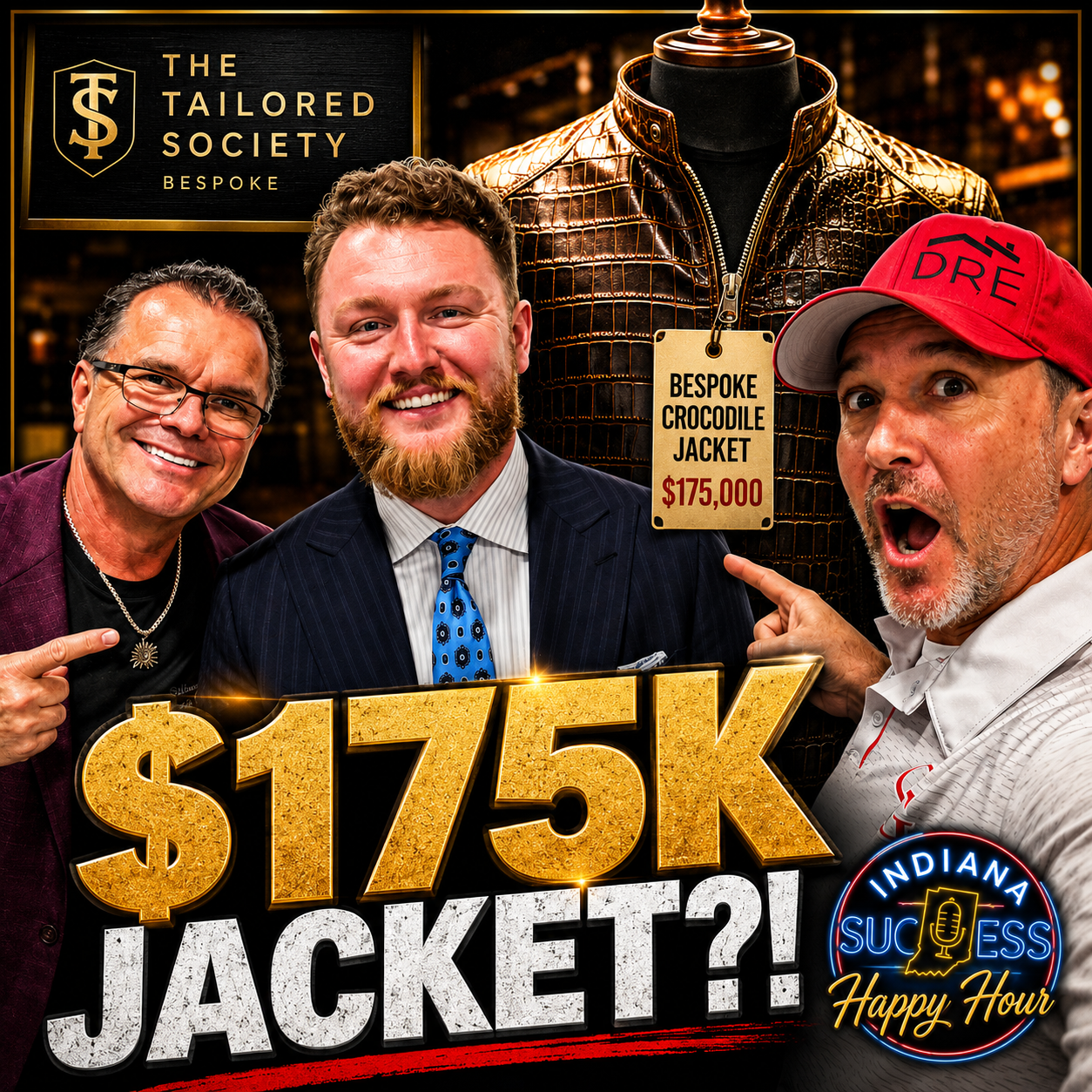
[00:31:38] Speaker C: The most expensive jacket we've ever sold is 175,000, and that was a Himalayan crocodile bomber, which is really cool.
[00:31:49] Speaker A: What the hell did you just say?
A jacket for 175,000?
[00:31:55] Speaker C: Yep.
[00:31:55] Speaker A: Okay, I. We're not naming names, but are we talking, like, someone people would know?
[00:32:00] Speaker B: Walmart manager.
[00:32:01] Speaker A: Is this a, you know, an athlete? You know, actors, like, somebody large.
[00:32:08] Speaker C: Large business owner. You wouldn't know the name. It just.
[00:32:11] Speaker A: Was it a large person? Like, it cost 175,000.
[00:32:18] Speaker B: Okay.
[00:32:19] Speaker C: We've done that from, like, a casual perspective.
[00:32:22] Speaker A: And it was what? Crocodile? Himalayan. What?
[00:32:24] Speaker C: Himalayan crocodile. Yeah. So Himalayan crocodile. A lot of people think, like, it's a him in the Himalayans, which is obviously very cold, so there's no crocodile.
[00:32:32] Speaker A: I mean, you said it right.
[00:32:33] Speaker C: But they're. They're n Croc. But the main thing is the underbelly of the crocs. So most crocs are, like, kind of that white, you know, kind of tannish color. Himalayan basically means it reflects the Himalayan mountains. So it's a perfect white.
And so there's usually about 10 to 13 crocs every year that would qualify as a Himalayan croc. So to get one is very hard. And then to make a garment, you usually have to have two or three, four skins, and so be able to have all those at one point. That all are perfectly matching. Pure white is pretty rare.
[00:33:04] Speaker A: And that was just a jacket.
[00:33:05] Speaker C: Expensive. Yeah.
[00:33:06] Speaker B: Do you. Do you think that he pulled up to the restaurant and scored for us?
[00:33:10] Speaker A: Ain't no way.
[00:33:12] Speaker C: So we've done that from, like, a soup perspective.
Our most expensive suit would be, like, 110,000.
That's for a pure pecunia fabric.
[00:33:20] Speaker A: That sounds Like a deal.
[00:33:22] Speaker B: No that's.
That's the animal. You have to. You have to only brush.
[00:33:26] Speaker A: Right.
[00:33:26] Speaker B: You can't shear them.
[00:33:27] Speaker C: Yeah. In the Peruvian mountains. It was the Incas named that fabric is the fiber of the gods. It's the softest natural fiber in the world. Feels amazing.
[00:33:35] Speaker B: It is. I felt it.
[00:33:36] Speaker C: I didn't buy extremely rare.
So we've got that 25 bucks.
[00:33:44] Speaker B: The bourbon is free. But I had to take.
[00:33:49] Speaker A: Holy shitola. This is worker wise.
[00:33:52] Speaker C: We're at probably about 85000 or so for a vicuna sport.
[00:33:56] Speaker A: Sure.
[00:33:56] Speaker B: Vicuna. I always forget the name.
[00:33:58] Speaker C: Yeah.
[00:34:00] Speaker B: It's an animal.
[00:34:00] Speaker C: Looks like it's like kind of like a camel.
A mix of between like a camel and alpaca.
And so it's up in the Peruvian mountains or the Andes mountains. Excuse me. In Peru. And they're basically guarded by basically monks. Is. Is what who lives there. And so they roam the. The mountainside. Every two years they have a huge celebration. It basically feeds or takes care of the village. And so they march these animals through the town basically as like crown jewels. And then they shear them.
They can do that every two years. And so it takes about nine.
[00:34:32] Speaker A: And they make a ton of money by selling it to the fabric companies
[00:34:36] Speaker C: is to make like a garment for example.
And so the. The jackets that we have are a patterned vicuna. And so it takes even more like a seven year process to get enough fabric shoe.
[00:34:46] Speaker A: This is NICU buy one.
[00:34:49] Speaker B: Do you get to apply to the area? We've.
[00:34:51] Speaker C: We've. One of our fabric partners will do that. If you want to go there. They'll. You can go to the fabric mills in Italy but you can go to where they actually sheared it. And then you can go to Italy and watch them spin your yarns.
Which is really cool like process to see all that and see like who is hand cutting it and going through the spinning process. We haven't any client take us up on that. It's kind of a process to do that. But sure. Yeah.
[00:35:15] Speaker B: They already dropped 80 grand on the jacket.
[00:35:19] Speaker A: They say it is. I'm going.
[00:35:20] Speaker B: I gotta work and pay off this jacket.
[00:35:24] Speaker A: Do we have some high end shoes also?
[00:35:26] Speaker C: Shoes? Yeah. Our most expensive shoe would be like a alligator shoe. Would be maybe 15. 15 grand.
[00:35:31] Speaker A: Roughly 50 grand compared to 175,000 dollar alligator jacket.
[00:35:36] Speaker B: I mean if you need a jacket you gotta get the shoes. The.
[00:35:38] Speaker C: The crazy. The craziest request we've ever had. We had the Swedish billionaire find us on link or not on LinkedIn on Instagram. And he sent us a message and he's like, hey, I saw this luggage piece that you were doing. And you know, so we were talking or whatever. He's like, I've also been really wanting this, this blanket for my, my jet. And it was like, okay, so tell me about that. He's like, well, I want this white fur and blah, blah, blah, whatever. And he's like, what, what's the best fur you can do? Well, sheared mink is kind of the, the staple for like the highest quality thing. But the best fur out there is lynx fur, so Canadian lynx.
And if you know much about lynxes, they're basically tan color, but there's about a 4 to 5 inch sliver right here on their chest. That's white, pure white.
And so if you were going to make a white lynx fur, you would have to take just basically 5 inches of the pelt. So it would take about 700 pelts to make this blanket.
It was close to, to once production was done with that, it would be close to like 750,000 for this blanket. And so we've had a request for something like that before. We didn't have doing it, but we can get to that level.
[00:36:43] Speaker A: I can't believe the words coming out of your mouth.
That is insanity. What is happening?
[00:36:50] Speaker B: Well, he started with Swedish food, right?
[00:36:53] Speaker A: Yeah, that's. I forgot that part.
[00:36:55] Speaker B: Like I'm in my jet listening to
[00:36:56] Speaker A: Abba and probably one of multiple jets that he has.
That is.
[00:37:02] Speaker C: So there's crazy stuff out there that's like, okay, just get astronomical.
[00:37:06] Speaker A: You started this business thinking you're going to be making suits for people and here you are talking to Swedish billionaires about three quarter of a million dollar blanket.
[00:37:17] Speaker C: Yeah, but think about this.
[00:37:18] Speaker B: Take a step back.
He started selling watches when he was 16 years old.
[00:37:24] Speaker A: Yeah, man.
[00:37:25] Speaker B: Like if there's ever been a person on our show with an entrepreneurial spirit, which is what we really talk about.
So let's, let's flip this a little bit. All right, let's now talk about.
You're. You're talking to 16 year old self.
[00:37:40] Speaker C: Yeah.
[00:37:41] Speaker B: What do you tell yourself that you learned today that you didn't know then?
[00:37:46] Speaker C: I would say take more risk.
I think I grew up in a very conservative household. Both really all my family were all entrepreneurs by both grandparents. My dad are all entrepreneurs.
And you see them build a successful business and you see them grow it slowly in the right way and they're not taking a bunch of risk as you wouldn't with a young family.
And I think looking back, I did kind of the same thing, grow our business very slowly, very appropriately. But there are times where we probably could have taken more risks and we probably could have accelerated certain things.
And so I would say, looking back, I would say don't be afraid to take risks, especially as an entrepreneur. You're not going to succeed at everything. You're going to fail. We still fail today at things that we do.
And so I think that's a big thing, is, like, don't be afraid to take risks now. Don't gamble everything. Right. Not put it all on black. But, you know, there are opportunities where, hey, you know, I don't know if this is going to work, but I just have that gut feeling. And it's like, sometimes I think I was afraid to do that, but so I would say, looking back, I would say take. Take more risk.
[00:38:49] Speaker B: Okay, so you're talking to a Kelly, business student at iu.
[00:38:54] Speaker C: Yeah.
[00:38:55] Speaker B: Who's probably thinking, I'm going to go get this great job.
Talk about the difference of putting it out there and being a business owner versus having just a career.
[00:39:05] Speaker A: What do you think?
[00:39:06] Speaker B: What do you think?
[00:39:06] Speaker C: It's obviously extremely rewarding, you know, to be a business owner and have success with it, because I think it's like, hey, you went out and built something that was successful, that took care of your family and built this amazing life that's so satisfying. And not many people can say that. I mean, it's kind of a special person to want to take on that responsibility.
My advice, I think, to a lot of people, and I'm glad that my route was kind of similar where I had my family's business that I was working with while I was building mine is do the same. Like, go experience the corporate world, meet people, build relationships, bring in a lot of knowledge, do your research and figure out kind of what do you want to do with your life instead of just going, like, straight for business. I think a lot of people are like, I know I want to be an entrepreneur, but I don't know what I want to do. I think sometimes you got to just trial. Trial that out. So I think I would tell everyone, like, go get a job working for whatever it is and get some experience and figure out what you want to do and learn from that or even work for whatever company in some industry. And you're like, hey, I know what they're doing really well. This is what I think I can do better than go out and do it.
And so I think that was similar to my story.
[00:40:10] Speaker A: You used to work for the clothing company down in Columbus, learned the business and, you know, moved up in that for a short time and, you know, transferred that into this.
[00:40:20] Speaker C: I think that was always interesting. Like, I took some entrepreneurship, you know, classes in, in college, and I don't think you can really teach entrepreneurship. I think you kind of either get that or want to do that or don't. There's kind of no like in between.
[00:40:33] Speaker A: I gotta say, it always cracks me up when I hear that it's of a couple class.
[00:40:36] Speaker C: I'm like, yeah.
[00:40:37] Speaker B: So I, I'm a professor and I'm going to teach you how to be an entrepreneur.
[00:40:41] Speaker C: It was, you know, good business, like, you know, how to, you know, do things and cash flow and some of that stuff, which I think is all important, but it's not like, would you, you know, I want to start a business now. What it's like, okay, well, now you got to go open, you know, all your llc.
That can't be taught. That's just kind of got to be something you got to just go out and do. And so I think there's kind of the, the, the interesting thing there with that is like, you just, it's a special person to really want to be an entrepreneur.
[00:41:09] Speaker B: I totally agree. Yeah. It is a special thing for sure. For sure. Wade, I want to say thanks for doing this, buddy.
[00:41:16] Speaker C: Yeah, thank you for having me. I appreciate it.
[00:41:17] Speaker B: You know, I, I told, I don't know if I've told you your face, but I'm very impressed with you. I always have been. I, I, you, you've intrigued me as a young man who's really done a lot, and you've been a great resource for me.
[00:41:29] Speaker C: Yeah.
[00:41:29] Speaker B: And your business is amazing. Like, I, I, I've always loved it. I've talked to every, everybody that knows me knows Taylor Society because I think about it all the time and I just really thank you for your time.
[00:41:40] Speaker C: Yeah, of course. For doing this. Appreciate it.
[00:41:41] Speaker A: I say check out Taylor Society on Instagram. We'll put that right here.
And yeah. Because it's a good time. And Wade, it was a pleasure to meet you. Thanks for being on the show.
[00:41:52] Speaker B: We both drink all of our drink.
[00:41:53] Speaker A: Got a little bit in there. And we'll see you next time on Indiana Success Happy Hour.
[00:41:58] Speaker B: Cheers.
[00:41:58] Speaker C: Cheers.