Episode Transcript
[00:00:02] Speaker A: It's the double clap.
[00:00:03] Speaker B: Wow.
[00:00:04] Speaker A: Nobody wants that.
[00:00:04] Speaker B: No, you got to get a shot for that. And it's a different kind of shot than what we have. That is correct.
[00:00:08] Speaker A: Hey, everybody. Hola, bienvenidos. Welcome to Indiana Success happy hour. Brian Quinlan here from Daniels real estate and first home indie on YouTube.
[00:00:18] Speaker B: And Brad Nickup from Nest Mortgage Group and tasting tequila with Brett.
[00:00:23] Speaker A: I am repping the tasting tequila with Brady. Stop picking your nose.
Rep it. The tasting Tequila with Brad. Because this is our post tequila Mexico episode. We just got back last night.
[00:00:35] Speaker B: Oh, we did.
[00:00:36] Speaker A: It's a late night. Did you have fun?
[00:00:37] Speaker B: No, it wasn't.
We usually fly at like 2 in the morning.
[00:00:40] Speaker A: All right, that's not late.
[00:00:41] Speaker B: 11 o' clock Wednesday.
[00:00:42] Speaker A: All right, that's fair. Yes, I did have a good time. So we are going to talk about the few days that we spent down in Tequila Mexico thanks to the Jose Cuervo people. And, you know, I think Brad's probably most interested to hear what I have to say because you've spoken quite a bit about your trips to Mexico. So before we get into that, let's talk about what we're drinking and get this mouse out of the way.
So what do you have there? Looks pretty familiar.
[00:01:08] Speaker B: Believe it or not, I'm on the show. I'm drinking Jose Cuervo.
[00:01:12] Speaker A: Hey, how about that?
[00:01:13] Speaker B: This is a smaller batch product that they make called La Rohena 1908.
They make it in one specific oven. They're using stone brick ovens. They're using a roller mill for crushing. They're using a proprietary yeast enclosed fermentation. And they try to do this as close to what tequila tasted like in 1908.
And it's 45% ABV. It's a little bit higher ABV as well.
And it's as for a Jose Cuervo tequila, I can drink it. I think it's pretty good. Okay, so enjoyed that. And we do have the familia reservoir we'll talk about here.
And then Brian has a special cocktail.
[00:01:50] Speaker A: So I walked in and Brad says, I made a cocktail for you. And he handed it to me and I did not know what it is. I don't add tequila because I'm not drinking a beer on this episode because it's our tequila episode. So here we are with this. And cheers to all of you.
Now this was made.
What would you describe this drink as?
[00:02:12] Speaker B: This is made with craft cartels, cocktail mixers. And this is the grapefruit and cinnamon.
[00:02:20] Speaker A: Hi, Richie.
[00:02:21] Speaker B: Soon to be available on Amazon, you can reach out to Kraft Cartel. I suggest if you're in the restaurant or bar business or if you don't mind cuss words and you like great content, definitely follow Craft Cartel on Instagram. He's phenomenal. And you got to meet him.
[00:02:35] Speaker A: I did.
[00:02:35] Speaker B: This week. He's pretty phenomenal.
[00:02:37] Speaker A: Richie's a fun dude.
[00:02:38] Speaker B: He's a little high strung any.
[00:02:40] Speaker A: He's always got stuff going on. He's got a couple of young girls at home and his wife. And he supports the family by owning, like, three businesses, I believe is what he said.
[00:02:50] Speaker B: Yeah. The Craft Cartel, syrups and cocktail mixers. And then he also has a. Craft Cartel actually is a. A service where he brings custom drinks for weddings or events, and they'll set up the bar and they'll. They'll do it all there for you. It's pretty awesome. He's. He's killing it.
[00:03:06] Speaker A: He is, man. And this stuff's delicious. And he's a content creator. He gets paid for that, so.
[00:03:10] Speaker B: Yeah.
[00:03:10] Speaker A: Good for him, man. And it was a pleasure to meet you, Richie. If you're watching. Thanks. Thanks for hanging with us.
[00:03:15] Speaker B: You better watch this one, Richie.
[00:03:17] Speaker A: Absolutely. So this. Does this have a name?
[00:03:20] Speaker B: It's using the Grapefruit and Cinnamon mixer. So you take 1 and 1 3/4 ounces of the mixer and then 1 and a half ounces of your favorite spirit.
[00:03:31] Speaker A: Okay.
[00:03:31] Speaker B: And so that has actually elevation 1250 reposado in there. Okay. And also added a little bit of lime, just because Richie told me to put it in a little spot of lime.
[00:03:43] Speaker A: Good call.
[00:03:43] Speaker B: And then what I like to do to cinnamon, bring the drink up a little bit less syrupy, is I add a little bit of topo chico.
[00:03:51] Speaker A: Okay. Well, it's. It's pretty fabulous. It is, yes.
[00:03:55] Speaker B: I. I could drink that for a while. Okay. So the first thing I want to.
I want to start at the airport at the. Not the Indianapolis airport, but at. At the Guadalajara airport.
[00:04:06] Speaker A: Okay.
[00:04:07] Speaker B: You've been to a lot of airports all around the world?
[00:04:09] Speaker A: I have been to many airports, yes.
[00:04:11] Speaker B: Guadalajara airport. First. First thought
[00:04:15] Speaker A: going in before even. Well, okay. Where you land and where you take off in an airport is generally almost like two different worlds.
[00:04:23] Speaker B: So this is true.
[00:04:25] Speaker A: So I. Yes, I had already been to the airport because we landed there, but I didn't see the airport. So going into the airport yesterday when we were leaving, in my head, you know, Guadalajara is a big city in Mexico, but I don't necessarily have the impression going in that it is, you know, not like A big city like we have here in the United States, especially, you know, having been to Washington, New York, Chicago, you know, some of the larger airports. Right.
So expectations were kind of low. Holy moly.
[00:04:56] Speaker B: What a great airport. Yeah.
[00:04:58] Speaker A: So many places to eat. It is super clean. It looked brand new, and I don't know how old it was. You said it had been renovated yesterday,
[00:05:05] Speaker B: adding on and renovating all the time.
[00:05:07] Speaker A: I. I was super impressed.
[00:05:09] Speaker B: So I think a lot of people think, oh, I'm flying to Mexico. And they have this picture of this, you know, airport that they're going to fly into because they've been to Cancun or they've been to Cabo or Puerto Vallarta. 8.9 million people live in Guadalajara.
[00:05:21] Speaker A: Yeah, it's a big city.
[00:05:22] Speaker B: It's a big city.
[00:05:22] Speaker A: Absolutely.
[00:05:23] Speaker B: You know, there's a lot of traffic of airplanes coming into that like any other city with 8 million people in it, so.
[00:05:28] Speaker A: Yep. And I loved the security. It was fast. The lines were practically nothing.
And, you know, compared to the American airports I've been in, way more efficient.
[00:05:40] Speaker B: Way efficient. Yeah. It's pretty awesome. So. So then from there, we. We had a little traffic snafu. We came in a little bit late. Our driver was.
[00:05:50] Speaker A: Well, now we're going back to starting.
[00:05:51] Speaker B: Yeah, this is landing. Yeah. So we. Our plane came in a little late. It was American, so that's kind of normal.
And then our driver wasn't there because the group. We were supposed to be left, so they were trying to get a driver back to us. It was an hour away.
[00:06:06] Speaker A: So traffic in Guadalajara was busy.
[00:06:09] Speaker B: It's exciting, isn't it?
[00:06:11] Speaker A: Busy?
[00:06:11] Speaker B: So we ended up getting an Uber. That was on his game.
[00:06:15] Speaker A: He was.
[00:06:16] Speaker B: And he said at one point, if. If you're in a hurry and you don't mind if I drive fast.
[00:06:21] Speaker A: And I remember you saying, drive fast.
[00:06:23] Speaker B: And I seen 140km two times in the city.
[00:06:26] Speaker A: Okay.
[00:06:27] Speaker B: He was cooking.
[00:06:28] Speaker A: You know, this is not specific to Mexico, but it is outside of the United States.
The regulations on driving are very lax in other countries.
[00:06:40] Speaker B: We have too many rules.
[00:06:41] Speaker A: Just the merging, the motorcycles coming up between, you know, tight spaces, pedestrians walking along the side of the highway, it. It's a bit scary.
I tend to consider myself a pretty safe driver. So just sort of being in a car where, you know, you're. You're merging into traffic in tight spaces, and you know what, the car you're merging on top of, they don't really care. It's almost like they expect that to Happen. There's very little horn honking.
[00:07:08] Speaker B: No, no. People are pretty.
No one got angry.
[00:07:12] Speaker A: Yeah. It just is what it is. And so, you know, when you travel outside of the U.S. just know there's a very good chance you're going to have some driving scare.
[00:07:21] Speaker B: It fits my driving style.
[00:07:22] Speaker A: I bet it does.
[00:07:23] Speaker B: Yeah.
[00:07:23] Speaker A: I've been in the car with you.
[00:07:24] Speaker B: I drive fine. And make it a quick driver. I, I like that. You know, you notice in the town that there's not four way stop signs at every road. You don't have to put four way stop signs at every road. If everybody knows that the other person might not stop and everybody stops. So.
[00:07:38] Speaker A: And the stop signs in the city of Tequila especially are optional. I think they're four. They're hand optional like. And it's almost like somebody took an eight and a half by 11 piece of paper, stuck it on a pole. It's a little tiny signal.
[00:07:53] Speaker B: Exactly.
[00:07:54] Speaker A: Hard to see and easy to miss.
[00:07:56] Speaker B: But crashes.
[00:07:57] Speaker A: I didn't see any.
[00:07:58] Speaker B: Yeah. So.
So the, the drive from the, from Guadalajara to Tequila.
I always talk about the views of what it looks like. Yep. What was it?
[00:08:11] Speaker A: So, lot of. A lot of mountains around.
Not unexpected.
And the amount of agave fields that you drive by was significantly more than I anticipated.
[00:08:25] Speaker B: It's just beautiful.
[00:08:28] Speaker A: I'm be honest. I'm not going to say it's beautiful because there just isn't a lot of color which makes the agave more noticeable because it looks like, you know, big squares of blue out in the field of brown dirt that's everywhere.
[00:08:41] Speaker B: Right.
[00:08:42] Speaker A: And.
And the more I learned about agave and, and the farming of agave to make tequila or whatever they do with it really stood out to me. The more I thought about it. You know, driving to the hotel, this wasn't registering with me because I didn't know that much.
[00:08:58] Speaker B: Sure.
[00:08:58] Speaker A: But fuck agave. People just plant it on the side of the highway.
[00:09:03] Speaker B: Yeah, there's.
[00:09:05] Speaker A: There's no, there's no watering of agave, which is cool for dry countries, of course.
But you know, you, you would think maybe out into an organized field. Nope. Just kind of spots of agave here and there. Just right there along the side of the road.
[00:09:19] Speaker B: And then you can see the rows and the cultivated fields.
[00:09:22] Speaker A: But some is just ran.
[00:09:23] Speaker B: Yeah, absolutely. And so you did see it with it very ground. We are coming out of dry season. So May is the driest, hottest time.
[00:09:31] Speaker A: Yeah. This is the hottest month.
[00:09:32] Speaker B: So when you. June, June 15th is the beginning of rainy season. And it rains A lot. And when I say a lot, like every night, been there in the summertime, it rains at nighttime, and it's a lot rain. Summertime, the sun comes out, you know, July, even though it's rainy season, or August, it may not rain at all during the day. Some days it does, but it rains at night.
So everything in two months from now is going to be unbelievably green. Cool as you drive in. And the blue of the agave, like, offset everything. It's pretty cool looking. The little town of Tequila. My wife and I always say that when you leave Guadalajara, it's 2024 or 2026.
[00:10:10] Speaker A: Yeah.
[00:10:10] Speaker B: And when you get to Tequila, it's
[00:10:14] Speaker A: more like 97, dude.
Okay. Driving through the town, trying to get to the hotel where he's taken, you know, side roads. What's just the roads there.
[00:10:24] Speaker B: But they're not. They're just roads. Right.
[00:10:27] Speaker A: I mean, thank goodness I was not sick. And I don't get motion sick because the bumping, because it's not a paved road. It's on top of bricks or cobblestone or whatever. And then they throw in random speed bumps that aren't labeled.
So if you're not paying attention, you're probably going to wreck your car. I mean, I don't know how people live in the town there and don't drive a truck or an SUV because low cars have got to just be wrecked. I was surprised actually at the number of people driving ATVs around town. You know, you don't have a whole lot of storage, but if all you're doing is going from one place to another, you don't have to carry, you know, or pack anything. ATV might be the best choice because the road that you're driving on, there ain't no flat surface anywhere on the roads.
[00:11:15] Speaker B: And I have to say they call them Moto locos. Okay. A lot of crazy people on motorcycles, like, fast, you know, and lane splitting, it's legal in a lot of states in America too, but they, they do lane splitting at a really high level.
[00:11:29] Speaker A: Yeah.
[00:11:30] Speaker B: No room. And they just like.
[00:11:31] Speaker A: Yep.
Just need a little bit of space.
[00:11:33] Speaker B: Little teeny bit. Yep. Hotel.
[00:11:35] Speaker A: Thoughts of the hotel is very nice and like a maze.
I. I'm sure I. No, I. I guarantee I did not see the hotel. The entire hotel.
[00:11:45] Speaker B: Oh, no.
[00:11:46] Speaker A: So, you know, we went to breakfast on Wednesday morning, and actually it's Thursday. Doesn't matter. And when I came out of breakfast, like you had led me to breakfast, so I knew where to go when I came Out. I wasn't entirely sure how to get to my room, and I went the wrong way and wound up in a part of the hotel I wasn't staying in. I'm like, okay, well, I guess I'll turn back and go a different way. But that set aside, it's super nice hotel.
[00:12:11] Speaker B: Yeah.
[00:12:12] Speaker A: Big rooms, very clean, humongous rooms, very clean, climate controlled. I thought, you know, some hotels you go into, you can't really do much with the ac. I thought that worked just great.
[00:12:21] Speaker B: Mine was an ice box.
[00:12:22] Speaker A: Yeah. Humongous shower and just a whole lot of space. I had two queens beds in my room. And I mean, it was twice the size of that.
[00:12:33] Speaker B: I had a living room. Yeah, you did a whole living room with a big bed.
So then the food. Phenomenal.
[00:12:39] Speaker A: Food was good. And as I've said, say to my friends, vacation Brian eats different than home Brian. So I'm a little bit more adventurous on vacation.
[00:12:48] Speaker B: And you did good.
[00:12:49] Speaker A: And I did. I ate, you know, most of everything. And, you know, it's cool because when you're here in the US As I find in many Mexican restaurants, it's really just a different version of the same thing.
[00:13:02] Speaker B: Yeah.
[00:13:03] Speaker A: And there. It certainly was not. There was lots of variety. And, you know, when we did our.
Our dinners with the whole group that we were with, oftentimes it was almost like small portions, but they brought you several courses worth of them. So you did get a good variety and good sampling of what the food is like there. And I was happy with that.
[00:13:27] Speaker B: Yeah, I was too. And so this trip was organized by Proximo and Jose Cuervo Corporation.
And the whole thing was what they. They called a transparency tour. Right. I'm not one that does a lot of speaking about Jose Cuervo and the size of brand they are and the juice that they're making.
And I also had a preconceived notion of how they made it. And I had a lot of people tell me how they made it. I find out now, I guess, from people who hadn't been there.
So it seems maybe I've only been to one of the distilleries that weren't the two that we visited it.
[00:13:58] Speaker A: Yeah.
[00:13:59] Speaker B: Because we. We talk about diffusers and. And that column still equipment and the things that really modern tequila companies use. And. And those are brands that I'm not necessarily fond of. And then we talk about brands that maybe have some additional sweeteners or things to change the flavor profile.
What we've seen is a very traditional process. And I'M glad that you've seen it the way you did because I believe we've seen two distinctly different distilleries within the same distillery.
[00:14:28] Speaker A: Yes, I totally agree.
[00:14:29] Speaker B: So la one with. I think he said there were 22 ovens total.
[00:14:34] Speaker A: Sounds right.
[00:14:34] Speaker B: Varying from 11 tons all the way up to 22 tons. Were was the biggest one.
Some mechanical systems of moving the agave from the ovens to the roller mill. Like I've been a lot of places where they hand throw them into the shredder versus a being automated, but still cut the conveyor belts. Big, big agaves, definitely. And they were very open. They answered any question that we had.
So what was your thoughts of seeing really how little it takes? I mean, it takes a lot. But when you think about the three or four steps that we walked through, did you feel that that was an overwhelmingly process or that it was smaller than what?
[00:15:16] Speaker A: I'm not sure I would say yes to either of those.
[00:15:18] Speaker B: So it depends on. You may not have a preconceived.
[00:15:21] Speaker A: Yeah, yeah, exactly.
Prior to going to the distillery the day before, we sat with the. The farmers and learned about how they cultivate the agave, how they harvest the agave. And they did a live demonstration of cutting up an agave and you know, before it would ultimately be thrown into a truck and goes over to the distillery. So now fast forward. Now we're in the distillery. There is a mound of cut agave. What are those called?
[00:15:53] Speaker B: Pinas.
[00:15:54] Speaker A: Pinas. That is massive. And knowing that essentially they brought them on a truck, dumped this out and now the manual process starts. And this is especially compared to the La Rohinga 2, which we'll talk about.
This is much more manual. So they have a number of people who come out and one guy is there chopping the pina in half and then two or three other guys pick up a half and they carry it and they throw it into the oven until it's essentially full and then the cooking starts. Well, when we were learning about the farming of it, we did a fun little activity where we were all estimating what the weight of it was and it was in kilograms.
No one was even close to the correct answer. 65, I take that back. People were close. 67 I believe was the correct answer. And to think that the entire truck is full of these penas that are, you know, probably 60 to 70 kilograms, and then they're manually trucking those things, that is intensive. And you know, Cuervo is huge. And so they do have a. They do have a Automated process in, in the other distillery, the other rohingya. Right.
But you know, so that does make it a little bit easier over there. It makes it a lot easier over there. But you know, to think about some of these smaller places that aren't Jose Cuervo and they're making it this way without all the, the automation to it. Yeah, it really gives a greater amount of respect to, to what goes into making a tequila because it is so much manual labor. And then, and I thought about this later on because the next part of the process after it bakes. For how long do they bake?
[00:17:42] Speaker B: 48, 72 hours.
[00:17:43] Speaker A: There you go. Then they got to cool off the ovens basically by opening part of that
[00:17:48] Speaker B: 72 is the cooling down process.
[00:17:50] Speaker A: So it cools down. Doors are open, you know, vents are open, whatever.
Then there's one or two or three guys that are inside that oven unloaded, shoving them out the door. Another guy is shoving it onto a conveyor belt. And then the, the, you know, the automated process takes over. But still manual labor. And while it may be cooler in the oven at that point, it's got to be so damn hot. Hell, it was 96 degrees the day we were there, just walking outside.
[00:18:20] Speaker B: It was hot.
[00:18:21] Speaker A: I can only imagine what it was like. We went into an oven. I don't know when the last time it was on, but I mean it was perfectly fine being in there. It's not like we're heated by any way, shape or form, but I mean it's pretty neat.
[00:18:31] Speaker B: Hopefully we can, while we're doing this talk, we can show some of the pictures that we have because we took a lot of video and pictures.
So let, let's, let's jump back to the, the, the fields for a second because when we drove up this huge hill overlooking the town of Tequila and I think they said we were close to 1,800 meters.
[00:18:51] Speaker A: Yes.
[00:18:52] Speaker B: And we ate, we had a great breakfast, great food. I think I'm the only one that had tequila in my coffee.
[00:19:00] Speaker A: Probably not. I don't know.
[00:19:01] Speaker B: The guy looked at me like really? I was like, yeah. So then we had some nice food and then we, we were leaving there to go to where they compost everything.
And another, I'm going to call it a tra. A travel snafu occurred.
[00:19:13] Speaker A: Would you agree with that? Yeah, yeah, I absolutely would.
[00:19:17] Speaker B: So we, we, we were loaded in the van to get ready to go and the driver wasn't in the driver's seat yet. We were just sitting there getting ready.
[00:19:23] Speaker A: And what Happens more people. You know, our van, I think we had about six people in the van.
So people are slowly loading in, people are outside talking. And then I don't honestly know how, but the parking brake came off, slipped, and the van started to roll forward down what was small hill towards, which
[00:19:46] Speaker B: became a much towards a brick wall. Gradual hill.
[00:19:49] Speaker A: Yeah. And so I. I was sitting. Brad and I were right behind the driver. So we're the first row. And I just know there was a gentleman standing in front of the van. One of the drivers, his eyes lit up and he's like trying to push on the van so that it doesn't roll forward. And he's like, oh, no. And so then he got out of the way. And I'm like, oh, oh shit, we're rolling. And so myself and Richie, we jumped out and while the van is slowly in motion. And I left Brad's ass behind because Brad was.
[00:20:23] Speaker B: Well, I thought they were still in the van. And I was watching a guy very hectically trying to open the door as we were gaining speed. And he couldn't get the door open. So I just scooted over, jumped over the console and threw my hand on the brake underneath next to the gas pedal and stopped the van.
[00:20:42] Speaker A: And so you had hand on the brake, hand head underneath the steering wheel. And the guy comes in and he's like, let go of the brake.
[00:20:48] Speaker B: And I said, set the parking brake.
[00:20:51] Speaker A: Which he did. And Brad. Brad saved everybody after it rolled for couple feet.
[00:20:57] Speaker B: I rolled a pretty good.
I didn't see it, but Jy said that her and Ally.
[00:21:03] Speaker A: Yep.
[00:21:04] Speaker B: That it was coming towards them as they were walking in front of it and they were like freaked out.
[00:21:09] Speaker A: So.
[00:21:09] Speaker B: So yeah, that was a fun. Yeah, it's a fun little thing.
[00:21:12] Speaker A: It's a good story to tell.
[00:21:13] Speaker B: It is. It's awesome.
I was impressed with the composting area.
[00:21:17] Speaker A: Oh my gosh.
[00:21:18] Speaker B: How they take care of all of the. The leftover. It's called bagasso, the. The or bagaza, that. That's all left over after the milling of the agave.
[00:21:27] Speaker A: So put two things together here. When we were at Rohan, when you watch the agave go down the conveyor belt and it passes through several spots of water, which is.
[00:21:40] Speaker B: What's that machine called, you remember? Roller mill.
[00:21:42] Speaker A: Okay. So it's going through the roller mill and it's hit with water, I think about three times on its way through. There you go. Part what it's doing there is it's helping to extract the. The juice that's Inside the agave. Essentially, the sugars. Thank you.
And then the agave itself starts to. Well, just continues on, and then it goes up an incline and eventually drops over the top into a dump truck.
Well, what amazed me was seeing how it had gone through four.
Four waterfalls.
[00:22:13] Speaker B: Yeah.
[00:22:13] Speaker A: And then by the time it gets to the top, which is, I don't know, 10 or 15ft up now, like, it's a huge distance. And it starts to roll over into the dump truck. It looks like it's dry.
How the hell is that happening? Because so much has been sucked out of this.
[00:22:28] Speaker B: Pushing, squeezing it all out.
[00:22:30] Speaker A: Yeah. So then as it fills up that dump truck. Well, that dump truck ends up going to the compost area, which we saw on our agriculture tour.
And it's just mounds of cooked, dried agave that they then mix in some of their own nutrients so that it composts. And all of that eventually goes back into their field to help more plants grow. Super impressive, you know, zero waste, basically. You know, they talked about their carbon footprint. Somebody asked that question. He says, you know, we don't have a carbon footprint because our. Our fields are always used.
[00:23:07] Speaker B: Yeah, yeah. And they said they can't. They can't be carbon neutral because of how much the agave uses to grow anyway. And so they said they'll never be carbon neutral, but they're trying to be as low as possible.
[00:23:17] Speaker A: They do a great job, though, of just reusing everything.
[00:23:19] Speaker B: And if you think of how much water it takes, you know, I forget how many liters of water it takes to make one liter of a tequila, but it's like 20 liters of water to make one liter of tequila.
[00:23:28] Speaker A: Yeah.
[00:23:28] Speaker B: You have a lot of waste and you have a lot of silage that's left over called vinyasas, and those have really super high pH con content. They're very bad for the environment.
So they showed us the facility where they treat those vinyasas in this tank.
I don't had to hold a billion liters.
[00:23:47] Speaker A: It was some crazy number.
[00:23:48] Speaker B: Massive, massive tank. They treat them all there. They're getting ready to build a wetlands to help cure those as well. And then once those are cured and the ph levels are removed and the chemicals are brought down on that, that is then used in the composting process to cycle that through. And they showed how there's this whole compost area is lined with plastic underneath it that goes into this tank. There's like, just millions of dollars in plastic underneath, you know, this compost. So I thought that was impressive. I know there's.
I. I've been to a lot of distilleries. They all have some form of process, but no one else is making 1.9 million liters a year. So it was really interesting to see how they treat.
And one thing that I don't know that you noticed, but I thought was pretty awesome, is as we were walking From La Rohena 2 to the barrel houses and where that the vinyasas are treated, you probably didn't see it, but there's a block wall, and right at the edge of the block wall, there's a salsa sign. Oh. Because the Salza water tower and the Salza property was on. Just on the other side.
[00:24:49] Speaker A: Oh, yeah, that brick wall.
[00:24:50] Speaker B: So you get two of the biggest, you know, manufacturers of tequila literally within 8 inches of each other. They're just like sharing a wall. And that is pretty incredible when you think about what's happening in both those facilities.
[00:25:04] Speaker A: Yep.
[00:25:05] Speaker B: So La Rogena 1 was small, old, disorganized.
[00:25:09] Speaker A: Right.
[00:25:10] Speaker B: The ovens kind of went every which direction because they said as they built on, they just used the space they had.
[00:25:14] Speaker A: Yep.
[00:25:15] Speaker B: And they designed La Rogena 2.
And I don't want to tell you my impression. I want to hear yours, and then I'll tell you.
[00:25:22] Speaker A: One of the things that sticks out to me is how he said they can run the entire warehouse. La Rohinga 2, with four people.
[00:25:28] Speaker B: Yeah. The whole distillation process from. From crushing to fermentation to distillation.
[00:25:33] Speaker A: Yeah. And part of that was a disappointment because obviously they're not hiring people because they only need four.
[00:25:40] Speaker B: But.
[00:25:40] Speaker A: But considering how much that they are making and they're still using La Rohana one. So it's not like they don't have a lot of workers hired there. Actually, I think is that 5,000 workers for.
Okay, I apologize.
[00:25:53] Speaker B: It was 120 per shift that worked in La Rohena 2. Okay.
[00:25:58] Speaker A: So, yeah, these massive roller mill.
[00:26:03] Speaker B: Biggest stills I've ever seen.
[00:26:05] Speaker A: Yeah. Just.
Just leaders and leaders of. Just massive.
Yeah.
[00:26:12] Speaker B: Distill when I seen the first still when we walked in that room, like I always tell people, you know, you literally could have fort delays. I sit in my barn. You could have so many of these. You've seen eltech Aleno.
[00:26:24] Speaker A: Yep.
[00:26:24] Speaker B: Right. That you. You didn't see the stills, but it was just on the other side of that wall. So it was pretty small.
When I seen the one still. That probably wouldn't fit in my bar, would it?
[00:26:34] Speaker A: They're.
[00:26:34] Speaker B: They were.
[00:26:35] Speaker A: Again, they're massive. Not. Not just wide, they're also super tall.
Yeah, it was. It was a sight to behold, really.
[00:26:42] Speaker B: This is a pretty impressive process.
[00:26:44] Speaker A: No doubt.
[00:26:46] Speaker B: You know, I'm not going to say, look, go, go run out and buy all of Jose Cuervo tequila.
[00:26:51] Speaker A: They're.
[00:26:52] Speaker B: They were very specific that, you know, they are using the diffusers for other products. They did show their column still, which. One of the things I found interesting is they take their heads and their tails and everything goes through the column still. They try to pull and extract as much alcohol out of the heads and tails, and that's what's used in RTDs and sent to the places where they make some of the flavored tequilas. So that kind of tells you what you're drinking there.
So, you know, they didn't change my mind that I think they're the greatest palate of. To you.
[00:27:24] Speaker A: I mean, they would have been happy for that to have been the result, but I think that wasn't their goal.
[00:27:30] Speaker B: Yeah, they knew this. We're. They're building a very stable, consistent flavor tequila and they are doing some nice things in barreling, which I think was impressive. So I. I like that part.
I'm going to say the barrel houses were pretty impressive.
[00:27:44] Speaker A: Oh, my gosh. Just.
Well, first he showed us, like, their old barrel house, which in and of itself was. Was very impressive. And like. Let's show you the new place. Well, there's two barrel houses right next to each other, each of which can hold 50,000 barrels.
[00:28:00] Speaker B: Yeah.
[00:28:00] Speaker A: And they're full now. He said not every barrel is full.
[00:28:04] Speaker B: Right.
[00:28:04] Speaker A: But if they needed them, they could be. And now the barrel house that was full.
[00:28:09] Speaker B: What was that smell when we first walked into barrel house? The dark.
[00:28:12] Speaker A: I don't know.
[00:28:13] Speaker B: Did you like it, though?
[00:28:14] Speaker A: I thought it was decent. Yeah.
[00:28:16] Speaker B: Yeah. I wish they made a candle out of that. Is it. It's the wood. It's the tequila. You know, all of that maturation smell, the alcohol, it's just like this really good smell.
[00:28:27] Speaker A: Okay. Yeah, there were lots of good smells.
[00:28:30] Speaker B: There were a couple bad ones.
The composting facility was not a light, not a candle.
[00:28:36] Speaker A: I remember getting out of the Van Gogh. Wow. It smells like shit.
[00:28:38] Speaker B: Okay, so let's talk about this thing here.
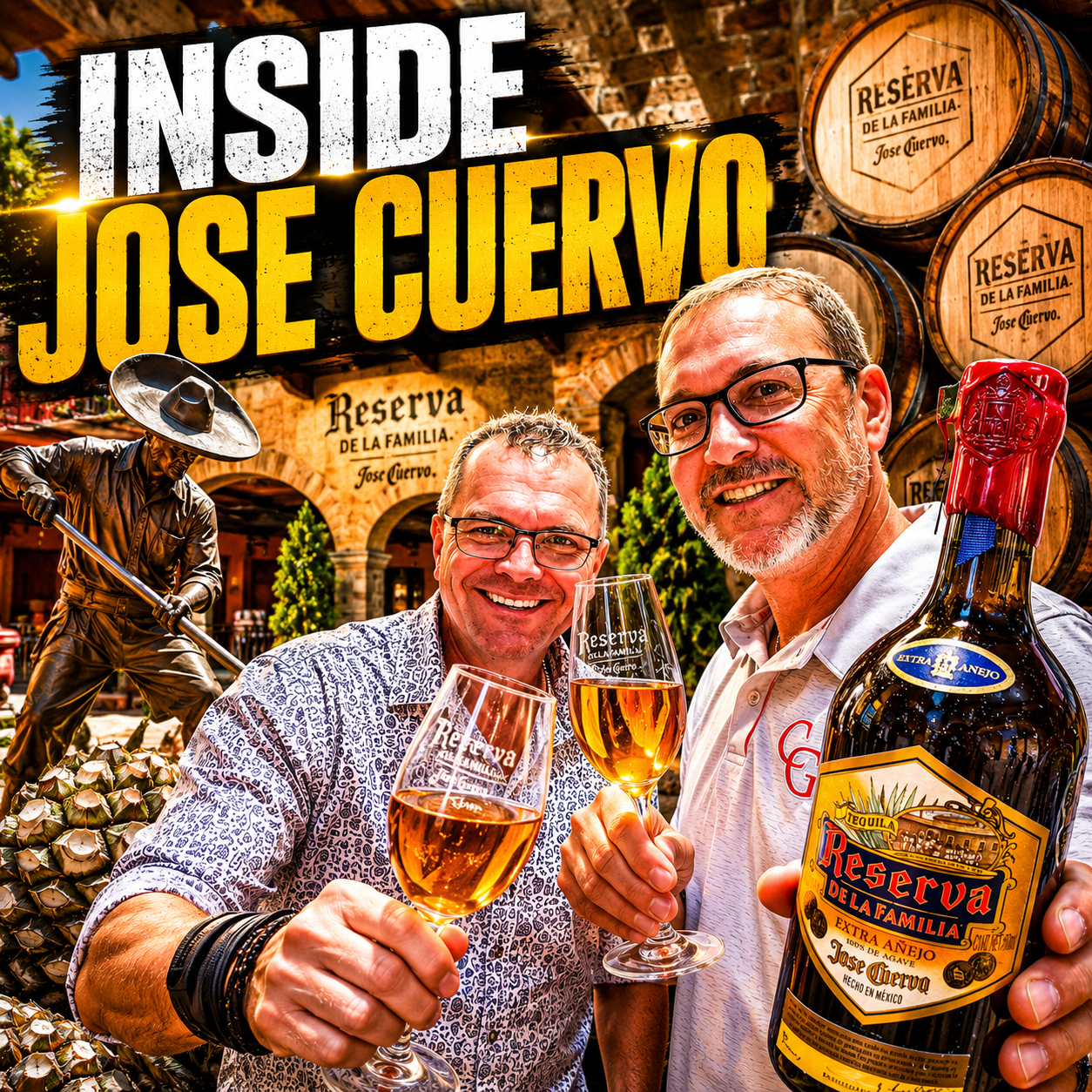
[00:28:41] Speaker A: So as he's going to reveal this here, One of the cool things we got to do was to bottle. To fill our own bottle and then complete the process for a bottle of la familia reserva Extra anejo.
Reserva de la familia so it is an extra anejo, and it's in this giant barrel and with a tap on it. And they allowed us to grab a bottle and fill it. Then we took that bottle after we put the cork on it and went over, and we got to put the wax seal on ourselves, which was pretty cool process. And then, you know, sign the label or whatever we did with that. And so we. We have our very own. Brad got two.
[00:29:27] Speaker B: Is that a surprise?
[00:29:28] Speaker A: Because he was the first one to be up there to do the wax. And instead of being able to wax the bottle himself, the gentleman took the bottle from him, and he wanted to show Brad how to do it, but then didn't. He didn't realize anyways, right away, like, oh, whoops.
And, you know, people in charge of our group said, we want you to do your own. He's like, I don't care. Yeah. Brad did not really care, but they insisted. He's like, can I keep both bottles? They're like, absolutely. So Brad came home with an extra bottle.
[00:30:01] Speaker B: I should ask for an additional box.
[00:30:03] Speaker A: You should have.
[00:30:03] Speaker B: Actually, one of the things they do is they. They hire a Mexican artist to do these boxes. Everyone is different. Every time they put an extra on Yejo out, the person that did it is this guy right here.
And I'm not going to try to say the name, but it should focus there.
[00:30:20] Speaker A: Alejandro Venegas.
[00:30:22] Speaker B: And they. They had all of the boxes in a museum and all the pictures that the artists had done and pretty impressive. And I honestly think this was kind of cool. I'm not a big art person, but
[00:30:33] Speaker A: it looks like something from Dr. Seuss.
[00:30:35] Speaker B: It does look very Seussish.
[00:30:36] Speaker A: Yeah.
[00:30:37] Speaker B: So I was impressed.
[00:30:38] Speaker A: I was impressed with their.
[00:30:39] Speaker B: Really, their whole presentation.
If it wasn't for Jose Cuervo, I probably wouldn't be a tequila fan, because Jose Cuervo is the reason tequila is what it is today. And I can't take that away from them. So for sure, I did have Alex. I didn't show on this bottle. Alex, the master distiller, autographed the back of the bottle and actually wrote a whole, like, story over the top of the other writing. And then he told me what it said because it was kind of hard to read. But I was really appreciative of him. And he was very, very pleasant, very nice man.
[00:31:08] Speaker A: So one of the other cool things, outside of that free bottle, they gave us all a bottle of the 1908 that you're drinking. So two free bottles, which is cool. And this would have been the last night that we were there at the hotel, we had gone out for the night after dinner and then came back and everybody in their hotel room had the 1908 and this copy of Tequila Wart, written by Ted Genoese. And it is autographed, which is cool. You've read this book?
[00:31:36] Speaker B: I found no autograph anywhere.
Keep on. I'm going to be so happy.
I didn't go far enough.
[00:31:44] Speaker A: There you go.
[00:31:45] Speaker B: Very cool.
[00:31:45] Speaker A: Yeah. So, Ted, you've read this book?
[00:31:48] Speaker B: I have. My wife and I have listened to it like, three times.
[00:31:50] Speaker A: There you go. So cool. Ted was on the trip with us, and the first night that we were there, he actually led us on a tour around the city and plaza area, giving us some background on the history of tequila and how Jose Cuervo was involved with all of that. And Ted was just a wealth of information and really nice guy. So that was a nice parting gift as well.
[00:32:11] Speaker B: And I'm going to say if. Even if you're not a tequila person, but if you're a history person, this book started out to be just the story of, you know, Jose Cuervo and tequila. And because the Cuervos and the salsas and all the. The families that are involved in the making of tequila were so prominent.
And they were in Guadalajara, which Alisco and Guadalajara were big. A big state, big city, a lot of wealth in that area.
They really dictated a lot of things that happened in their. Their government.
And I think they had a war, like, every year. If you listen to this book, that's why it's called the Bloody Struggle, this beard of Mexico, from the French Revolution, the Spanish Revolution, to corruption and killing governors and getting.
It's amazing. The story of this is amazing. It should be a movie or. I. I told Ted it should be a Taylor Sheridan series because it would be really awesome. But it's something to read or listen to. I listen to it. I haven't read it, so I'm probably going to read it now because you get another piece, you know, when you're a little bit. But intent is, like you said, a wealth of knowledge. Took him, I think. I think he said five to 12 years of research to get the whole thing put put together.
[00:33:30] Speaker A: All right. Well, again, thanks, Jose Cuervo for that. No doubt leading to one of the things you asked me, I think every night was, what did I think?
Am I enjoying myself? And so the bloody struggle for the spirit of Mexico really resonates. Not that I remember a whole lot of what he said in terms of history. But I enjoy going places and learning about their culture and learning about their history and is just in the culture of the town that we were in. You know, you see it everywhere. The church and it in and of itself has its own great stories.
Is the center of the town off very typical in Mexican society, but, you know, everything. There's a plaza right outside there and people gather there, they sell their stuff. And, you know, I'm sure that there's lots of celebrations that happen right there.
[00:34:24] Speaker B: Oh my gosh. I guess every weekend.
[00:34:26] Speaker A: And then, you know, from there it just kind of branches out into little shops here and there, distilleries here and there. And there are several of those around town. And so, you know, I was impressed and impressed by the, the history and the culture that's there.
One of the things that I heard multiple times before I left and I told people where I was going and they said, be careful.
And you've said this multiple times.
It is to me a very safe place. Now, anywhere you go, anywhere in the world, you're always going to have idiots that do stupid and people get hurt and killed.
So that being said, at no point while walking around town did I feel unsafe. Not one time.
[00:35:11] Speaker B: Yeah. And you even walked back by yourself. I did. Pretty late at night.
[00:35:14] Speaker A: Yeah. I mean, I, I walked from a bar back to the hotel, several blocks, and it was 11 o' clock at night. And I never felt like, like I was unsafe or out of place. You know, I have been places where there's a feel, sometimes an actual sketch or, or just that, you know, as I'm walking by, people are looking at me going, oh, that guy's American. You know, maybe giving you an evil look or really just kind of the cold shoulder. Not here, man.
People were welcoming. People were, you know, bienvenidos, buenos tardes, you know, all the time. And so I, you know, I, I was impressed by that.
[00:35:50] Speaker B: It's, it's. They usually speak first too oftentimes. A lot of times you're walking, you know, in the morning, they're like, buenos dias, Dias.
[00:35:58] Speaker A: You know, and that's not just the workers at the hotel.
[00:36:00] Speaker B: No.
[00:36:00] Speaker A: Because, you know, they're paid for that kind of stuff. These are people on the street. Yeah.
[00:36:04] Speaker B: So it is very welcome. I'm glad you said that because it is something we talk about a lot.
You know, how, you know, it's Mexico. You should be scared. And everybody thinks like, Mexico is the size of Chicago. It's like. No, it is huge. It's like the size of Europe.
[00:36:18] Speaker A: Yeah.
[00:36:18] Speaker B: You know, so come on. You got. Again, don't be stupid. Don't do stupid things. But the other thing you did get to see was you got to see a couple little pieces of fortaleza. Yep. Which I think is pretty beautiful in itself.
[00:36:31] Speaker A: It was cool.
[00:36:32] Speaker B: And then we got to go to Casa Sayas. So you've seen that hotel that we stay at, which is.
[00:36:36] Speaker A: Which is connected to El Teo.
[00:36:39] Speaker B: Yeah, we walked through there. We walked through and, hey, can you give us some cooked agave? And the guy, I don't think he spoke any English. He was like, see, it's too big, Giant.
[00:36:46] Speaker A: It's a waste anyways. Right.
You know, what are they gonna do then, man?
So good.
[00:36:51] Speaker B: It is good, isn't it?
[00:36:52] Speaker A: It's just like eating candy, man. It's so good.
[00:36:54] Speaker B: There are a couple times I look over at Brian when we were at one of the dinners. He was just, like, chewing on cocktail. The correct. I was so good.
[00:37:01] Speaker A: Food wasn't coming fast.
[00:37:02] Speaker B: Super hard to explain to people, though.
[00:37:04] Speaker A: Oh, there's a flavor that.
[00:37:06] Speaker B: Yeah, you just can't explain. So it was pretty awesome. Well, I want to say thanks for going.
I know that it was free, so that part was cool.
[00:37:15] Speaker A: Yeah.
[00:37:17] Speaker B: And you got to spend some time in a rooftop pool drinking some margaritas and whatever that purple drink. Drink you drink.
[00:37:22] Speaker A: I have no idea.
[00:37:24] Speaker B: And you met some pretty fun people. We met some people that have really big followings, like Lucas AIs and again, Craft Cartel and Dylan, which is. Was it Kesto?
[00:37:34] Speaker A: Yep. Kesto Sips.
Detroit. Detroit.
[00:37:38] Speaker B: So, yeah, we had some really good times. It was a lot of fun. And thanks to the global people, I will.
[00:37:43] Speaker A: I will say thanks to you for inviting me, and I'm glad I was able to experience that, because having heard you talk about this in your visits for the last two years, it's nice to. Nice to live and be engrossed in. In the culture there and the things that you talk about. And also, you know, you can tell me until you're blue in the face, as you already have, about how tequila is made. It doesn't really register because, you know, I'm not a huge fan of tequila, so, you know, do I really care? But b, never having actually seen it now, seeing it in person definitely gives me a greater appreciation for it. One thing I did learn, which is funny, because you have made me drink so many tequilas, and I never really know which one I like and which one I don't. For whatever reason, on this trip, I finally registered.
I'M not a blanco or reposado person. And now I know why. Because it really gives me a peppery sensation in the back of my throat that is very aggravating to me.
[00:38:45] Speaker B: You don't like that?
[00:38:46] Speaker A: I don't. And so ano and extra anejo, I'm pretty good. But there was one that we had, I think it was Wednesday night, and I took a drink. I'm like, oh, my God. That is like dessert. Yeah, it was so good.
[00:39:00] Speaker B: I. I believe it's actually this one
[00:39:02] Speaker A: here, which might have been French.
[00:39:03] Speaker B: American. French cast and American cast.
And this is very good. And it doesn't have a. It's not overly sweet. It's not, like, fake sweet.
[00:39:11] Speaker A: Nope.
[00:39:11] Speaker B: It's just a really nice cooked agave with a really nice softening. So that tells me probably every one of the anejos have up there that are aged well with some French wood. You probably like every one of them.
[00:39:19] Speaker A: I just might. Yeah, I just might. Cristalino, I believe, is another one.
[00:39:23] Speaker B: Yeah, you should like that.
[00:39:25] Speaker A: Well, but I did. It was.
[00:39:26] Speaker B: It was good.
[00:39:27] Speaker A: And again, soft. I now know what I don't like. And I had a number of mixed drinks. Now, when I go out to a bar, I don't order anything that has tequila because I always just think, well, I don't really care for tequila, so I don't order those drinks. Well, here. That's just what they gave you. So we had, um. Shoot, I can't remember the names.
[00:39:47] Speaker B: You had a catarito.
[00:39:48] Speaker A: That's the one.
[00:39:48] Speaker B: You had palomas. You had margaritas, Whatever that purple one was.
[00:39:53] Speaker A: Well, yeah, I don't know what was in the purple one.
[00:39:56] Speaker B: It was tequila.
[00:39:56] Speaker A: There was one. There's one you kept calling purple. That wasn't. It was red, but it was actually a tequila mixed with a vodka.
[00:40:03] Speaker B: Okay.
[00:40:03] Speaker A: And then a strawberry syrup and some. I don't know, like, maybe a squeeze of lime or something. But, man, that was good.
[00:40:09] Speaker B: Good, too.
[00:40:09] Speaker A: Yeah. But I have no idea what it's called.
[00:40:11] Speaker B: You leaned into the cantaritos.
[00:40:13] Speaker A: I did, yeah.
[00:40:14] Speaker B: Three. Those are good.
[00:40:14] Speaker A: Yeah. Again, if anything came out of this trip, it gave me a greater respect for tequila and opened my eyes to, you know what? Maybe it's not all that bad.
[00:40:24] Speaker B: Some healthy stuff.
[00:40:25] Speaker A: There you go.
[00:40:26] Speaker B: So I want to say thanks for two things. Thanks for going with me. But first and foremost, none of this stuff would have happened if you wouldn't have said, hey, let's do a podcast.
And none of this would have happened if you witnessed and hey, you should do content with tequila and a thousand bottles later.
[00:40:43] Speaker A: Yeah.
[00:40:44] Speaker B: And 25amazing distilleries that I visited and so many people that are friends. And you. You. You've seen that a little bit. Like, we walk in some of these bars, and they're like, dude, like, you were.
[00:40:56] Speaker A: You were a mini celebrity.
[00:40:57] Speaker B: No.
[00:40:58] Speaker A: Oh, yes, you were.
[00:40:59] Speaker B: Have a lot of good friends that we've met there and really became friends with people, and that part is really fun, and I thank you for that because you.
You forced me to do something uncomfortable and chase something that I've been a big fan of for a good portion of my adult life.
So thank you for helping me do that.
[00:41:18] Speaker A: I mean, a free trip is nice, but when you start getting paid from YouTube, you can just throw me some of them up.
[00:41:22] Speaker B: I mean, last month I made $200. What?
[00:41:26] Speaker A: All right, let's take it off.
[00:41:27] Speaker B: It's going.
[00:41:28] Speaker A: All right, well, to all of you out there, thanks for watching Indiana Success, Happy Hour and tasting tequila with Brad, because I bet this winds up over there, too.
Cheers to you, my friend, and cheers
[00:41:38] Speaker B: to all of you.
[00:41:38] Speaker A: We'll see you next time.