Episode Transcript
[00:00:00] Speaker A: We always start the show this way.
[00:00:02] Speaker B: Bang. Hey, everybody. Welcome to Indiana Success Happy Hour. Brian Quinlan here from Daniels real estate and first home indie on YouTube.
[00:00:11] Speaker A: What about move Me to Indy?
[00:00:12] Speaker B: Nope, that's changed its name. It's now.
[00:00:15] Speaker A: All right.
[00:00:15] Speaker B: First Home Indy.
[00:00:16] Speaker A: Well, Brad Nickam with Nest Mortgage Group and tasting tequila with Brad.
[00:00:20] Speaker B: Fantastic. And I am super excited. Fangirling a little bit today.
We have a former major league baseball player here today. Sir, tell the folks who you are.
[00:00:31] Speaker C: Last I checked, I'm Drew Storen.
[00:00:33] Speaker B: Excellent.
[00:00:33] Speaker C: Yeah. Brownsburg native.
[00:00:35] Speaker B: Yeah.
[00:00:36] Speaker C: Kind of bounced around the big leagues for eight years, and now I'm a bourbon guy.
[00:00:39] Speaker B: Now you're a bourbon guy. That smells fantastic.
[00:00:42] Speaker A: Now we got the trifecta, meaning we had a professional basketball player. We had friend Scott Pollard, and then we had that guy that used to
[00:00:51] Speaker B: play for the Chiefs, Carson Steel. Right. Had a race car driver.
[00:00:56] Speaker A: Yeah.
[00:00:56] Speaker B: Connor Daly.
[00:00:57] Speaker C: D was on here.
[00:00:58] Speaker A: I actually almost said Carson Daly.
[00:01:02] Speaker B: Actually, we had them both on the same night we did.
[00:01:04] Speaker A: So that.
[00:01:05] Speaker B: That was a thing.
[00:01:06] Speaker A: And now they. The Major League Baseball. I mean, it's great. I guess next we just have to slump it down and get a hockey player.
[00:01:13] Speaker B: That'll be all right, too. Not. Not an area of expertise for me at all. But baseball, man. I got it. So we're good. So this is going to be a great show. Brad, you were just talking about this bottle. You were very excited.
[00:01:25] Speaker A: Surprised. I'm not like, super excited, but I just. Just got back from Mexico. And this is Jose Cuervo. This is the La Rohena 1908. And this is the Beckman family, who now is one of the owners of Cuervo Go all the way back. They wanted to make a tequila in a traditional way with no additives, no chemicals in it. Done with the tona and a roller mill and stone oven. Like old school. And I drank this originally with the Ted Genois, the tequila. Tequila wars guy. Okay. With the book. And he brought it to me and said, it's good. And it's.
[00:02:01] Speaker C: It's good.
[00:02:03] Speaker B: Jose Cuervo made a little different today than 1908 on that bottle.
[00:02:07] Speaker A: Yeah, yeah. They. They use it with machines that we didn't even know existed back then. But yeah. But yeah, this, actually, I'm proud of them for trying to do something a little more original. And it's fairly tasty. And I. I brought it home to do some reviews on it and talk about it.
[00:02:21] Speaker C: So.
[00:02:21] Speaker B: Awesome.
[00:02:22] Speaker C: Yeah. All right.
[00:02:23] Speaker B: Well, I have a helis beer from the world's oldest brewery. Apparently that's what their can says.
Why Hess and stuff. Any idea how to say that? Nope. Okay. Either way, this is a brewery in South Carolina. You want to give that a shot?
[00:02:40] Speaker C: Why?
[00:02:40] Speaker A: House and stuff?
[00:02:41] Speaker B: Yeah. Nailed it. I'm sure that's exactly right, but I'm a fan of Helles Beers, so that's what we're going with today.
Drew, the three products in front of us you are responsible for.
You opened one of them. What you got?
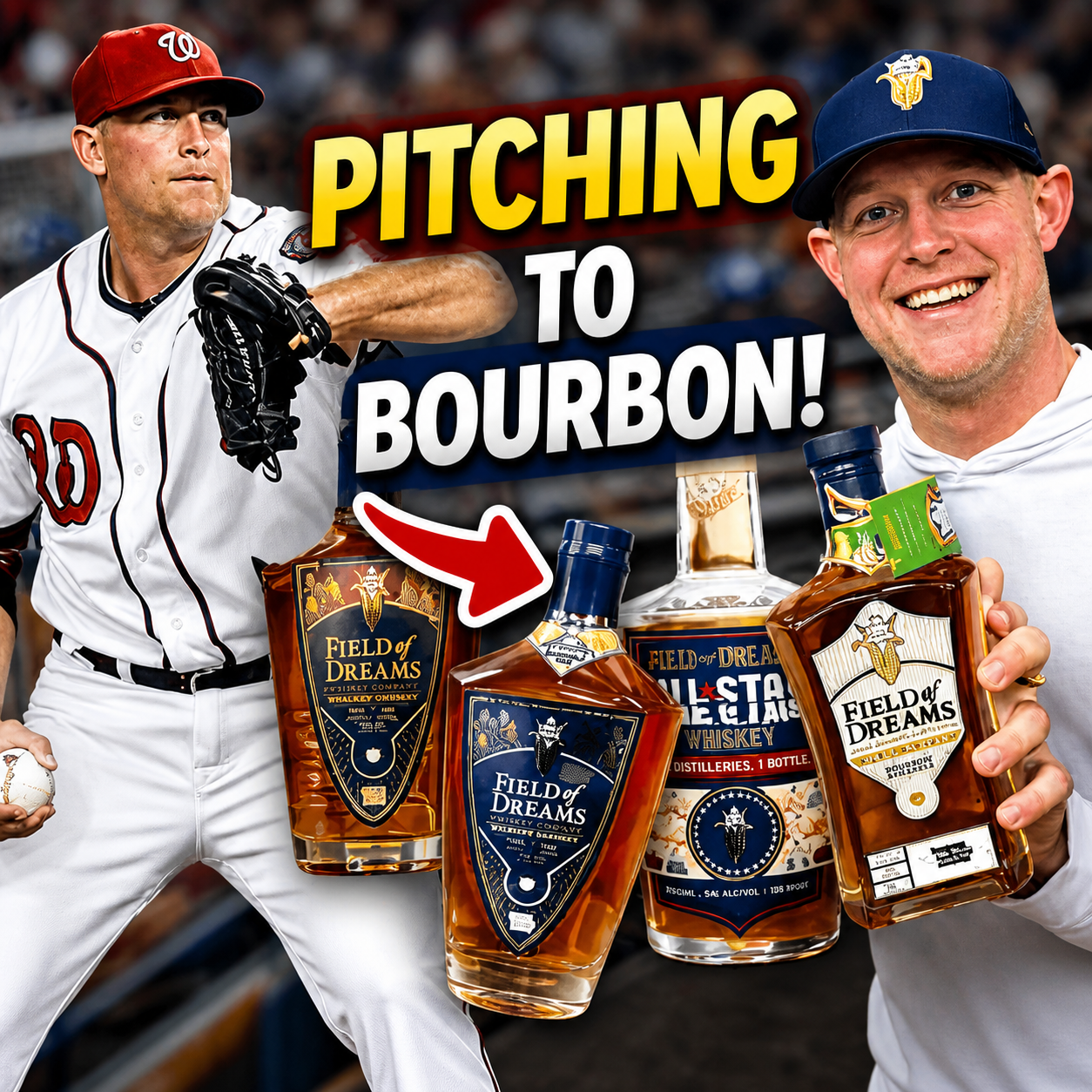
[00:02:55] Speaker C: So I started with our newest bottle. So this is our All Star. So first off, we are Field of Dreams whiskey company. We do take the corn from the actual movie site.
[00:03:03] Speaker B: Awesome.
[00:03:03] Speaker C: And turn it into bourbon.
So with our All Star, this is the largest blend of whiskey in the history of whiskey. So we took 51% of the juice in. This is ours. And then we went to every major league market and found a craft distiller there and bought a barrel from them. So it's kind of like a, you know, like a baseball team would be. So it's a mix of a one year. Anywhere from a one year in Arizona to a 25 year Canadian. So kind of all over the map, it's a. It's a curated infinity bottle. So there's kind of a different note in every sip. So it's. It's certainly our most fun one that we've. That we've come out with.
[00:03:37] Speaker B: And that's relatively new.
[00:03:39] Speaker C: Yes. So that came out at the very end of last year.
And then, yeah. Our middle one is our player series. So this year will be year four of it. So we do one bottle for every player in major league history, which this year will come out to be 23615 players, all hand numbered. And if you go to our website, you can see the player that's associated with it once you plug in the number.
And then our last one is our small batch.
This one is 99 proof because I ended my career with 99 saves and it annoys me that I didn't get 100.
So I just decided to lean into it. These are 108 proof because that's how many stitches are in a baseball.
[00:04:17] Speaker B: Yeah.
[00:04:18] Speaker C: Under our small batches, like our everyday, we hide the legends of the game. We laser engrave their face and autograph on the top and hide it under that opaque capsule so you have no idea who you get until you open it. So it's a pack of tops that get you drunk, essentially.
[00:04:31] Speaker B: Uh, I have one of those at my house and I don't know who it is.
[00:04:34] Speaker C: I haven't Opened it.
[00:04:34] Speaker B: You autographed it? It's just sitting at my house. I'm like, I really want to open this, but I don't know who's underneath.
[00:04:38] Speaker C: Yeah, we can pop that one, and we'll figure that out.
[00:04:40] Speaker B: We could. All right, well, Drew, that's crazy. Thanks for being here today.
[00:04:44] Speaker C: Thanks for having me.
[00:04:45] Speaker A: That first one you mentioned has to be one of the coolest projects I've
[00:04:48] Speaker C: ever heard in whiskey. Thank you.
[00:04:49] Speaker A: Like, that is so freaking cool.
[00:04:53] Speaker B: Quite cool.
[00:04:54] Speaker C: It was quite.
[00:04:56] Speaker A: Quite the freight bill, but I could only imagine.
[00:05:00] Speaker C: Yeah, we. We actually reached out to Guinness to ask about getting a world record for it, but apparently cost $30,000. So.
[00:05:07] Speaker A: What, for an empty barrel? What's that for an empty Guinness barrel?
[00:05:11] Speaker C: No, no, no.
[00:05:12] Speaker B: World records. Oh.
[00:05:13] Speaker C: To get the actual world record.
[00:05:14] Speaker A: Oh, I was. I heard Guinness. Yeah. I think, oh, we'll put one in the Guinness.
[00:05:18] Speaker B: But that's the same company, is it not?
[00:05:20] Speaker A: I. I couldn't. I believe it probably is.
[00:05:23] Speaker B: Yeah. I believe they come from the same Guinness.
[00:05:25] Speaker A: I mean, it would be weird if you were named that and it be,
[00:05:28] Speaker C: like, a coincidence, I suppose.
[00:05:32] Speaker B: All right, well, the first half of the show, and we're definitely breaking for shots today, we're talking baseball, because I've been jacked about this all day.
So in the first. For the first time in the history of our show, I brought notes because I Wikipedia you, Drew, and you said you have not checked out your Wikipedia page.
[00:05:51] Speaker A: Yeah.
[00:05:52] Speaker C: In a while.
[00:05:52] Speaker B: I think it. Actually, you said you have three kids, and I believe Wikipedia says you have two, so it's a little behind.
[00:05:58] Speaker C: Okay, that's fair.
[00:05:59] Speaker B: Yeah. Your daughter does not exist in the world of Wikipedia.
[00:06:02] Speaker C: Bless her heart.
[00:06:04] Speaker A: You only made notes. I actually cut a trip home from Tequila early to be here to make this work.
[00:06:10] Speaker B: That's. Hey, that's all right. I. I appreciate you being here.
[00:06:13] Speaker A: I didn't make notes, though.
[00:06:14] Speaker B: No, that's okay. That's all right. All right. So starting you were from Brownsburg and state champ in 05, which was your sophomore year of high school. And there are at least two other major leaguers I know of who went to Brownsburg. Correct.
[00:06:31] Speaker C: And they are Tucker Barnhart and Lance Lynn. So Lance was a senior the year that we won state, so we were 35 and 0.
He would pitch one game, and then I pitched the next. So we would just switch. It would just be, I play first, and then he played first. And it was funny because Lance is pretty much the same size as. As he was in high school.
[00:06:49] Speaker B: Oh, wow.
[00:06:50] Speaker C: And he's a big dude and I'm not. So the day after he would pitch, you know, they see me going out there and guys are lining up at the rack going, okay, we got a shot today, boys, you know, but, yeah, it was. It was that team, you know, there were. There probably should have been a couple more major leaguers on there. There's pretty good. Pretty good talent.
[00:07:07] Speaker B: Is Tucker a few years behind you then?
[00:07:09] Speaker C: Yeah. So Tuck was two years younger, so he was the hot shot freshman when I was a junior.
[00:07:13] Speaker B: Gotcha.
[00:07:14] Speaker C: Yeah.
[00:07:15] Speaker B: No offense, but the fact that you all only won two state or one state title, it's a bit of a disappointment.
[00:07:21] Speaker C: Oh, yeah, Both. Both times that Tuck and I played together, we didn't get out of sectionals. Oh, yeah, no kidding, man. Because we did the one year where it was like, we tried to.
I think I pitched against a team that probably, you know, they didn't save me. And then the next year they tried to save me, and then we lost. It was. Yeah, so.
[00:07:39] Speaker B: So I. I've worked in Center Grove since 2000, and, you know, Center Grove is pretty solid baseball program. Right.
It always amazed me how they would either knock it out of sectionals or lose first game regional or something. And it always had to do with the other team had their ace pitcher going against you. And the fact that it's single elimination, I think sucks. I know you can't do much about that. There's only so much time.
But, man, because you could have one phenomenal pitcher, everybody else is average, and you win that one game, you knock out the best team and just takes one bad day. Yeah.
[00:08:13] Speaker C: And that's. That's the crazy thing about us going undefeated was you don't run into one loss. Like, it just shows you. Again, the. The 05 class was so talented that I was. Yeah, I was just a young dork trying to hang on.
[00:08:27] Speaker B: How hard were you throwing in high school?
[00:08:28] Speaker C: I topped out 94 by the time. Like, I was a senior, but I was. I hit 90 as a sophomore so
[00:08:36] Speaker A: I could drink 90. 90 kids,
[00:08:40] Speaker B: that's a different sport altogether. So.
[00:08:42] Speaker A: So when you played, was it a class like. Yes. Okay. Yeah, I.
I went to this little school called Wabash High School, and they won the state title in 19.
[00:08:54] Speaker B: Wow, that is unprofessional.
[00:08:56] Speaker A: I thought that was off.
[00:08:57] Speaker C: I'm very sorry.
[00:08:58] Speaker B: You're gonna have to edit that part now.
[00:09:01] Speaker A: So. Wabash, Indiana, 1986, won the Indiana state championship. The smallest school to ever win the baseball championship. That's before our class.
[00:09:09] Speaker C: Yeah.
[00:09:10] Speaker A: And they beat Mar in high school.
[00:09:12] Speaker C: Cool. Yeah.
[00:09:13] Speaker A: Kind of a big school. It's kind of a big deal.
[00:09:15] Speaker C: Yeah.
[00:09:16] Speaker A: It, you know, it wasn't as.
Because baseball was. When school was over, it wasn't like the school got behind it, like, like sectionals of baseball or sectionals of basketball because it was like, oh, wait, yeah, they're playing, you know, but it was so cool to go to the Busch Stadium is where they played it back then. And so that was pretty cool.
[00:09:35] Speaker B: That's awesome.
[00:09:36] Speaker A: That's the closest thing I have to baseball that counts.
[00:09:38] Speaker B: Way to contribute.
[00:09:40] Speaker A: You're welcome.
[00:09:41] Speaker B: All right. Senior year of high school, you are drafted by the Yankees late, And there's like 400 rounds in the major league draft. I never understand that at all.
34th round.
Were you at all tempted to sign with the Yankees and forgo college?
[00:09:56] Speaker C: Yeah, I had an opportunity to go in the supplemental round and passed on that. So the Yankees were willing to pay overslaught. But I needed a certain amount of money to just skip going to Stanford, especially because I was a draft eligible sophomore, so I could leave after two years versus the three years so that it ended up being the right decision, obviously, because I don't know how I would have done as my early year.
[00:10:22] Speaker B: Okay, you just mentioned something I know nothing about. Draft eligible sophomore. What does that mean?
[00:10:27] Speaker C: So once you're eligible to get drafted out of high school and then once you go to college, essentially if you turn 21 within 90 days of the draft, then you are. So I was older and so that helped me. So I didn't have to wait till my junior year. Yeah.
Were you?
[00:10:43] Speaker B: Well, I mean, you were the 10th pick overall, so.
[00:10:47] Speaker C: Sure.
[00:10:47] Speaker B: Certainly not. Probably, Probably. Any thought of going back to Stanford at that point?
[00:10:51] Speaker C: No, no, that was, it was the perfect situation.
You know, the Nationals needed bullpen help and they wanted me as a reliever. I told teams that I would start because I was willing to, but I really wanted to stay a reliever because I knew I would go faster through the minor leagues.
[00:11:05] Speaker B: Ah, good point.
[00:11:06] Speaker A: If you could have gotten paid in college like the kids get paid today, would you have stayed because you could have earned a really strong income while playing?
[00:11:13] Speaker C: No, because baseball's not seeing that money.
[00:11:15] Speaker A: Oh, it's not?
[00:11:16] Speaker C: No. And, and you know, and, and from Stanford standpoint too, they're not, they, they're not a big nil program.
[00:11:23] Speaker A: Okay.
[00:11:24] Speaker C: And so like, it. It would be more, it's more of the opportunity to, you know, it would be nice to have that. But I, I wouldn't see much. I can't imagine there's much income coming in from the baseball unless you're playing SEC baseball, which it comes down all that's kind of baseball guys are just going to get trickled down football money.
[00:11:42] Speaker A: Gotcha. Is that because baseball has its own farm league to, you know, you think of the NFL, their farm teams are the colleges. Yep.
[00:11:49] Speaker C: Yeah. And that. So what you're seeing, my opinion is a merge of all business models from professional sports. So you're seeing that football money.
So they've eliminated, you know, 20 or 30 rounds I think from the MLB draft and then they've eliminated a bunch of minor league teams. So then that way, because colleges are now, you know, creating these guys or I guess I don't know why I can't even think about developing these guys, developing these guys into big league ready dudes that you don't get that in the minor leagues necessarily. So it's easy for guys to be quick. So I was lucky to go quick because I was a college guy. And that's the new trend because you have all these college guys that throw 100 now, so why not just do that? And you know, like you said, I'm it. When the colleges are willing to put in the money for the development, a pro team is like great. It eliminates their risk and like it kind of make, you know, it makes sense. Yeah.
[00:12:45] Speaker A: How did your baseball career start? Like what, how old were you when you all of a sudden said, hey dad, I want to play baseball?
[00:12:53] Speaker C: Yeah, I mean I played. I mean I was a switch hitter. As soon as I could walk, my dad had me switch hitting. So I always loved it.
You know, I was going up through coach pitch, like I was good, did my thing. Loved it. Like it was cool. But then once we got to kid pitch and I started playing wiffle ball in the front yard and you know, realized I could embarrass some people.
I fell in love with that and just really enjoyed pitching too. So something I've wanted to do both and then actually hit. I played third my freshman fall at Stanford but then ended up being a Vulcan guy. So.
[00:13:29] Speaker B: Okay.
[00:13:30] Speaker C: Yeah, I always, I always knew I wanted to do it. I, I didn't really think I ever had a chance. I mean I, I thought like going into high school, I hope I was like, man, if I could walk on at Purdue, that would be awesome. Very cool. Yeah. And then, you know, just kind of progressed. I just kind of took it a day at a time or Every, you know, cliche that we say in interviews, but that's kind of what you got to do. You just do.
[00:13:52] Speaker B: They give you a list of cliches to use in your interviews.
[00:13:55] Speaker A: I think that was probably dad that wrote that.
[00:13:58] Speaker C: I know all. I know all the dodge one.
[00:14:02] Speaker A: Very nice.
[00:14:03] Speaker C: Yeah. Yeah. But it's. Yeah, it was something I always just. I love and, you know, being on the other side of it now coaching my kids, I don't know how it ever happened because it's just the light years away that T ball and coach Mitches to major league baseball. Like, it's a long drive. Yeah, it is. And you gotta have a lot of things that go your way. Like. Yeah, before.
[00:14:23] Speaker A: Before Brian geeks into nerdy baseball questions. Because I know they're coming. Like, I can feel it.
I. I would like to talk about your. Your pops a little bit. Like, was dad a big baseball guy?
[00:14:34] Speaker B: And mention who dad is.
[00:14:36] Speaker A: Not yet.
[00:14:36] Speaker C: Okay.
[00:14:37] Speaker A: So was he a big baseball guy?
[00:14:39] Speaker C: Yeah, I mean, he was a big. He's obviously a big sports guy.
Basketball and baseball, that was.
That was kind of the thing. I played both of those. And he was there to, you know, give me every opportunity. Like, he always tells the story about coming back, you know, between doing the 6 and 7 or after doing the 5 and 6 news, he would have dinner, and then we would play catch. He'd be in a full suit, hairspray, whole, whole, whole bit.
[00:15:04] Speaker B: Did he have, like, on, like, if
[00:15:05] Speaker A: he started to sweat, did people come out like that?
[00:15:08] Speaker C: Yeah, they're just hanging out at home.
[00:15:09] Speaker B: Yeah.
[00:15:10] Speaker C: Yeah. That's what we have.
[00:15:11] Speaker B: We.
[00:15:12] Speaker C: We were living that well.
[00:15:13] Speaker A: I just knew that.
[00:15:15] Speaker C: But yeah, so it was great. Like, he.
He really prioritized. I mean, hell, he was doing live shots from my little league games, so he wasn't missing games.
[00:15:24] Speaker A: So your dad worked like Ryan Seacrest schedule from. From Bob and Tom to the Hoosier, the Hoosier lottery show to the news.
[00:15:33] Speaker C: Insane. Always.
[00:15:34] Speaker A: Yeah.
[00:15:34] Speaker C: Yeah. I don't know how he knew what he was supposed to be doing every day, because it was. It was a ton. But. Yeah. And he always, like I said, found a way to make sure he wasn't missing my games. And. Yeah, and. And on top of all that, you know, he didn't care that he probably wasn't supposed to take me to a lot of his live shots at Victory Field or Market Square Arena. So the amount of people I got to talk to, you know, experiences of playing horse with Reggie before games and, like, you know, like, I met Aaron Boone, when he was playing for the Indians, you know, like just crazy stuff like that where, you know, you normal kids don't get that experience. So for me, I wasn't totally shell shocked when I got to the big leagues. I'm like, okay, I've been around it. And, and then also when you're a kid and you see that these guys are human, you're like, oh, okay. If you just. It's possible, you know.
[00:16:20] Speaker B: Sure.
[00:16:20] Speaker C: Now you do meet some guys. Like the first time I met Scott Roland, I'm like, there's no way I'm ever gonna play in major leagues because this guy is a major leaguer and he's the size of that garage door.
Yeah. I was like, I don't stand a chance if that's the case.
[00:16:33] Speaker B: Third baseman from Jasper.
[00:16:34] Speaker C: Okay, that's right.
[00:16:35] Speaker B: And actually he's in the hall of fame now, is he not?
[00:16:37] Speaker C: Yes.
[00:16:38] Speaker A: And dad is Mark Patrick.
[00:16:40] Speaker C: Oh, that's right. We do.
[00:16:40] Speaker B: Yeah, that's right. For those of you watching from Indianapolis area, Mark Patrick, the. Let's see, sports broadcaster from Channel 8, who. Yeah. And Bob and Tom show.
[00:16:53] Speaker A: 30 different voices on the, on the Tom show. Like, it was, it was like it was always a great show when, when Mark was going to be on there and you always knew because there'd be some kooky voice that you pull out.
[00:17:04] Speaker C: That's right.
[00:17:04] Speaker A: Did he do that at home a lot too?
[00:17:06] Speaker C: Keith Jackson would hang out at our house quite a bit.
[00:17:10] Speaker A: Can you do many of the voices?
Did he pass that along to you?
[00:17:14] Speaker C: I. I try. I tried that.
That's awesome.
[00:17:18] Speaker B: Another one we've had on the show, Matt Taylor.
Do you know Matt?
[00:17:22] Speaker C: I don't know him personally, but I
[00:17:23] Speaker B: know that dude does some great voices as well. He did an internship and then I think worked for Q95 and Bob and
[00:17:30] Speaker C: Tom for a while.
[00:17:31] Speaker B: That's awesome. But hilarious. Dude with some great voices.
[00:17:34] Speaker C: I, I mean, that's one of those things. I, I think that is one of the coolest things that. When people do impressions.
[00:17:40] Speaker B: Yeah.
[00:17:40] Speaker C: My last spring training, I actually lived with Ron Sexton.
[00:17:43] Speaker A: Okay.
[00:17:44] Speaker C: And so like waking up, I'd be going to, you know, to the park and hearing him calling in as Donnie or Kenny Tarmac, like, just so funny. And you want to talk about a guy that, like, he would go into bits like automatic and like you, Tony Soprano at 1 sec. It was, it was hilarious. It was just like a very much like Frank Caliendo just in real life.
[00:18:04] Speaker B: Yeah. For real.
[00:18:05] Speaker A: He. He does a great what's the guy's name that you do a great impersonation of?
[00:18:10] Speaker B: Grew from Despicable Me.
[00:18:11] Speaker A: Yeah, that's the one.
[00:18:13] Speaker C: Itchy. I like it. Thank you.
[00:18:15] Speaker B: My students. Back when I taught you sound like groove.
[00:18:19] Speaker A: Okay, okay, so I rolled with that one.
[00:18:22] Speaker B: All right, Back to baseball.
10th pick by the Nationals in 09. They were relatively new at that point.
I don't think that was the first year.
[00:18:31] Speaker C: Yeah, they were.04. Yeah. Okay.
[00:18:34] Speaker B: Major league debut, 2010.
Was it home or away?
[00:18:38] Speaker C: Away. At St. Louis.
[00:18:39] Speaker B: So at St. Louis Cardinals, which is in and of itself a monument to baseball there. Push Stadium. What?
Like, you said, you weren't. You grew up in that environment, but still, now you're rookie coming out of the bullpen. What's that like?
[00:18:56] Speaker C: I mean, it's kind of like what you see in the movies where, like, everything is really dark except for the field. And I wasn't really nervous because I just had no idea what was going on. So, like, I couldn't wrap my head around what was going on.
And so kind of worked out for the best. But then, you know, a couple weeks in, that's when you start, okay, noticing, and you're like. Then you start wrapping your head around a little bit more. But, yeah, the first one, I was just like, I hope I don't throw this first pitch off the backstop, you know, like, absolutely. You're just like. Because you're like, I've done this my entire life. And I like.
But it just takes one, you know? And then you're like, man, what could be different? But it was really cool because, you know, St. Louis, like, as you mentioned, is a phenomenal place to play, see a game, etc. But, you know, when I got introduced, the PA Guy said, making his major league debut, which. Which they don't do that. They don't do that for road guys usually. So that was. That was really pro.
[00:19:51] Speaker A: Yeah.
[00:19:51] Speaker B: That's nice.
[00:19:52] Speaker C: So that was a pretty cool. And. And full circle, too. Like, I was a. I used to be an Expos. Bat boy.
[00:19:58] Speaker B: Okay.
[00:19:58] Speaker C: When they would come around Indy, and Bush Stadium was one of the places I would bat boy at. So the guy that was the security guard I'd sit next to was still the security guard when I made my debut.
[00:20:09] Speaker A: Oh, that's very cool.
[00:20:10] Speaker C: And. And the clubby that gave me my uniform as a bat boy gave me my uniform as a big leaguer. No way.
[00:20:15] Speaker B: How awesome.
[00:20:16] Speaker C: Pretty wild.
[00:20:17] Speaker B: Yeah. No kidding.
[00:20:18] Speaker A: That's really cool stuff.
[00:20:19] Speaker B: Awesome. All right.
So several successful years with the Nationals Playoffs, a couple playoff appearances. Right?
[00:20:26] Speaker C: Yeah.
All right.
[00:20:29] Speaker B: I'm gonna back up actually. So how long did you play in the minors? Not very long.
[00:20:33] Speaker C: Like four months. Yeah. Yeah.
[00:20:34] Speaker B: Not real long.
Did you notice a drastic difference in competition level from say AAA to pros?
[00:20:43] Speaker C: Yeah, I mean, you've got.
I say at any point, at least when I was there, you could switch 25% of a big league roster with 25% of a AAA roster. And it's pretty. Whatever. Same thing you just. I noticed in, in double A, guys can't hit a breaking ball.
And then once you get aaa, guys can hit breaking balls. And then you had to learn how to pitch. So that was. I dominated double aaa. I had a, like, you know, first couple outings.
Once I realized I couldn't just go with the same skit, I had to pitch a little bit. And which helps because then you're able to, to like cut the ball and sink it against those guys where like you're hit facing better hitters. So it, I mean, I hate, I hated facing the guys that just swung at everything. Like those are the hardest ones, the best hitters I love facing because like, I liked playing the chess game with them and all that. But yeah, it was, it was definitely something different.
[00:21:41] Speaker B: So who would you say were some of the just toughest outs for you?
[00:21:46] Speaker C: Pablo Sandoval.
[00:21:48] Speaker B: Okay.
[00:21:49] Speaker C: I. I don't know.
[00:21:50] Speaker B: For the Giants.
[00:21:51] Speaker C: Yeah. Okay. I just. The guy, I don't, don't know, he would hit stuff in the other batter's box.
Like, I'm just like, yeah, my dude. I threw the rosin baggy. Find a, find a hole with it, right?
Yeah. He was one. You know, a lot of the lefties, like slapping lefties, just kind of guys that were willing to take a ground ball through the hole annoyed me. If a guy wanted to come up and hit a homer, like, I had him right where I wanted. So I, I did pretty well against like the elite players. I got burned by some of the mid guys that I might have.
Should have done better against. Let's go with that.
[00:22:26] Speaker B: Sure.
[00:22:26] Speaker A: That's pretty, that's pretty insight.
[00:22:28] Speaker B: Yeah.
[00:22:28] Speaker A: For real.
[00:22:29] Speaker B: All right, so we're going to run through this.
Drafted by the Nationals, then to Toronto, then Seattle, which according to Wikipedia, that was your team growing up.
[00:22:40] Speaker C: Yeah.
[00:22:41] Speaker B: And you got to meet your idol, I would assume.
[00:22:43] Speaker C: Yeah.
[00:22:44] Speaker B: So you play against him?
[00:22:45] Speaker C: No, I just missed it.
[00:22:46] Speaker B: Yeah. I can't remember where he got out. Ken Griffey Jr. By the way.
[00:22:50] Speaker C: So kind of another cool full circle story. So when I was nine. My parents took me out to the kingdom for my birthday on seafare weekend to see Griffey play Tomei and the Indians. Right.
[00:23:03] Speaker B: Dude, that's awesome.
[00:23:04] Speaker C: So got to see the Blue Angels fly over Puget Sound like, you know, so a love fighter jets from then on and then two get to see Griffey. Like this is the coolest thing ever.
[00:23:13] Speaker B: Yeah.
[00:23:13] Speaker C: So fast forward, I get traded to Seattle. I meet the team in Pittsburgh. We go back for our first home stand which is seafare weekend.
Griffey's jersey retirement.
[00:23:24] Speaker B: No way.
[00:23:26] Speaker C: And the Blue Angels throughout the first pitch to. To the bullpen. So I got to catch the first pitch from a Blue Angel. Like isn't that kind of a weird.
[00:23:33] Speaker A: That's huge. Full circles.
[00:23:35] Speaker C: Yeah.
[00:23:35] Speaker A: Have you ever met King Griffey Jr.
[00:23:37] Speaker B: I have not.
[00:23:38] Speaker A: I have for real. Supercross fan. Came to. Came to Lucas H. Stadium one time. We got to meet him there.
[00:23:44] Speaker B: So I just recorded this week. There was a. A special one hour documentary on Griffey trying to become a photographer and last year at the Masters and I think that's what the episode is actually about was him being at the Masters and taking photos.
[00:23:58] Speaker C: No kidding.
[00:23:59] Speaker B: We saw Ken Griffey Jr. The one and only time I was at the Masters last year, taking pictures. Yeah.
[00:24:03] Speaker A: Yeah.
[00:24:04] Speaker C: That's super cool.
[00:24:05] Speaker B: All right, so Seattle then to Cincinnati, which probably had to be pretty cool
[00:24:09] Speaker C: because relatively close to home and got to throw to my high school catcher, Duck.
[00:24:13] Speaker B: Oh yeah. That's awesome.
[00:24:15] Speaker C: And so that was. Those were always fun mound visits and.
Yeah. And I got to throw. I threw an immaculate inning to him. So that was. Yeah, that was like.
[00:24:25] Speaker B: Which for those who don't know, immaculate landing is.
[00:24:27] Speaker C: That means three strikeouts and nine pitches. So nine straight strikes.
[00:24:31] Speaker B: Yeah.
[00:24:32] Speaker C: And it's only. I mean now it's. It's happened a lot. I. I think when I did it was the 81st time. Now it's probably in the 120s because now guys have still rare Nintendo stuff.
[00:24:41] Speaker B: But baseball's been around a while. Yeah, 920 is pretty good.
I. While in Cincinnati, Tommy John surgery.
[00:24:48] Speaker C: Yep. Okay.
[00:24:50] Speaker B: That's a big deal. As far as a pitcher gets. You're pretty much out the rest. Definitely out the rest of the season.
[00:24:57] Speaker C: Yeah.
[00:24:57] Speaker B: Potentially out most of the next season as well. Because it takes a while.
[00:25:00] Speaker C: Yeah, it's a year.
[00:25:01] Speaker B: So what. All right, what is Tommy John surgery? What is that? What causes that?
[00:25:07] Speaker C: So essentially when you throw, it's the most unnatural thing you can do. So you're essentially tearing Your arm.
Every time. My shoulder still hurts. Yeah, every time you throw. So in order to throw.
In order to throw above 86 miles an hour, you actually have to slap, tear your labrum. And then every time that you get to 86, 87, you are redlining the ulnar collateral ligament down here in your elbow.
Other than throwing, it doesn't really do anything.
But throwing, it's pretty important. So kind of one of those things where, you know, eventually something's. You're going to need a pit stop for something.
And I kind of got to the point where my. You know, I had my first elbow surgery in 2012 to kind of clean it up. And when they clean out bone spurs, they tell you you probably have two years before your ligament blows. So I lasted five years on that, so I thought, okay.
And then, yeah, I had a fix at the end of the season, and it rolled into my free agency year. So that was not great.
[00:26:02] Speaker A: That's great.
[00:26:02] Speaker C: So that was a lot. That was a lot. Just hanging out here and rehabbing. But, yeah, it. You know, Tommy John's not bad. Like, especially nowadays.
[00:26:10] Speaker B: Nowadays.
[00:26:11] Speaker C: Yeah. But, you know, my. My shoulder probably could have used something to get some velocity back, but I was like, you know, hopefully maybe the elbow can do it, because I just didn't want to go into my shoulder and mess with it, you know, it was too much. But, yeah, who knows?
[00:26:24] Speaker A: Was this Tommy John, like, the first guy to have the surgery?
[00:26:27] Speaker B: So Tommy John was a major league pitcher. And ultimately, do they remove your tendon in your elbow and get it from somewhere else?
[00:26:35] Speaker C: No. So what they do, it just depends. So if you do this and then you don't have it there, do with your other.
You got one there?
[00:26:44] Speaker A: Oh, yeah.
[00:26:44] Speaker C: Okay.
[00:26:45] Speaker B: That.
[00:26:45] Speaker C: So I don't have one in here, but I had one here, and you can kind of see the dent.
But what they do is they first, like, minute they cut this, and then they pull that out, and that's what they use to wire, to rewire. They drill five holes here and then leave it.
[00:27:00] Speaker B: Huh.
That sounds painful.
[00:27:03] Speaker C: I'm sure it was if I was awake.
[00:27:06] Speaker B: Okay. Yeah. So Tommy John was essentially famous, or is essentially famous for being the first one to have that done and come back.
[00:27:15] Speaker C: Yeah.
[00:27:15] Speaker B: To continue.
[00:27:16] Speaker C: Because it used to just be a. It used to just be a death sentence.
[00:27:19] Speaker A: Yeah, right.
[00:27:20] Speaker C: You would just pull your elbow out and like, all right, now you're done.
[00:27:23] Speaker A: And that's back when they made, like, $9,000 a year.
[00:27:25] Speaker C: Yeah.
[00:27:27] Speaker B: Yeah, that's for sure.
Okay, so Cincinnati, then On to Kansas City and then ended the career in the Philly system. But I don't think. Were you up with the Phillies?
[00:27:36] Speaker C: No. So I was in major league camp.
I was in major league camp with the Phillies in 2020 before the World shut down. So that was a wild couple of days because it went from, yeah, broody Gobert get sick.
[00:27:51] Speaker B: And then as he kissed all the microphones.
[00:27:53] Speaker C: Yeah, well, so the day before he got sick, they. MLB came in and talked to us and said, don't we. We're going to leave baseballs in here. You guys sign baseball. We don't want you interacting with fans, which is like, obviously the opposite of what they always tell you. And so we're like, oh, come on.
[00:28:09] Speaker B: Like, what.
[00:28:09] Speaker C: What is this? Like, no big deal. And then next day, Gobert got sick. Next day, they call us in, everybody's going home. Like, it was just like. And I. I was digging myself out. Like, I was getting myself back on track. And. And then that happened. I'm like, okay. So then I was at home throwing by myself in the garage, Just not as good as I used to be. I'm like, I kind of like this whiskey idea. You know, this.
[00:28:33] Speaker A: This is going to hurt my. Well, it might hurt my elbow a little.
[00:28:35] Speaker C: Yeah. I was like, you know, I. I just.
I got these kids. I. I kind of know how this is going to go. So let's. Let's see if I can do the whiskey stuff. So it ended up working out great.
It would have been cool to play in Philly, but.
[00:28:47] Speaker B: Yeah.
So I asked my friend Chad GPT today.
[00:28:51] Speaker C: Nice.
[00:28:52] Speaker B: The average length of a Major league baseball career being 5.6. And for a major league baseball pitcher, it's like four.
And you lasted how long?
[00:29:03] Speaker C: Eight.
[00:29:04] Speaker B: That's pretty solid.
[00:29:05] Speaker C: Yeah. I didn't know. I didn't. I didn't realize it was that long. Yeah, Well, I didn't realize, like, the average would be that long. That's crazy.
[00:29:11] Speaker B: Yeah. Definitely something to be proud of.
[00:29:14] Speaker C: Yeah. Thanks.
[00:29:14] Speaker B: So your baseball career ends and you seem to have rolled right into the whiskey, which we're going to get to.
Was. Was there any point where you kind of miss baseball and, you know, wish you could go back?
[00:29:28] Speaker C: Yeah.
[00:29:29] Speaker B: But not for the money. Be nice.
[00:29:30] Speaker C: But. Yeah.
Well, that aside, of course. Yeah. There's a lot more red once I retired isn't in that bank account.
[00:29:38] Speaker A: Gosh.
[00:29:39] Speaker C: Really took that for granted.
[00:29:41] Speaker A: And the liquor business doesn't have the same contracts you have.
[00:29:43] Speaker C: No. Yeah. There's a lot more costs that go into Write us another check. Yeah, yeah. What do you mean?
[00:29:49] Speaker A: Distribution?
[00:29:50] Speaker C: Yeah, exactly. That's it.
I honestly, what I miss, like the flights, the travel. Like, the travel is so awesome. Like just going to the.
[00:29:59] Speaker B: You're going to say that because I think a lot of pro athletes get tired of the travel. I, I feel like I hear that more than anything else.
[00:30:06] Speaker C: Yeah. But I mean, that's, I mean, for baseball, like, you're just used to it and like you're. The, the flights are so much fun. Cause like it's the easiest thing in the world. Like it is.
You're. There's no work to it. Cause like all you do is bring your suitcase to the field and hand it to the clubhouse manager and then that goes on a, On a truck. And then next time you see it's in your room. And then once the game's over, you get on the bus, they pull you right up to the plane. You get on the plane, play cards, have a couple drinks.
[00:30:32] Speaker B: And I will say difference with major league versus really any of the other major sports is you're at a place. Place for three or four days.
[00:30:40] Speaker C: Yes.
[00:30:41] Speaker B: So, you know, as opposed to a basketball player who flies in, plays, gets on the plane and leaves. I can see where that'd be more of a. Yeah.
[00:30:49] Speaker A: And that you didn't have to wait an hour Last night at 2:30 in the morning at the Indianapolis airport wondering why the one guy they have took so long to get your luggage there. Good lord.
[00:30:59] Speaker C: Been there.
Yeah. And that's. I mean, that's the cool thing too. Like again, being able to enjoy the cities because we're going to the field at like one or two so you can get up and, you know, go grab lunch somewhere or whatever. Like it's kind of cool. Like you get to experience the cities without just showing up just for business.
[00:31:16] Speaker B: You're a successful major league player.
Not sure how well known you are. No offense.
So I would imagine as you're, you know, visiting the cities, you're probably left alone. Yeah. Oh, yeah.
[00:31:30] Speaker C: It's usually like, name like people, but yeah. It's not like I'm physically imposing by any means. And like, or NBA guy wants in, walks in, you're like, hey, definitely somebody
[00:31:41] Speaker A: but your head on the fan.
[00:31:44] Speaker C: But you do. We did have to use aliases on the road because you'd have people call in. So that was always a fun, A fun game.
[00:31:49] Speaker B: You still use that when you make reservations?
[00:31:51] Speaker C: No.
[00:31:52] Speaker B: All right, what was your alias?
[00:31:53] Speaker C: Let's see, I had.
[00:31:55] Speaker A: Please tell me. It was T.C.
[00:31:58] Speaker C: i let. I let. I let off with Jimmy Neutron. Um, and then I went to. Oh, God, Patrick Bateman.
[00:32:07] Speaker B: Okay.
[00:32:07] Speaker C: Yeah.
And then I went to Eric Van Lemur. Let's see if you get this one. Oh, no, I gotta get the last summer catch. The guy with the flame gloves.
[00:32:17] Speaker B: Moly. Yeah.
[00:32:19] Speaker C: Ball Sagrat. That actor.
[00:32:20] Speaker B: No. Yeah, we gotta get him. Yeah.
[00:32:23] Speaker C: Corey Pearson. Yeah. My dad.
[00:32:25] Speaker B: That.
[00:32:25] Speaker C: My dad's first internship was with his dad.
[00:32:28] Speaker A: No way.
[00:32:28] Speaker C: Weird. Full, like.
[00:32:29] Speaker B: Yeah, that's.
[00:32:30] Speaker C: Yeah.
[00:32:30] Speaker B: Unusual.
[00:32:31] Speaker C: Yeah. But. So I've been trying to get that flame glove. That's long story. But.
But yeah, so that I did that one.
Oh, I did a bunch. But my favorite one, my buddy Clipper, was the Pink Panther, because when he was with the Yankees, Derek Jeter called him. He said, you look like the Pink Panther, which is accurate.
[00:32:48] Speaker A: So that's not. That's not a flattering look.
[00:32:50] Speaker C: Well, yeah, but he, you know, he pitched 16 years in big leagues. He understands. He gets it. Uh, but so we were in Detroit, and that would have been my first year. We had. We get in on Sunday, we're off on Monday. So, like, at this time, Detroit was really not like Detroit. So you only stayed in the hotel. So we went to the hotel bar, had a couple drinks, and so Tyler goes up to his room. I left something in his room, so I had to go to the front desk to ask what room he's in.
So I'm like, excuse me. Excuse me. I need to know what room the Pink Panthers.
Like, sir, sir, you need to go upstairs. I'm like, I'm telling you.
[00:33:28] Speaker B: I'm Jimmy Neutron.
[00:33:29] Speaker C: I'm telling you. Right, exactly. Like, look at the faux hawk. I know what I'm talking about. And. And so then I'm like, I'm telling you, just. Just look it up. And then they're like, oh, he's in 504. I'm like, told you.
That's awesome.
[00:33:43] Speaker A: Right next to Mickey Mouse.
[00:33:44] Speaker C: That's right.
[00:33:45] Speaker A: That's right.
[00:33:46] Speaker B: So obviously, playing for teams in both leagues, you've probably been to every city in major leagues. Do you have. I don't know, I won't say necessarily, a favorite stadium, but a couple of stadiums that you're like, you know, always look forward to going to.
[00:34:01] Speaker C: Yeah. Dodger Stadium.
Because the playing surface is like Augusta, the mound is tall, and the speaker system is awesome. Oh, it is like. It's like you're at a music festival with the bass.
So they had one guy had brass monkey as his walk up one year, and it was so good.
And then Kelly Jansen would come into California Love and it was like. That was pretty sweet.
[00:34:23] Speaker A: What was yours?
[00:34:25] Speaker C: When I first came up, eight second ride, Jake Owen. And then once I started closing, I went to Bad Company remake by Five Finger and Death Punch.
[00:34:34] Speaker A: Oh, yeah, that's a great one.
[00:34:35] Speaker C: And I had it, like, timed out so that once I hit the mound, it would kick nice. Then I went, count your steps, speed
[00:34:43] Speaker B: up or slow down.
[00:34:46] Speaker C: Yeah, there's a standard Cadillac pace that I had.
[00:34:49] Speaker B: All right.
[00:34:49] Speaker C: And then I went when the lights go out by the Black Keys, God's gonna cut you down by Johnny Cash.
[00:34:55] Speaker A: I was kind of good on there.
[00:34:57] Speaker C: A lot of people do that now. I had that one in high school, so I like to say I was first on that, but, you know, whatever. And then.
Then I went to Long Cool. Oh, no. When I went to Toronto, I went Paul Revere by the Beastie Boys.
[00:35:08] Speaker A: That's a good one.
[00:35:09] Speaker B: Did you change songs when you change teams?
[00:35:12] Speaker C: Yeah. Or, like, roles.
[00:35:13] Speaker B: One of those. Like, you never step on the baseline as you get it on.
[00:35:16] Speaker C: Yeah, you just like, you don't need like a. You can't have like a tired, like, metal song as like a middle relief guy. It's like, okay, just.
[00:35:23] Speaker B: It's true.
[00:35:23] Speaker C: Just chill, man.
[00:35:24] Speaker B: Like, you're just the middle reliever, dude.
[00:35:27] Speaker C: Yeah. Like, you don't need the theatrics on that.
So that was kind of my feel part of that. And then. Yeah, I went to Long Cool Woman in a black dress once. I like, from then on out because I was like middle relief.
[00:35:37] Speaker B: And Brad's geeking out of here. Like, I'm not a music guy. So.
[00:35:40] Speaker A: My son Blake was a motocross racer. Pro motocross racers, as an amateur little bikes we get announced at Arena Cross, you know, like. Like the big guys do in Lucasol Stadium.
[00:35:49] Speaker C: Yeah.
[00:35:49] Speaker A: He'd write out the click, click, boom.
[00:35:51] Speaker C: Oh, nice.
[00:35:51] Speaker A: And hit the big jump.
[00:35:53] Speaker C: That's awesome.
[00:35:54] Speaker A: That stuff is so cool. That is one thing I've always thought was cool about baseball is the. The walk out.
[00:35:59] Speaker C: And now. And now they're finally leaning into the entrances of bullpen guys, like the clo. Like, well, now it's because the LED lights. So they had just started that, like, right when I was on my way out. And like, it's cool. Like, I wish I had that. I. I had the video and. And the song. So I thought that was cool. Because usually if you're middle relief, it's an ad or they're doing some fan Contest, competition.
[00:36:23] Speaker A: Are you tired of having jock itch
[00:36:26] Speaker C: and another T shirt toss as you're trying to get ready to face the order? Yeah.
[00:36:32] Speaker B: Speaking of jockic. So stadiums that you did not. That's what I was going to say.
[00:36:37] Speaker A: Give me a wretched stadium.
[00:36:38] Speaker C: Yeah, the old Miami Stadium was, oh, brutal there. The warning track there was like this rubber.
It was like a. They're like almost mattes. You'd see a tractor supply and. And when it rained there, like it did every day, it just became. Built a dome, became an ice rink when you're out and like, so guys just eating it during batting practice, trying to. Oh, but yeah, that, that was tough. Let's see. Philly's a tough place to play, but just because I always tell a story about dollar hot dog night, because the visitors bullpen, which used to be the home bullpen, is right there by the walkway.
[00:37:17] Speaker A: Okay.
[00:37:17] Speaker C: On top. And so dollar hot dog night, what do you think was getting thrown out?
[00:37:21] Speaker B: You're getting chucked with hot dogs.
[00:37:23] Speaker C: Oh, just foil. Foil balls off the. Off the dome. And you know, Gary, the security guard down there, loved the guy, but he wasn't really. He didn't really. Yeah, you know, that's just kind of part of the, you know, kind of part of Philly. Yeah, that's the experience.
And then Marlin, Marlins park is the new one is also bad because you're right next to the Clevelander, the nightclub, and you can't hear the actual game. So you.
Yes. That's all you can hear.
And then.
[00:37:53] Speaker B: Yeah, yeah.
[00:37:55] Speaker C: As.
[00:37:55] Speaker B: As you're all sitting out in the bullpen, are you actually paying attention to what's going on?
[00:37:59] Speaker C: Yeah, yeah, yeah. That's good because you try, like, especially like when I was closing, I would. I would always really pay attention on the fifth and sixth inning because that's usually where the lineup would roll over. Okay, so then you're kind of. Because you're just trying to watch and you're just doing the math in your head of like, okay, here's who I'm probably gonna see and stuff like that first couple innings I would be getting ready and, you know, you're watching, but it's honestly, it's more beneficial to watch it from the clubhouse than it is from the bullpen because you can see the strike zone and. Oh, yeah, you know, all that stuff.
[00:38:28] Speaker A: Okay, what about worst fans of any place you've ever been?
[00:38:32] Speaker B: Who's about to piss off a whole city?
[00:38:34] Speaker A: Well, you know, we have, like, we have tens of listeners.
[00:38:36] Speaker C: Yeah, I tell you what? Like, you know, Philly fan, like, they're intense.
They, you know, they, they're super passionate.
Mets fan.
[00:38:48] Speaker B: Like, I had something to say. New York, I was gonna say I
[00:38:50] Speaker C: had some like, not, you know, adults that were gonna say what you would think they would, but when you had like 10 year olds.
[00:38:57] Speaker A: Not 10 year olds being me.
[00:38:58] Speaker C: Not. Not just like, not just like, hey, you suck.
[00:39:01] Speaker B: Yeah.
[00:39:02] Speaker C: More of like, hey, I hope you die when you go out there. Like, I'm like, okay, if you don't like that.
Yeah, yeah, yeah. Come on, man. Yeah, so you're just like, all right, man, that's a little, A little rough. But yeah, I mean, like I said, you, you're going to get tough ones. I mean, you're, you're easy pickings when you sit down in a cage and people are just. People can walk by and do drive bys on you all day. And then of course with Google, that gets fun. So.
[00:39:31] Speaker A: Oh yeah, I bet. Funniest thing you've ever heard somebody do a drive by and say, oh, man, tough question.
[00:39:38] Speaker C: That is a tough one, man.
[00:39:43] Speaker A: I don't like something that was so harsh that you looked at the guy you said it to and went, that was awesome.
[00:39:48] Speaker C: That was pretty, man.
[00:39:50] Speaker A: I don't.
[00:39:51] Speaker C: There, honestly, there was very, very rarely did somebody ever have anything fresh. It was more of a, like, because you got to realize, like, we're sitting down there every day and doing nothing but talking junk. Right. Like so, like we. Right. Like so if you're going to come over here, like, you better have something really good. And I. You rarely heard it, like, the amount of times that, you know, they're like, oh, you're from Indiana, you know, mounting cows, you know, that's a fresh bit. That's. That's really fresh. Never heard that one.
Yeah. So, you know, it's. It was kind of tough to have somebody ever really do anything.
[00:40:25] Speaker A: No one threw out anything good.
[00:40:26] Speaker C: All right.
[00:40:28] Speaker B: I grew up south of Chicago. So A, I'm a White Sox fan.
[00:40:31] Speaker C: Yeah.
[00:40:32] Speaker B: And B, obviously the Cubs are nearby. How would you rate those two stadiums?
Were you, what were you in Wrigley since it's been renovated? Because I can't remember when that happened.
[00:40:45] Speaker C: It was partially like I had one year of the air conditioned bullpen.
[00:40:50] Speaker B: Okay.
[00:40:51] Speaker C: Which was like a great thing, but a horrible thing because, like, there's nothing worse than warming up and got comfortable. Yeah, well, yeah, there's nothing worse than warming up on the field. Like you're sitting down for two hours and then it's like, hey, I need you to throw a baseball as hard as you can and get ready. And then. But not. Don't overthrow it. And almost hit the first base umpire and the first base coach so tough. So then they move it inside and you're like, that's great. Except for when it's 110 out and it's air conditioned, so you don't sweat until you get out there and then it catches up to you.
[00:41:22] Speaker A: Oh, yeah.
[00:41:22] Speaker C: Oh, man. Yeah. So it was.
[00:41:23] Speaker B: That's rough.
[00:41:24] Speaker C: It was. It was just a little different. And then they. I pretty sure they still haven't touched the visitors clubhouse, which is, I mean, pretty rank. It is very, very tight. Old, very tight carry. Carry in there. Yeah, it was. And it was in the. When you go to the visitors clubhouse, you actually have to walk over the concourse. So, like, especially after a loss, it's always great to hear people singing go Cups, go.
[00:41:48] Speaker B: And you're like, I hate that song.
Again, a socks fan. My whole family's Cub fan. So too much of that nonsense.
[00:41:55] Speaker C: That is by far the best place, though, during batting practice. So much fun. Like, very, very cool. Yeah.
[00:42:01] Speaker B: And Kamisky. It's always going to be a Kamisky.
The bullpen is right there in the outfield.
[00:42:07] Speaker C: Yeah.
[00:42:08] Speaker B: But I mean, they don't draw any fans, so maybe it wasn't too bad.
[00:42:11] Speaker C: Yeah, I don't. Yeah, I don't recall much there.
[00:42:14] Speaker B: Yeah, that's legit. Yeah. Unfortunately, the Sox haven't been very good except for, you know, 05 and actually they were good in 2020.
[00:42:22] Speaker A: Aren't they in Boston?
[00:42:23] Speaker B: Well, there's a Red Sox in Boston. There's the White Sox.
[00:42:26] Speaker A: White Sox in Chicago.
[00:42:27] Speaker C: Okay.
[00:42:28] Speaker A: Yeah, I got you.
[00:42:28] Speaker B: But yeah, 2020. I think they were one of the best teams that. I don't think they even played the playoffs that year. It doesn't matter.
[00:42:35] Speaker C: Yeah.
[00:42:36] Speaker B: Either way.
Okay, well, it's time to move on and talk about some whiskey. But before we get to that, we're going to set up some shots. So we'll be right back.
And look at all the glasses up here.
[00:42:47] Speaker A: Man, oh, man.
[00:42:48] Speaker B: And the super fancy field of dreams are beautiful here. That's fantastic.
[00:42:54] Speaker A: Definitely tell that none of us have been or are currently on a wagon.
True, true.
[00:43:01] Speaker B: I'm not.
[00:43:02] Speaker C: Oh. Holy.
[00:43:03] Speaker B: All right, so we know we've got the field of dreams. We're. We're sipping the All Star, but now there's tequila present. What do we got, Brad?
[00:43:10] Speaker A: Well, I just threw out the. The Tequila Collectives. New Anejo.
And this was aged in a Woodford Reserve, and then the same barrel was used to make Woodford Reserve cherry bitters and then tequila 20 months. What I poured for him is actually the Partita Roblefina, which is like their high end brand, and it has been aged in Macallan barrels. And it is. You get all those sherry notes. That's so, so good.
[00:43:39] Speaker B: Sweet.
[00:43:40] Speaker C: Cheers.
[00:43:40] Speaker B: All right.
[00:43:41] Speaker A: Cheers.
The whiskey nose on this is phenomenal.
That stone fruit and that oak.
[00:43:53] Speaker C: Get a little cherry coke in there. Yeah, like, but that's cool. Thing is, you're gonna just pick up.
[00:43:59] Speaker B: Well, there's so much in it.
[00:44:00] Speaker C: Yeah.
[00:44:02] Speaker A: Okay.
[00:44:03] Speaker B: So Major league career comes to an end. Did you immediately go into the whiskey business?
[00:44:09] Speaker C: Yeah.
[00:44:10] Speaker B: How did that come about?
[00:44:12] Speaker C: So I had the idea in 2018 when I was rehabbing my Tommy John, actually on. On a road trip to a WWE pay per view event with my best friend from here, so. Nice.
Yeah. He was the one that helped me hunt a bunch of bourbon. And we were just kind of going back and forth and like, oh, what about this? So I knew I had to have an answer for what I was going to do when I was done playing, because I'm not going to sit still.
And so this idea just kind of never went away. And nobody ever told me, outside the obvious of how do you get that actual corn, why it wouldn't work if we were able to pull it off. So when during the COVID shutdown, I kind of was, you know, training, but then also digging into this more. And so, you know, it was. A lot of people were like, hey, how's baseball going? I'm like, yeah, but listen to this.
So I kind of already knew. And. And that's when I called my buddy Clipper to tell him I was done playing. And he's like, well, if you're done, you can do the whiskey thing. I'm like, yeah, man. Like, I'm going to see if I can do it. And he's like, all right, well, if you can do it, I'll back you. And I'm like, oh, okay. Done, like. And so then he.
[00:45:17] Speaker B: I apologize. Is he local or does he live.
[00:45:19] Speaker C: No, he's in Tampa. We were this guy, the Tyler Clipper. So he baseball player? He was my. He was my teammate. We were roommates for like four years.
So we were pretty much husband and wife for a while, you know, like, just so he kept playing. I call him every couple weeks being like, hey, like, we can get the corn. We can get this, you know, how in are you?
And then it kept going, and. And here we are.
[00:45:44] Speaker B: Okay.
[00:45:44] Speaker A: Where did that cinnamon roll note come from?
[00:45:46] Speaker C: That's on this thing? That is phenomenal.
[00:45:50] Speaker A: Did you get that? Did you, like, smell that? Like, I know you don't smell or taste anything, but, yeah, there's like a great, Like. Like, almost like a cinnamon roll note on that.
[00:46:00] Speaker B: I'm not getting that, but, you know.
[00:46:02] Speaker A: Oh, there's a nice taste, pals.
Did you get that? You get that? Like. Like a doughy.
[00:46:08] Speaker C: I get it on the front end, yeah.
[00:46:09] Speaker A: That is so good.
[00:46:11] Speaker B: All right.
Field of Dreams. Phenomenal movie. Obviously. One of probably the, what, 10, 20 best movies?
[00:46:20] Speaker C: Doesn't matter.
[00:46:22] Speaker A: It's my favorite baseball movie.
[00:46:24] Speaker B: Well, that's. That's saying something.
[00:46:25] Speaker A: Did you say porn or corn?
[00:46:27] Speaker B: Corn.
So the corn used to make your whiskey comes from the baseball field in Iowa?
[00:46:33] Speaker C: Yep.
[00:46:33] Speaker B: How did that come about?
I can't imagine it was easy.
[00:46:38] Speaker C: It wasn't as bad as I thought.
I just googled who owned the movie site and then found. I fired up in LinkedIn because I never had one, and then found a guy on there that was part of the. You know, he's on the board or something of the llc, and then he left his email on there, so.
Fired email over hoping that he was a baseball fan. And luckily, he recognized my name.
[00:47:02] Speaker B: And I feel like if you're the Field of Dreams corn guy, you've got to be a baseball fan.
[00:47:06] Speaker A: No.
[00:47:06] Speaker C: Well, so this isn't the actual corn guy, though. This is a guy that is just a board member. So I was like, hey. So he put me in touch with the main majority owner, and then. Then he put me in touch with the Ray family, who are the farmers. And Andy told me, hey, I just take the corn in town, sell his feed corn. So I'm like, I got an idea for you, man.
[00:47:25] Speaker B: Interesting.
[00:47:26] Speaker A: So I know a field isn't. Is a baseball field is not gigantic, like, enormous. So does it produce enough corn from.
[00:47:34] Speaker C: Yeah, the movie site. The movie site's 192 acres.
[00:47:37] Speaker A: Okay. So I always pictured a baseball field, Right.
[00:47:41] Speaker C: Yeah.
[00:47:41] Speaker A: Really? It's the whole facility where the movie was made.
[00:47:44] Speaker C: So, yeah.
[00:47:44] Speaker A: Okay. That makes so much.
[00:47:46] Speaker C: Yeah. So we can put down thousands. Thousands of barrels. Incredibly small batch.
[00:47:50] Speaker A: Yeah.
[00:47:51] Speaker C: The smallest batch ever. Exactly.
But, yeah. So it's nice because there. There is a ton. And, like, going into it, I didn't know anything about corn, so talked to one of the farmers in Brownsburg that I knew, and I was like, I need to speak corn man. Like, because I assumed we would have to pay him to put down a certain grain or whatever, you know? No, it was already it. So number two, yellow dent corn was already being grown there. So all the corn that's in these bottles from that White Sox Yankees game, by the way.
[00:48:21] Speaker B: So that was a good game.
[00:48:23] Speaker A: Did you pick the mash bill that they made to come up with the flavor profile?
[00:48:27] Speaker C: Yeah, I mean, it's all just us picking kind of what we. What story we want to tell initially. You know, mix in some wheat. Now we're. We have some of that in there. But again, I'm. I'm kind of just picking. I'm kind of like you. I talk a lot of junk about bourbon over the years, and, like, I know what I'm talking about, so kind of put my money where my mouth is on some of this.
[00:48:46] Speaker A: This has a lot of nice floral notes in it as well. Is that. Is that copper pot still? Are they using pot still for distillation?
[00:48:52] Speaker C: Well, on these, who knows? It's one of the 30, so. Okay. Yeah, so we're not using it because we're with Bardstown now. Our new fills go down with them.
[00:49:02] Speaker A: Gotcha.
[00:49:02] Speaker C: But I'm sure somebody in this in that group.
[00:49:06] Speaker A: Yeah, it's very floral, and usually in. In a bourbon or a whiskey, the floral is going to come from a pot still versus column still, so. So some nice floral notes to it.
[00:49:15] Speaker C: Yeah, because we've got some.
[00:49:16] Speaker A: I still get that cinnamon bun, though. That's.
[00:49:18] Speaker C: That cinnamon bun smells nice. Something a little different every time, man.
[00:49:21] Speaker A: Something would be really cool for you is taste the whiskey, and then before the finish of the whiskey, take a T sip of the tequila.
And then once you do that, then do it the opposite way.
[00:49:33] Speaker C: All right, That's good. That's really good.
[00:49:40] Speaker A: So then if you. So you know one, you're lending your bourbon flavors to the tequila.
[00:49:45] Speaker C: Yeah.
[00:49:45] Speaker A: Then if you do it the other way, and then. Then pick which way you like the best. It's amazing how the two spirits really complement. They lay into each other in a really cool way.
I stole that, by the way. Whiskey Tequila Fridays podcast, Drew and Matt, they call that the quick sips, and they got a whole story behind it. So check out the Whiskey Tequila Podcast to get the. The good inside of that.
[00:50:08] Speaker B: All right, Excellent.
[00:50:10] Speaker A: And if you ever want to be on the Whiskey Tequila Podcast in Chicago, let me know. They would love to have you.
[00:50:15] Speaker C: Sweet.
[00:50:15] Speaker B: There you go.
So when you first started, it was this product right here?
[00:50:20] Speaker C: Yes. And.
[00:50:21] Speaker B: Okay, first is the idea of coming up with. All right, we're going to call this field of Dreams. We're going to get the corn from Iowa, and we're going to make it baseball theme.
How did. Where did the idea of numbering by baseball player, How'd that happen?
[00:50:38] Speaker C: So I was a product design major in college, so I. This is like kind of my. My dream of designing cool things and doing, you know, drinkable baseball cards. Right.
[00:50:48] Speaker B: Very cool. That's a great description.
[00:50:50] Speaker C: You know, so essentially I talked to somebody, you know, somebody. An industry person going into our first release, and I was like, hey, what would be a really good first year?
Like, what would be impressive? They said, if you can do 4, 000 cases, that would be. That'd be pretty good. I'm like, okay. So, like, you know, do the math. And I'm like, man, that's kind of close to that.
That trivia question that they always say about major leaguers. I'm like, that'd be kind of cool. And I was like, nobody's gonna notice it, but I'll enjoy it. I'll have something to talk about. Like, we can. We can just number them all. And. And then it became a thing. So that first year we did it sequential order, so, you know, it was one through six in a case, all that.
Now we randomize it at the case level and we actually go through and do all 23,000 some numbers on an Excel spreadsheet so that certain players go to certain markets. So. Okay. And so it's. It's kind of a pain, but it also is that much cooler when you can look up the number and get your hometown guy. So.
[00:51:51] Speaker B: Yeah, for real.
[00:51:51] Speaker C: Very cool.
[00:51:52] Speaker B: Yeah. So the 23,000 number is how many have ever played major league baseball.
[00:51:57] Speaker C: Yeah. So that's a cup of coffee. I mean, there's.
So one of our player tops is Larry Yount, who is Robin Yount's brother.
[00:52:03] Speaker A: Okay.
[00:52:03] Speaker B: Yep.
[00:52:04] Speaker C: So Larry actually got to the big leagues before Robin and was on the mound warming up for his debut and blew his elbow out. Pre Tommy John never made it back, but technically a big leaguer, and that's why he's a top.
[00:52:16] Speaker B: Okay.
[00:52:17] Speaker C: Yeah. So.
[00:52:18] Speaker B: So with the number that's like, based on, like the start of a season, so it counts the 2026 season.
[00:52:28] Speaker C: It does not count this year. So we do as of the end of last year.
[00:52:31] Speaker B: Okay. Because what I was going to ask was, how do you account for somebody who doesn't start the season with the big league team and then comes up.
That doesn't take effect till next year. Yeah. Okay, that's cool. What number are you?
[00:52:44] Speaker C: 19,737.
[00:52:46] Speaker B: Okay.
[00:52:47] Speaker C: Sometimes it changes though. It's kind of cool because baseball, we get all the data from Baseball Reference and. And they'll actually find old Negro leaguers and add them in. And then also there was like it went down by a number a year ago or something because they realized a guy that caught a game in 1898 caught a game in 1904 under a different name.
[00:53:09] Speaker A: So they're used him twice.
[00:53:10] Speaker C: Yeah. Like. So there's. There's all this like super nichy like baseball history that kind of comes out of it and changes around.
[00:53:16] Speaker A: But I. I just remembered something else about your father that you also have.
[00:53:21] Speaker C: Oh.
[00:53:21] Speaker B: Random thoughts.
[00:53:22] Speaker A: The ability to have all these crazy ass stats in your head and all of this information about baseball.
[00:53:27] Speaker C: Like, your dad was like, he's way better than me.
[00:53:30] Speaker A: You could throw like a race question, a basketball question, and he'd be like,
[00:53:33] Speaker C: oh, if I had half the memory.
[00:53:34] Speaker B: He did.
[00:53:35] Speaker C: I. Yeah, he is. He. He. Especially on trivia stuff like there's. I don't.
[00:53:40] Speaker A: You couldn't stump him on.
[00:53:41] Speaker C: No, stump the jerk.
[00:53:44] Speaker A: It could have happened. Yeah.
[00:53:45] Speaker B: Yeah, that's. But he'll still absolutely random but fascinating. Yeah.
[00:53:49] Speaker C: Yeah. I mean it's still amazing because to this day he'll be like, oh, do you remember this game? And I'm like, no, no. I got paid to have a short term memory. So.
[00:53:57] Speaker B: Yeah, it was a Tuesday.
[00:53:58] Speaker C: Yeah.
[00:53:59] Speaker A: It's 47 degrees.
[00:54:00] Speaker C: It's like, yeah. You play with this kid when you're 11. I'm like, man, I don't know. Like a lot of games.
[00:54:06] Speaker B: Jimmy.
[00:54:06] Speaker C: Yeah, thanks for watching though.
[00:54:10] Speaker B: All right. So you said you're on your fourth iteration now of this?
[00:54:13] Speaker C: Yeah.
[00:54:13] Speaker B: And this came along when?
[00:54:16] Speaker C: Two years ago. Okay. Yep.
[00:54:17] Speaker B: And how is, how is this version different from this one?
[00:54:22] Speaker C: So this changes every year. So we, we will change the mash bill on this every year. So it'll be a kind of a unique taste, kind of like our. That's why we want to change it up every year.
This one is our standard. There's nothing.
Anything crazy. It's pretty. It's just a solid bourbon.
And then, you know, like I said, that's our everyday. So that's our lowest price point.
That's the, the idea of the tops is you get a case of it and then you got your daily drink or whatever, but then you also can collect it like your Blanton's tops, except
[00:54:54] Speaker B: there's it's the baseball card of whiskey. Yeah.
[00:54:57] Speaker C: So collect them. Yeah. And that's.
[00:54:59] Speaker B: So.
[00:54:59] Speaker C: It's fun.
[00:55:00] Speaker B: We.
[00:55:00] Speaker C: We say we. We do hall of Famers or hall of Fame stories. So we got Johnny Bench, but also Doc Ellis, who is famous for throwing a no hitter on lsd, so. Right.
[00:55:10] Speaker B: That's awesome.
[00:55:11] Speaker A: That. That had to be in the 70s.
[00:55:13] Speaker C: Yeah, for sure. Yeah. It's a great. It's a great YouTube where he tells a story, but so it's kind of stuff. And then, like, Jay Buer is like another, you know, like, selfish folk hero kind of guy you throw on.
Dude.
[00:55:24] Speaker B: That. He was legit for about five years.
[00:55:27] Speaker C: Oh, man.
[00:55:28] Speaker B: So good. Like when he and Griffey and Randy Johnson were all in the Mariners. Oh, man, they were good.
[00:55:33] Speaker C: Edgar Martinez was my hitting coach when I was out there. How about that?
Buhner would come around, and then Dan Wilson, now the manager. But so all those guys were still around. And so when I met Buhner, I'm like, dude, you're like. They had a. They had a. A body diagram in the training room, and it. It had all these pins in there, kind of like when you travel the world. But it was all his different injuries and then. And then why it happened. So it was like running into the wall. Like, he just, like all these awesome things that he was doing.
[00:56:03] Speaker B: When you were, I believe, with the Nationals, Matt Williams was your manager. Yes.
Who played with my baseball idol, Will Clark.
[00:56:10] Speaker C: Oh, yeah. He's the top. Will Clark is the top.
[00:56:13] Speaker B: As he should be.
[00:56:14] Speaker C: Yeah.
[00:56:15] Speaker B: Yeah, that. That dude should be in the hall of Fame, unfortunately. Actually should have been the MVP when Kevin Mitchell won it, but is Pete Rosa top anywhere? I would think so.
[00:56:26] Speaker C: We. We have them made. I don't. We haven't put them in circulation.
[00:56:29] Speaker A: I'd like to gamble on when those come out.
[00:56:31] Speaker C: Yeah, that's right.
I always.
I always like to tell the story, like, I don't know that his body was cold before. They were in our inbox trying to get a top.
[00:56:42] Speaker A: Oh, I bet.
[00:56:43] Speaker C: Yeah.
[00:56:43] Speaker B: Okay.
[00:56:44] Speaker C: Yeah, it was a pretty quick turnaround, but that's a tough one. That's a tough one. I don't know if we're gonna release them, but we'll see.
[00:56:51] Speaker B: Okay. All right.
All right. So. And these two. Now we're on to this one.
[00:56:56] Speaker C: Yeah.
[00:56:56] Speaker B: Which is available everywhere. Anywhere. Yeah.
[00:56:59] Speaker C: Yeah. So all three SKUs are available, obviously, locally, but we're in 15 states, and then our website ships to 40, so. Very cool.
Yeah. Pretty good chance you can get it.
[00:57:11] Speaker A: Askew Is each available?
[00:57:15] Speaker B: I'm not ignorant.
[00:57:17] Speaker C: Industry talk.
[00:57:18] Speaker B: That's right.
[00:57:19] Speaker A: You got.
[00:57:19] Speaker B: You got any more nerd talk?
[00:57:21] Speaker A: Oh, we could go deep.
We could talk about fermentation, the flavor factory.
[00:57:26] Speaker C: You'd really go into some things. But now we want do that today.
[00:57:29] Speaker B: I know. Okay. Savannah Bananas. They'll be here in May.
Or at least the clowns will be here in May. They're well known for in the city that they play in. They'll bring out somebody who. I don't know, famous person from the area.
You're relatively famous from around here. Any chance of getting in with the bananas for an appearance?
[00:57:52] Speaker C: I mean, I think you actually have to ask them. Oh, okay. From what I've heard, I did.
[00:57:57] Speaker B: Would you have an interest?
You and Lance and Tucker? Yeah.
[00:58:01] Speaker A: I mean, can you dance?
[00:58:02] Speaker C: No. Okay.
[00:58:03] Speaker B: Well, I mean, he said, well, after
[00:58:05] Speaker A: the bourbon's been kicking in.
[00:58:07] Speaker C: A little more tequila? I'll find a way.
[00:58:09] Speaker A: I think you have to dance with your clothes on.
[00:58:11] Speaker C: Yeah.
[00:58:11] Speaker B: Oh.
[00:58:13] Speaker C: Huh. All right. Well, yeah, no, I actually, I did throw out.
I did the unceremonial first pitch for the glow baseball last year.
[00:58:20] Speaker B: Oh. Yeah.
[00:58:21] Speaker C: Or they. They act like it's a. So they acted like I was a random fan.
[00:58:24] Speaker B: Oh.
[00:58:24] Speaker C: And then I just came out.
[00:58:25] Speaker A: You nailed them.
[00:58:26] Speaker C: I actually threw a strike, which in tennis shoes is hype.
[00:58:31] Speaker B: Okay. Very shocking on the radar gun nowadays.
[00:58:33] Speaker C: Oh, I have no idea. I probably go. I mean, I only know when I go to the state fair now.
[00:58:38] Speaker B: Sure. Yeah.
[00:58:39] Speaker C: Because, hey, choice is 85 and above, so you gotta. You gotta dig deep so I can get choice. Let's go with that.
But I might not be able to feel my pinky ring finger the rest of the day, but.
[00:58:50] Speaker A: Right. You can't hold your beverage, but you want to. You want a stuffed animal.
[00:58:54] Speaker C: Yeah. You know, and then you. We're walking out with, you know, life size stuffed animal, and they're like, what's the secret? It's like I'm just a dick. That's. That's right. That's what it is. I, you know, here's my baseball card.
[00:59:05] Speaker B: Yeah.
[00:59:05] Speaker A: Started pitching when I was two.
[00:59:07] Speaker C: Yeah.
A little bit of a ringer, but
[00:59:10] Speaker B: a little bit of a ringer.
[00:59:13] Speaker A: Awesome. That's awesome.
[00:59:14] Speaker B: Ah, I have one other question, and now it escapes me.
[00:59:19] Speaker A: So while he's thinking of that looking over your baseball career all the way from just getting started, right, as playing with dad and learning baseball, what can you look back at and say the thing that you really learned the most? That it's a Good thing in life. Not necessarily in sports, but something that you learn in baseball that is really helped you through your life.
[00:59:43] Speaker C: I would say not riding the emotional roller coaster.
So, like, you know the. Again, back to the cliches, but the day at a time or like I would say, honestly, the biggest thing is, and it's the way my dad taught me, so every time he would come home from the station, he.
[00:59:58] Speaker A: I would.
[00:59:59] Speaker C: He would ask me one thing I did to get better that day. And so that's what he taught me was like, no different than putting a dollar aside every day. Might not seem like a lot, but that compounds and all that. Right. And so that's kind of my approach to business, because I don't know anything about business. I don't have an mba, but I know that, hey, if I just do one, One little thing each day to make the business better, it's going to work out. So I think, obviously just the mental toughness of not riding that, but like, I would just say the ability to go, okay. Understanding the process and respecting process is probably the biggest takeaway. And, you know, you play baseball long enough, it's going to screw you. And like anything else. So it's how you. I always tell people, like, I came up to the big leagues and I was Maverick, and then at some point you're going to kill Goose and you got to figure it out. So, like, that's kind of, you know, one of the many life lessons I feel like I got out of baseball.
[01:00:53] Speaker B: I.
I would think. And it's really similar to what you're saying is you as a short reliever, and you already said this, you got
[01:01:00] Speaker C: to have a short memory.
[01:01:01] Speaker B: And that's a pretty good life skill, honestly, because so many people hold grudges and just can't let things go. And it's like, you know what? You got to move on to the next thing.
[01:01:08] Speaker C: Yeah. Yeah. There's a. You always want to show up and be the same guy every day. So, like, you shouldn't be able to tell the way I walk in the clubhouse one day, you know, what I did the night before, if I blew the game or whatever. So you got to be. You got to show up and be the same guy. And like, it's no matter what.
[01:01:25] Speaker B: It's.
[01:01:25] Speaker C: What have you done for me lately? Like, it doesn't matter. Nobody cares. All it takes is one bad outing to ruin your stats for the whole year. True story. As a bullpen guy. So it's like you're. You're doing a high Wire act and like teach you a lot and you're going to be out there pitching a majority of the time. You feel terrible, like you're, nobody cares if you've been throwing 10 days straight. You got to go get three outs one way or another. So figure it out.
[01:01:49] Speaker A: How do you feel professional baseball compares to your life now as a business owner and working in, in the, in the liquor business today?
[01:02:00] Speaker C: Way different, much slower.
I, I didn't realize how much I appreciated the wins and losses every day. So baseball like you either stink, you're told every day you stink, or you're good, whether by the result. And you are either know you're on the right track or you're not in business. It's such a long play and you
[01:02:20] Speaker A: just need someone to say, hey, good job today.
[01:02:23] Speaker C: Yeah, right. Or it's like, that's terrible. Like you just, there's not that constant evaluation versus like okay, yeah, we release a bottle. Like okay, that was a seven month project or whatever. You know, like it's tough because along the way you just have all these little battles, but you don't know whether you're making the right calls necessarily. So it's kind of more of a flying blind.
But again, I, to make another baseball analogy, like if we're going to lose, it's going to be on my best pitch and that's what. So I'm not going to do what I, you know, what's supposed to be done. I'm going to do what I think is authentic to our brand. And because anytime I ever got beat because I didn't throw the pitch, I really had my gut and like, you know, because I was confident I could throw something else but that gut pitch. And so that's what I kind of have to keep telling myself. Like don't get caught up in random noise and thinking you're an outsmart smart the world. Just stick to your gut, sticking into
[01:03:14] Speaker A: what you know and do it.
[01:03:15] Speaker C: Yeah, that's what you do.
[01:03:16] Speaker A: That's very awesome. Did you think your question. Because I have another one.
[01:03:19] Speaker B: Go for it.
[01:03:19] Speaker A: I got one in the chamber.
[01:03:20] Speaker B: Nah, mine's not really all good at this point, so it's fine.
[01:03:23] Speaker A: Okay. So you've had this great baseball career and I really wish the phone would stop that.
[01:03:29] Speaker C: Good luck with that. No good guy. Sleep, focus.
[01:03:34] Speaker A: You'll be able to fix that.
So now that you've had a baseball career, a professional career, and now you have this successful whiskey business, this bourbon business out there, if you could take one of your whiskeys maybe your favorite one that you've done so far, the best batch you've had. And you could sit down with anybody alive, dead, history, family famous, whoever.
Who would you most want? And you could pick a couple people if you want.
[01:04:01] Speaker B: Who.
[01:04:02] Speaker A: Who are the people that you would most like to sit down, pop that bottle of whiskey and.
And just kind of tell stories and hear what they think about what you've done through your first career as a baseball player. And then today in the whiskey business,
[01:04:18] Speaker C: I would say it would be cool to do Bob Gibson. Oh, yeah.
[01:04:24] Speaker B: So same picture.
[01:04:25] Speaker A: He.
[01:04:26] Speaker C: I had a chance to meet him and have dinner with him when I was, like, 8.
My dad hosted a charity event down Terre and so got to go to dinner with him after. And he made me fall in love with pitching because he talked about how much he hated hitters and, like, just wanted to attack him and, like. Yeah. And. And, like, I was a little scrawny kid, so I'm like, yeah, I love this. You know? Hell, yeah. And that was kind of the.
The way I did it. Like, so, to me, it'd be kind of cool to say, like, hey, like, I know that you don't even remember this, but you really shaped the way that I pitched. And, like, so when I was in se. Went to Toronto, in Seattle, I was 45 because I couldn't be 22, so I picked 45 because of him. So that's awesome. So that'd be kind of a cool one.
Yeah, I mean, I. That's. That's probably the best one I come up with nowadays.
[01:05:16] Speaker B: It's nothing for major leaguers to throw 100, 101.
[01:05:19] Speaker C: Yeah.
[01:05:20] Speaker B: It seems like if you're not throwing
[01:05:21] Speaker C: that hard, you're maybe not right. Yeah.
[01:05:24] Speaker B: Gibson was throwing a hundred when nobody else was throwing a hundred. That dude was unbelievable.
[01:05:29] Speaker C: Pumping cheese. Yeah. And that was. They lowered the mound for him.
[01:05:34] Speaker B: Oh, I didn't know that.
[01:05:35] Speaker C: Yeah. So he had a 1.12 ERA one year, and then they lowered the mound. That was.
[01:05:40] Speaker B: How does that. How does that affect.
[01:05:43] Speaker C: Taller the mound, harder you throw.
[01:05:45] Speaker B: Yeah.
[01:05:46] Speaker C: And. And better get better plane, so it's harder to hit.
[01:05:49] Speaker B: Okay. So that's why Johnson at 6 foot 10.
[01:05:52] Speaker C: Yeah, well. And that's why, like. Like, the mound in Cincinnati is really flat because they have a crowned infield.
And so, like, that's why. Which is an advantage to. To the Reds because as opposing guy, you come in on a flatter mound, you're gonna leave the ball up.
[01:06:08] Speaker B: Okay, well, there you go. Well, Drew, this has been a phenomenal episode. Thanks for being here.
[01:06:14] Speaker C: Thanks for having me.
[01:06:15] Speaker B: Appreciate you coming out.
[01:06:16] Speaker A: I gotta say, the best whiskey I've had in a long time.
[01:06:20] Speaker B: Field of Dreams available here in Indiana at pretty much most liquor stores.
[01:06:23] Speaker C: Yeah.
[01:06:24] Speaker B: And in 15 states, but orderable in 40.
[01:06:28] Speaker C: Yep. Drink field of dreams.com and I'll show you stores we're into.
[01:06:32] Speaker B: There you go.
[01:06:32] Speaker A: There's some weird shipping laws when it comes to.
[01:06:35] Speaker C: There's that.
[01:06:36] Speaker B: Thanks for watching. We'll see you next time on Indiana Success. Happy hour.
[01:06:39] Speaker A: Cheers.