Episode Transcript
[00:00:00] Speaker A: You already did it.
[00:00:02] Speaker B: Hey, everybody, welcome back to the show. Brian Quinlan here from Daniels Real Estate.
[00:00:07] Speaker C: Brad Nicken from All Kinds of Things.
[00:00:09] Speaker B: That's right. All kinds of things. And we have another guest tonight. Apparently it's Wild shirt Wednesday as we record this tonight, which we did wear in honor of you. Yep. Sir, tell the folks who you are.
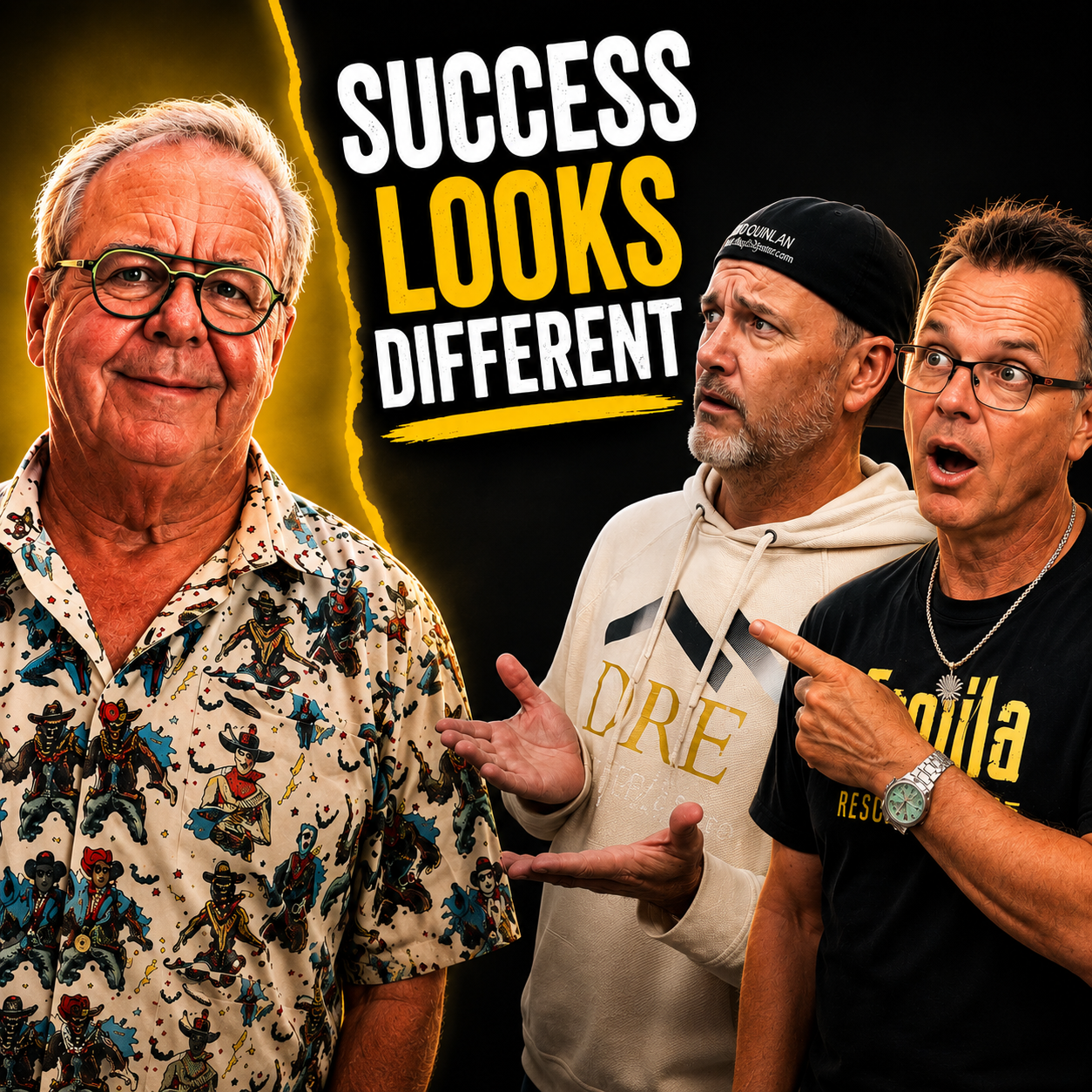
[00:00:20] Speaker A: Oh, my name is Christopher Jones. I'm a plastic surgeon in Indianapolis.
[00:00:24] Speaker B: All right. And now, truth be told, this is the first time we have met Dr. Jones. True. And one thing, because he is the plastic surgeon where my daughter works. And so Alex has told us all about Dr. Jones, and we've seen some social media, and every time I see you on. On the Instagram, you've got some crazy shirt on.
And so I was like. I figured there was a good chance you were coming with something wild tonight, and so here we are.
[00:00:50] Speaker C: You were kind of just normal Hawaiian.
[00:00:52] Speaker B: I don't really own anything too wild, to be quite honest. I don't.
[00:00:55] Speaker A: I would like to see you in a black light. I bet you that would be intense.
[00:00:58] Speaker B: Probably would be.
[00:00:59] Speaker C: I want to see the stains.
[00:01:03] Speaker B: Well, Dr. Jones, thank you for being here. It's a pleasure to meet you.
You had some. Some soda on your way here and said you didn't want to have to stop halfway through the show.
[00:01:14] Speaker A: So you are beverage free.
[00:01:16] Speaker B: However we are drinking beverages. Brad.
[00:01:19] Speaker A: Yayo. Yayo.
[00:01:21] Speaker C: Yeah, it's a special.
A special single barrel anejo, one of their first on Yejos, so I figured
[00:01:27] Speaker A: I would have it tonight on the show.
[00:01:28] Speaker B: And Chris noticed that there's Betty Boop on the side. Why?
[00:01:33] Speaker C: Liz? That's her avatar.
[00:01:35] Speaker B: That's right.
[00:01:35] Speaker C: So she.
This is one of the single barrels that she helped pick this with Kenny, which is a. Kenny's is actually a store in Georgia. So she was the person that helped put this single barrel together.
[00:01:47] Speaker B: All right, cool.
[00:01:48] Speaker A: Is ano aged?
[00:01:49] Speaker B: Is that what that.
[00:01:50] Speaker C: Yeah, this is aged for more than a year, but less than three years.
[00:01:55] Speaker B: The longest of those extra. Oh, I apologize.
[00:01:58] Speaker C: More than a year still an on you. More than a year.
[00:02:01] Speaker A: Less than or.
Oh, goodness.
[00:02:05] Speaker B: Three.
[00:02:06] Speaker C: Three years.
[00:02:06] Speaker B: Yeah.
I'm not a big tequila guy, though. Brad has been trying for two years to get me to come over to his side of the bar.
I have Anejo would be my tequila of choice.
So there you go. Yeah.
[00:02:21] Speaker A: A year to three years.
[00:02:23] Speaker C: Anything more than three years is extra.
[00:02:25] Speaker B: And I am rocking Avalanche Amber ale from Breckenridge Brewery. This one from Jolla Wine. And you know, I like amber ales It's. It's rather dark, though.
[00:02:36] Speaker C: This is a dark amber ale.
[00:02:38] Speaker B: So there you go. All right, bro. Well, cheers to you.
[00:02:41] Speaker A: I normally drink iced tea, and if it's aged more than a day, it's poor, horrible.
It has to be French.
[00:02:46] Speaker B: How about sweet tea? No, just straight iced tea.
[00:02:49] Speaker A: Plain old. Plain old.
[00:02:50] Speaker B: All right.
[00:02:51] Speaker C: I drink a lot of tea kilo.
That's about it for me. It's tea kilo.
[00:02:56] Speaker B: Yeah. All right. Well, Dr. Jones, you say you're a plastic surgeon, and here in Indianapolis you own a practice?
[00:03:03] Speaker A: Yes, that's correct.
[00:03:05] Speaker B: Okay. Which is what?
[00:03:07] Speaker A: I'm in private practice, which is getting a little bit more and more rare as hospitals and big corporations acquire practices and put everybody on salary. But me and my gals decided we're going to stay independent as long as we can. And I. Yeah, I'm getting to the age where I think I'll make it without having to be employed somewhere. I think I'll make it.
[00:03:26] Speaker B: That's good.
[00:03:27] Speaker A: I have specialized over the years. I started out doing reconstructive microsurgery. That's transplanting tissue from one part of the body to the other to heal gigantic defects caused by trauma, injuries, cancer, removals.
I trained my last year at Sloan Kettering Cancer center, and that's where I learned microsurgery, which is the ability to transplant a piece of tissue based on tiny little blood vessels which you hook back up to other blood vessels in the body under the microscope, with stitches about a quarter of the diameter of human hair. So you have to learn very, very small surgery.
And I came back to Indianapolis. At that time, there were no microsurgeons. I was the first one. And I thought, I'm going to pick a hospital. I'll pick the biggest trauma hospital, and I'll present myself and I'll be successful. And I got there and encountered politics and some other things that I wasn't aware of.
So that was my first shift I had to make from head and neck reconstruction, where I'd done at Sloan Kettering, to meeting re meeting. Everybody I trained with at IU that went into ortho was Ortho Indy.
And they welcomed me with open arms and said, we need you badly. So the first week I was back, I did three tissue transplants to the lower extremity of a race driver and two other people hurt.
We greatly bothered the anesthesiologist because all of a sudden we're doing 8 and 10 hour cases when they want to go home at 4.
But over time, I did about 750 tissue transplants and about 1800 breast reconstructions done the same way. Taking tummy tissue and transplanting it up, that's now pretty routinely done. At that time, it was pretty new.
As healthcare changed over the years, my wife at the time became a bariatric surgeon and started making little people out of big people. She was one of the first ones.
[00:05:20] Speaker C: That's fantastic.
[00:05:21] Speaker A: I think she's done something like 14,000 stomach stapling operations.
[00:05:26] Speaker C: Wow.
[00:05:26] Speaker A: She started the major programs at all the hospitals. She started at Winona, then she moved to St. Vincent Carmel. Then she went to Community North. She's the most gifted surgeon I've ever seen.
[00:05:36] Speaker C: Wow.
[00:05:36] Speaker A: Then she started sending me, in 1993 patients who had lost over a hundred pounds. Oh, before that, that was unheard of. I have some old medical books that says it's impossible to lose more than £100. Just impossible.
[00:05:48] Speaker C: Now it's just a shot away and.
[00:05:50] Speaker A: And hey.
And you don't even need surgery anymore.
[00:05:53] Speaker B: We've come a long way, but the skin's still there.
[00:05:55] Speaker A: She started sending me patients who had such profound excess skin. We had to reinvent the operations that a tummy tuck used to be. Oh, woe is me. My tummy ticks out an inch. And we had to re engineer that operation all the way around a person.
So I began accidentally to specialize in people who had lost a lot of weight. And I still find that probably one of the most rewarding things to do is to take a person who has a history.
They've somehow overcome it through major work. And believe Me, Bariatric Surgery, GLPs, or just do it yourself, any of that is a fundamental change in your head and your spirit and your valuing of yourself. And all of those go through that. It's so cool to be around. I'm down 39 pounds because I hang around those people all the time. Rubs off on you.
Now I gotta specialize in that.
[00:06:45] Speaker B: Now, Alex sent me a video that was on our local news several years ago about a gentleman who had lost 500 pounds, I think a massive amount. And he had a leg prosthetic, but he couldn't wear it because the skin that was now excess after losing all of his weight wouldn't work with being able to fit into a prosthetic leg.
That story that she sent was like, right before he was about to go in for surgery with you and have skin removed. But it seemed as if there were gonna be several surgeries there that he was gonna have to go through.
I Guess just kind of as a follow up. Have you stayed in touch with that guy? Like, how's he doing?
[00:07:27] Speaker A: Well, my doctor patient relationship ethics understands me. I can speak in generalities and I, I can't go into my relationship with him.
I think he would be okay if I said he was one of the coolest guys I ever met. He did seem like a cool dude. He. There were many other aspects about his life and we all tend to distill each other down to one thing, maybe to make it easy to remember him. But he was a lot of different things and had a lot of great stories himself.
[00:07:57] Speaker C: I didn't even think of how happy Buffalo Bill from Silence of the Lambs would have been if, if he would have met because it would have been a lot easier to get all that skin.
[00:08:07] Speaker B: I don't think he was a trained searcher.
[00:08:10] Speaker A: If Hollywood would use more plastic surgeons as consultants, they'd come up with way weirder stories.
[00:08:14] Speaker C: I'm sure they would.
[00:08:16] Speaker B: All right, so how long have you been a doctor?
[00:08:20] Speaker A: Let's see. I became an MD in 81.
I did a 12 year residency, General surgery, then plastic surgery, then hand surgery, then microsurgery. And I finally became an honest guy and got a job in 89 here in Indianapolis. So I've been doing it since then.
[00:08:38] Speaker C: So. So what year did you want to join NASA that way?
[00:08:43] Speaker A: Somebody told you something.
I went to medical school because I had heard that the University of Texas Southwestern specifically had kind of an in in the Texas system to NASA. And at that time with the new space shuttle, you could only go into space if you were military or you could be a doctor and be a mission specialist. And I thought, that's my chance. Because I think we humans need to be out there where we belong. This is our egg. This is not our home. This is our egg and we need to hatch.
And so I wanted to do whatever we could to get us out there living where we belong, where our destiny is. So I wanted to be a mission specialist if those. In those days I heard it was, it was between 10 and 100 to 1 to get in Southwestern.
And I got in, I, I didn't expect it, but I did. And so I thought, well, damn it, now I'm going.
When I got in there, the application for a mission specialist, I think I found out it was about 1 to 10,000. I didn't make that cut, not even close.
So I thought, oh, well, I'm, I'm here, I'll be a doctor.
[00:09:51] Speaker C: Well, Elon is doing the Good work to get us out there. Someday maybe it'll happen.
[00:09:55] Speaker A: We'll get there.
[00:09:55] Speaker B: They crashed something in the moon today.
[00:09:57] Speaker A: Yep.
[00:09:58] Speaker B: Curious how that came out.
[00:09:59] Speaker A: Because they were made a crater. I'm not. Yeah, legally we're allowed to make a new crater. I don't think we've studied that before. Legally.
[00:10:05] Speaker B: Yeah. I don't know.
[00:10:06] Speaker C: I don't know. I don't, I don't know if the moon judge is going to be able to do anything about it at this point in time.
[00:10:11] Speaker B: They cop and Alford.
[00:10:12] Speaker A: The Supreme Court guys have enough to do right now. They can't be talking about craters.
[00:10:16] Speaker C: Yeah, I guess Elon, if he has to cut a check for something, he'd be okay. Yeah, that's a good point.
[00:10:20] Speaker A: He could buy a crater.
[00:10:21] Speaker C: He could. Yeah. Maybe he just paid for the grater.
[00:10:23] Speaker B: I think he just did. I think SpaceX may have just bought that crater.
[00:10:27] Speaker C: That's why this Stock is down 13.
[00:10:31] Speaker B: So when you were little, Chris Jones, thinking about going to medical school, what kind of doctor did you want to be?
[00:10:38] Speaker A: I didn't want to be a doctor when I was little.
[00:10:39] Speaker B: Oh, okay.
[00:10:40] Speaker A: I wanted to design space colonies and be an astronautical engineer. Oh, all right. I was spaced when I was a little kid. I wasn't medical until I got into college and engineering. In the 70s, engineers were driving taxicabs with an engineering degree because of some defense cutoffs in the Vietnam War and all that. Engineers weren't having a good time just at the time I was supposed to choose my major. So I thought, okay, I'll go into medicine.
I went into medicine for all the wrong reasons. I went into it because it was doubtful you could get into Medical School.
A 3.8 grade point average was barely good enough.
[00:11:16] Speaker C: Wow.
[00:11:17] Speaker A: It was very competitive. So I went to pre med major because it was difficult and I, I. My immature ego wanted me, wanted to find out if I could do it. That's why I did it.
And then I got to medical school and I hated it. It was so horrible.
It was two years of intense science on steroids. We didn't have time to go to classes even. We just studied from the morning to the night. Morning to night, seven days a week was horrible.
[00:11:44] Speaker B: I see why you and Alex get along so well.
[00:11:47] Speaker A: Because she hated school.
It was. I got through it in there and I was not a distinguished student.
But then I got on my third year and as I briefly mentioned before, OB GYN was my first rotation at Parkland and we were now in the third year, supposed to touch patients. And that was frightening. You know, you make a mistake in class, you get a low score on a test, you make a mistake on a person. Oh, my God, I can't even think about that right.
So I was one of six on OB gyn and they said, today you will deliver babies. I thought, oh, can't you ease us into this?
[00:12:23] Speaker C: Can't you get me a pizza to
[00:12:24] Speaker A: bring in or something?
Show me someone naked before you make me take a baby out of them.
That was fast. The nurse day. And they said, by the way, who here speaks Spanish? And I raised my hand. I'd had Spanish in high school and college, and I lived in Dallas. You had to speak a little.
So I raised my hand. They said, jonesy, you got all the Mexican girls. They're over there. Get with Bonnie, the nurse.
[00:12:43] Speaker B: She speaks a little too.
[00:12:45] Speaker A: And from that point on, I was the Spanish speaking girls. City County Hospital, obstetrician. Oh, boy. And I had lots of babies. I was really busy. And I learned for the first time I went to medical school for the wrong reason. Because it was just difficult and my ego couldn't deal with that. I wanted to see if I could do it or not. I decided at that point, I'm going to stay in medical school for the right reason. Because those little Mexican gals new in this country, not speaking English would grab me by the coat and say, please don't leave me. Don't let me go. Because I was the only one that could speak with them and reassure them that it would be okay. And they'd say, you have to deliver my baby. I'd say, yeah, you're right, you're right.
[00:13:27] Speaker C: They're not.
[00:13:28] Speaker A: I'm not even a doctor yet. I didn't say that medical students.
[00:13:31] Speaker B: You had the coat on. You were good.
[00:13:33] Speaker A: But that was seminal in my development.
Just to learn that I could be essential to someone. And believe it or not, I had not considered that before going to medicine.
[00:13:43] Speaker C: No kidding.
[00:13:44] Speaker A: It didn't occur to me.
[00:13:45] Speaker C: Wow.
[00:13:45] Speaker A: I just went because it was interesting and difficult and it took till the third year before I thought, wow, I can be abuse. Yeah, I hadn't thought of that.
[00:13:54] Speaker C: And that's where the human part of it all came together.
[00:13:57] Speaker A: I think it taught me to start learning, to develop myself. I think all of us doctors start out autistic spectrum.
I think maybe we even have to be autistic spectrum just to put up with all that.
But I don't think we have to stay that way. And so I started kind of trying to develop my listening skills and my empathy skills, my humor skills, all those other things that you have to have to get a date as a result, later on I was able to get dates for the first time.
[00:14:28] Speaker C: There you go.
[00:14:28] Speaker A: Works for that.
[00:14:29] Speaker C: But it also helps being a doctor.
It never hurt me.
[00:14:32] Speaker B: It doesn't hurt. So how long were you then OB in Texas?
[00:14:37] Speaker A: That was just my rotation student. I went off that two months later. But by then it had not eased me into it. It's. It had thrown me into the lake and I had to learn to swim.
So the other rotations after that, I went from being an unremarkable first and second year student, I think, to being an above average clinical third and fourth year student.
[00:15:01] Speaker C: But you found a reason why.
[00:15:02] Speaker A: Yeah, and I've.
[00:15:04] Speaker C: I've always said there's the. Just the right amount of autism and ADD will make you successful. Those are two superpowers. Just right amount.
[00:15:11] Speaker B: There you go.
So after Texas, did you then move back to Indiana or did you go somewhere else first?
[00:15:16] Speaker A: I did my medical school in Texas. And then at those times in those days, they had a delta pass. You could spend like $300 for a whole month to fly anywhere in the United States you wanted to as many times as you wanted to, as long as you didn't retrace your steps. Why that was the rule, I don't know. But I arranged for 18 interviews from Harvard to University of San Francisco, all over the country. I just interviewed everywhere I could that would take me. And. And there were three places that had a city county hospital, a tertiary referral university hospital, a VA and a children's hospital all in the same campus. There were only three places that I interviewed, and that was Salt Lake City, Emory in Atlanta and Indiana. In Salt Lake City, I was single and I thought, how Salt Lake gonna go?
I don't know if I want to convert or not.
And then in Atlanta, I was given a police escort from the parking garage to the hospital.
[00:16:15] Speaker C: Yeah.
[00:16:16] Speaker A: Because of what was going on downtown.
I don't know if I like that either.
[00:16:20] Speaker B: Right.
[00:16:20] Speaker A: And Indiana looked at that time, it was 19, 1981. I saw a restaurant along Crawfordsville Road that said Rabbit Today.
And both Rabbit and today were misspelled her, which I thought, this is not the most advanced city. It's kind of boring.
But I'll go back to Dallas as soon as I finish my residency so I can. I can survive here. And so I did. I didn't realize there is a great tendency for you to go. To live and go into practice in those days, at least in the last major place you train because that's where you make all your relationships with other. Other student doctors, other nurses. My rep was made here. I stayed here. No kidding.
[00:17:03] Speaker C: So which hospital did you work at when you first came to Indy?
[00:17:06] Speaker A: Methodist.
[00:17:07] Speaker C: At Methodist.
[00:17:08] Speaker A: There I got to know Hank Bach and Terry Tramell and I got to work on all the race drivers as a result.
[00:17:15] Speaker C: All the.
[00:17:15] Speaker A: All the indigent people and all the regular people that would come in with similar injuries from car accidents, we had them covered, too. It worked out.
[00:17:22] Speaker B: Right?
[00:17:22] Speaker A: Are.
[00:17:23] Speaker B: Are you allowed to say any of the RA car drivers you worked on?
[00:17:26] Speaker A: I don't think so. Okay. But you'd recognize them. They were, at least back then. I think some of those names are still recognizable.
[00:17:32] Speaker C: But yeah, Doc Tramell is friends of a good friend of mine and Dr. Bach, my really good friend and my current doctor was his right hand person at the Annapolis Motor Speedway. Chris Tracy.
[00:17:44] Speaker A: Yeah. So I think you may have already proven that point on your show that if you just talk, you'll find there's connections everywhere.
[00:17:52] Speaker C: Oh, yeah.
[00:17:52] Speaker A: Crazy.
[00:17:53] Speaker C: You would think. People say six degrees of separation was the thing, but I think social media has made that more like three.
[00:17:59] Speaker B: Turn that down.
[00:18:00] Speaker C: If you like to meet people and talk to people, I think this is tighter and tighter. Yeah.
[00:18:05] Speaker A: That's awesome.
[00:18:06] Speaker B: Yeah. You obviously have done some fascinating things in your careers. Anything stand out? Any, I don't know, cool procedures or just like, things you look at and go, holy, I can't believe I did that.
[00:18:16] Speaker A: The one I like to tell the most is a time I had one of my first major, major weight loss patients who had lost over 200 pounds under my wife Rosie's care. Rosie Jones.
And she sent Kathy to me. And Kathy was a triple wedding cake, layered abdomen, everything hanging down. And she was only, I think, 31 years old.
[00:18:42] Speaker B: Wow.
[00:18:43] Speaker A: And we started on a journey together where we fixed her tummy and fixed her chest and fixed her arms and all that.
At the end of that, she said, I have a difficult question to ask you.
My father died 10 years ago.
He never got to see me lose all my weight.
I had never been on a date, never had a boyfriend. I've been £400 ever since I was 15 years old.
[00:19:14] Speaker C: Wow.
[00:19:14] Speaker A: And thanks to you, now I have a boyfriend.
And, well, I'm in love. And he's asked me to marry him. Will you give me away?
[00:19:23] Speaker C: Wow.
[00:19:24] Speaker A: Wow. So if you said, what's the coolest thing you've ever done in medicine? I'D say it's the two times now I've given one of my gals away at her wedding.
[00:19:32] Speaker C: That's very cool.
[00:19:33] Speaker B: Wow.
[00:19:34] Speaker A: Yeah.
[00:19:35] Speaker B: That's so cool.
[00:19:35] Speaker C: So, so again, chills.
[00:19:37] Speaker B: That's great.
[00:19:37] Speaker C: Came into this to, to battle your own ego and then became such a pivotal point in people's lives. It's. It's more about how it's touched people's lives. That's. That's pretty awesome.
[00:19:48] Speaker B: That's amazing.
[00:19:49] Speaker A: Turned my focus outward instead of toward what I needed.
[00:19:53] Speaker C: Yeah.
So when I think plastic surgery, I think boobs and butts, right?
[00:19:58] Speaker B: Yep.
[00:19:59] Speaker C: That's. That's what you grow up thinking. And I, I didn't guys. Yeah.
[00:20:02] Speaker A: Well, I did a mor.
[00:20:03] Speaker C: I did a mortgage for a, a resident that was at Wishard Hospital.
[00:20:07] Speaker B: Uhuh.
[00:20:08] Speaker C: And he bought a house here in Indianapolis and he was finishing his residency and he was doing his fellowship and then he's like, I'm moving to Miami, I'm opening a practice and I'm going
[00:20:15] Speaker A: to build boobs and butts the rest of my life.
[00:20:17] Speaker C: And the last time I talked to him was about eight or nine years ago and he's doing very well doing that in Miami. So that you've brought this other piece of plastic surgery to, to, to remove. Just that that's what people think of and that there's so much more of that. And you know, he was working in Wisher, you know, in the ER and he was fixing people that were injured, you know, doing what you're talking about doing, you know, fixing someone's wounds and gunshots and things like that. And so it was funny that that's what his whole, you know, thing was. When I'm. When I'm done here, I'm going to do that.
[00:20:50] Speaker B: Yeah.
[00:20:51] Speaker C: And he was very money focused and that was where his drive was to see somebody that not that way and been more focused on how to help other people. It's really.
[00:21:00] Speaker A: A few years ago I was greatly tempted by this website that said, would you like to know as a physician how your income compares to every other physician in Your specialty within 300 miles? No, I don't put your specialty in. And your zip code.
[00:21:17] Speaker C: Yeah.
[00:21:17] Speaker A: And I didn't do it for the longest time because I thought why would I do. Why?
[00:21:20] Speaker C: Right.
[00:21:21] Speaker A: Why do I care?
[00:21:22] Speaker C: Right.
[00:21:22] Speaker A: What does that matter? And in a day of weakness one
[00:21:25] Speaker B: time, too many teeth, I went ahead.
[00:21:27] Speaker A: Nothing to do.
I went ahead and did that and a bell curve came out with all the plastic surgeons in 300 miles. And I was Dead bottom.
[00:21:37] Speaker C: Wow.
[00:21:38] Speaker A: I was the lowest annual income of anybody on that list, and it made me feel a little bit inferior. And I went to my office manager and I said, you know how I've been wanting to give a series of lectures to whoever will listen. Medical students at IU maybe, on all the stuff they don't teach you in medical school. How to read a lease, how to go to a bank, how to ask for a loan, how to talk to
[00:22:00] Speaker C: a mortgage person, how to think about
[00:22:02] Speaker A: square footage and how to get certification for your office. So all the stuff that you don't learn in medical school, I've now had to learn twice in my career by experience. And I would like. But since I did that survey and it said I make the least money of anybody, I don't feel qualified as a business person to give that lecture anymore.
And my office manager at the time, Brittany, said, well, if I had ever known you to judge the value of your practice by how much money you make, that is news to me. And I've known you eight years.
I think that you judge the value of your practice by how happy your patients are, how happy your office staff is, and, oh, my God, I hope how happy you are.
[00:22:44] Speaker C: Right.
[00:22:44] Speaker A: By those three standards, I would put you at the other. Into the bell curve.
[00:22:49] Speaker C: Totally.
[00:22:50] Speaker A: And that. That brought me back to reality.
[00:22:52] Speaker C: Yeah. Having patients that have asked you to walk them down the aisle and give them away. I mean, that's.
[00:22:58] Speaker A: And does a plastic surgeon who makes the least of any plastic surgeon in the state do okay?
I pay my bills.
[00:23:05] Speaker C: Yeah.
[00:23:07] Speaker B: You have an interesting wristband there. That.
Is that a watch?
[00:23:14] Speaker A: Know, for years, my patients accused me of being an artist. Oh. And I thought, honey, you don't understand. I'm a scientist. I had. We don't understand the amount of biochemistry and immunology, all this. My head was stuck full. I'm a scientist. I don't know what you mean. This artist thing.
And I wasn't really being fair with them or myself.
And one day I decided as part of my maybe midlife crisis, maybe I'll just see. I'll sign up for an art class at the Indianapolis Art Center. But since I'm not an artist, I'll sign up for something safe, like jewelry making, because I'm good with my hands. Yeah. And I've collected rocks all my life, ever since I was a little kid. Maybe I'll take some of those rocks and make jewelry out. So I signed up for this jewelry class and this little old artsy fartsy lady that was a teacher.
I'm working on one of my first projects and it's not going according to my plan and I'm wanting to toss it or melt it down or something. And she said, well, perhaps if you'd use the rest of the class tonight, the remaining two hours to pursue the direction the piece appears to be heading rather than trying to make it conform to your own plans. Maybe you're asking too much of the piece. And I thought, lady, that is the.
Where did that gibberish come from?
But you know, I've always tried to be teacher's pet. I've always tried to be a good teacher, be a good student and stand out. So I thought I have to do it. So I did it. And it's still one of my best things I've ever made.
[00:24:41] Speaker C: That's awesome.
[00:24:42] Speaker A: Because I learned to collab. They call it collaboration with the medium.
[00:24:46] Speaker B: That metal that's a nerdy art will
[00:24:49] Speaker A: only go a certain way. And when I laminate metal, this is called mokume gane. It's 22 layers of silver and copper. Knife makers make it sometimes. I decided to adapt it into jewelry and others have to you it'll only do certain things. And then I realized, wait a minute. In my practice, skin only does certain things. I can't make it do what it won't do.
I already knew this lesson, but somehow Marilyn Smith, this little teacher, retaught it to me. In this art class, I am closer to what I do than farther away.
And I kept taking art classes at the art center.
I took drawing and found that I can draw anything I want.
And the teacher said, it's not about talent. Talent's kind of overrated. It's about desire and working at it. No one is a wonderful world class tennis player until they take tennis lessons. Drawings the same way.
[00:25:42] Speaker C: Wow, that's. That's a nugget. That's one of those bell ringing There it is.
[00:25:47] Speaker B: Great nugget.
So Alex has also told me you like to collect movie memorabilia. Which really hits home for me because I. I'm a big movie guy. So what are some of the cool things you have?
[00:26:03] Speaker A: Well, the one that every guy that visits when I have it, if I find out guys are going to visit, I go the bank and get it out of the safe deposit box. It's a lightsaber used by Obi Wan Kenobi in the movie the Phantom Menace.
I believe it's the one that spun across the floor of the cave when he was battling General Grievous.
[00:26:26] Speaker B: All Right.
[00:26:26] Speaker A: And it had to be a close up. So this one's made really well. Some of the lightsaber props are just a piece of painted wood with a wire coming out of it so they could do post production, like themes.
Those were regal.
[00:26:38] Speaker B: They're not. They are nowadays, but not that.
[00:26:41] Speaker A: This one is beautiful looking. And I decided I was going to take it in my carry on luggage out of lax, where I bought, bought it in Melrose in la, off the wall.
And it goes through security and it stops.
[00:26:55] Speaker C: Wait, you have a lightsaber?
[00:26:57] Speaker A: Their eyes bugged out and they said, you can't take that through here. It's on the list, doesn't do anything. I said, what list? And they called the head guy over there, he said, no, a lightsaber definitely on the list. You cannot take this through here.
And he said the list.
Sword, knife, gun, lightsaber.
We can't allow that on a plane. And I said, it's just a machined piece of aluminum with some brass fittings.
I was worried they were going to drop it on the floor.
And he's looking at it and he takes the button and puts, puts it up to his eye.
What comes out of here? A laser beam?
[00:27:38] Speaker C: A sword.
[00:27:38] Speaker B: What is that?
[00:27:39] Speaker A: He's pressing the button. I wanted to say, how do you test revolvers?
So finally I, I just, I just opened up and said, look, I just bought this. It's worth way more than the luggage liability that you allow on the checked bag. So I can't check it, Right. It's too late to ship it.
My plane leaves in 40 minutes.
Exactly. What do you want me to do?
And he said, did you say this was Obi Wan Kenobi's? And I said, yes. And he said, okay, you can take it too.
[00:28:11] Speaker C: Well, thanks, Reese. He didn't ask you to promise not to use it on the plane.
[00:28:15] Speaker A: I had accidentally if I had bought Darth Maul's lightsaber.
Thank God.
[00:28:22] Speaker B: I'm also told ray guts from.
[00:28:26] Speaker A: Is it Star Trek?
I think I have Star Trek. It was a, it was Mars Attacks. I have one from Mars Attacks. And then I just, I just got into ray guns. And so I, I had a gun maker in Louisville, Kentucky who custom makes guns. I said, could you make me a ray gun? And he said, well, I could if there was such a thing.
[00:28:48] Speaker C: Right? Yeah.
[00:28:49] Speaker A: I said, no, I mean, we'll keep it with your lightsaber. Make something that looks like a ray gun. And so he made me this exquisite, machined, beautiful weapon that he called a disintegrator ray. And he actually started making some of them.
[00:29:01] Speaker C: No kidding.
[00:29:02] Speaker A: And then I said, I want you to make me another one, but I want it to be slightly different because I want to make a dueling set from the future that maybe appears in a red phone booth.
And I grabbed the little suitcase with the two guns, and I look around, and the phone booth's gone, but I kept the guns. So that's my story.
[00:29:19] Speaker C: That's awesome.
[00:29:21] Speaker B: That's fantastic.
[00:29:23] Speaker C: So do you. Are you a movie buff, too? Do you watch a lot of movies?
[00:29:26] Speaker A: I don't watch a lot of current movies. I watched movies all through my youth, but somehow I think the attention span of all of us has changed.
[00:29:35] Speaker B: I'd say so.
[00:29:36] Speaker C: The new movies are all carp.
[00:29:39] Speaker A: When I watch old movies that I love, I try to get a little objective and say, what's different from this movie? And what's different is old movies.
It took a long time to develop. It took two hours to develop a plot to come to a climax. And in the movie, absolutely now there have to be 80 car crashes along the way.
[00:29:56] Speaker C: Yeah.
[00:29:56] Speaker A: And so I'm not a big.
My dad. My late dad, the film professor, would correct me on this, actually. I need to change what I said about that. I. There are modern films that are every bit as breathtakingly great as old films. It's just.
It's an artifact of memory that I only remember the good films and I don't remember the schlock that came out that same year. So dad, say 1939, gone with the Wind, wizard of Oz, but. And he'd name these other films that I never heard of. Those were all horrible.
[00:30:29] Speaker C: Right?
[00:30:29] Speaker A: You don't remember those. Yeah, they only remember the good ones.
[00:30:32] Speaker B: You know, there's a interesting story recently from Matt Damon and Ben Affleck, and they talked about how making movies today is so different that essentially, like, they have to re.
Introduce the plot, like, eight times throughout a movie because attention spans of people are so short that they basically have to keep going back, which, you know, makes it very different than how they
[00:30:54] Speaker A: have to work storylines.
[00:30:57] Speaker C: The movies here are so weird that you go, what was that about those? That happens a lot, too, so.
[00:31:04] Speaker B: Absolutely.
[00:31:05] Speaker A: Although I can think of a couple of movies. They're nearly my favorites. They're kind of cult films, and I still don't know what they're about. Oh, there's a movie called Eraserhead. Oh, I've heard of Eraserhead.
[00:31:15] Speaker C: Eraserhead.
[00:31:16] Speaker A: It is disturbing. It is not a horror movie. It is not gory. It is just so disturbing. The sounds and the sights you see and you can't figure it out. And you just leave that movie with an unsettled feeling. And it's good luck getting to sleep that night.
[00:31:31] Speaker C: I'm gonna put that on my list to not bring on the plane.
[00:31:37] Speaker B: All right. So movie memorabilia, collection.
You have a pretty nice car collection.
[00:31:44] Speaker A: Tiny compared to all those YouTube people.
[00:31:47] Speaker C: Yeah. Isn't it weird to be 20 years old and make 30 million a year off YouTube?
[00:31:54] Speaker B: Not so bad.
[00:31:55] Speaker A: I mean, you're planning on doing toenail cutting on only fans I'm gonna see.
I think I could. I think I could do okay.
[00:32:03] Speaker B: You do all right.
You drove here in a pretty nice car today, and I know you took my daughter for a ride in that car. She had a really good time speeding around 465 in your car is.
[00:32:16] Speaker A: We didn't exceed the speed limit.
All right, all right.
[00:32:20] Speaker B: So the speed limit, is it fast cars. You're into sports cars? Are into any of the above.
[00:32:27] Speaker A: I was not a car person until about two years ago, and I don't exactly know what happened to me.
I had kidney cancer twice. Once on one side, was told, that's kind of a curable cancer. If you're going to get cancer, that's not a bad one to get. Then five years later, I'm there for my last CAT scan, and it shows up on the other side.
[00:32:46] Speaker B: Ah.
[00:32:47] Speaker A: So then I had another operation. So I'm living on two halves of two kidneys.
[00:32:51] Speaker C: All right.
[00:32:52] Speaker A: And I'm doing fine.
So I'm. I'm nine years out and four years out, I'd say, okay.
But that did something to me. Like a lot of people faced with an injury and illness, a lot of my patients will say, my attitude about life, my everything, my day is different because of once upon a time a threat to me.
So it kind of shakes your bag up and. And re. Rolls the dice and reprioritizes things. So I don't know if that's what was happening, but I decided I have been conservative and I have saved my money all my life.
Why can I not have an Aston Martin?
So I had no answer for me to that except, go ahead and give them.
[00:33:33] Speaker C: And neither did the sales guy.
You should.
[00:33:35] Speaker A: And my financial guy had.
[00:33:37] Speaker B: He opened the door because a few
[00:33:39] Speaker A: years before that he said, I was thinking of getting a new car. And he said, it's going to be worth half what you pay for it the day afterwards.
Don't you realize you can get a way Better used car than a new one.
And I think he was just trying to tell me don't buy a new car. But what I heard from him is, oh, so I could get a used Aston Martin. Exactly, yeah. And so I did and it was wonderful. And I thought this will cure me of whatever my old dude midlife crisis.
Buy a car to substitute for your waning sexuality or whatever it is we do that for.
[00:34:16] Speaker B: Didn't do that
[00:34:18] Speaker A: and it made it worse.
So then I bought a McLaren and it's a 650s and it is wonderful and it's fun to drive. It's mid engine, so it thrusts you the driver.
It's like you're on a skateboard. You can see everything and it's extremely maneuverable. And it also happens to be 600 and some horsepower.
So that's supposed to cure me, but that didn't cure me?
[00:34:45] Speaker B: No.
[00:34:46] Speaker A: So I'm getting ready to put money down. I think they're going to let me do this on a. I'll have to pronounce it correctly, Don.
It's a. It's a Dutch supercar.
[00:34:57] Speaker C: Oh.
[00:34:58] Speaker A: The company's been in existence since 1978.
They made originally cars that look like kid cars, but they were extremely overpowered and extremely lightweight. And to this day they're most. They're. The P24 is their new model. They're just making 150 of them and it's extremely lightweight. It's 1700 pounds and it's 600 horsepower. It uses the Ford GT engine and I don't know, I fell in love with it. I saw it on YouTube, shmee150, reviewed it and some other people did. And I'm about to buy a car that I've never touched, never driven.
[00:35:34] Speaker B: Sure, why not?
[00:35:36] Speaker A: I think at my age, maybe I've allowed myself to be a little crazy.
Nobody down. It's going to take them two years to get it to me.
[00:35:45] Speaker C: No kidding.
[00:35:45] Speaker A: So I have to look it up. I'm going to try to get a picture of it to put on my wall and look at it for two years.
[00:35:51] Speaker C: There you go.
[00:35:51] Speaker A: That's all I can do.
[00:35:52] Speaker C: You can drive something else while you're waiting.
[00:35:54] Speaker A: I'm probably going to sell the other two just to be able to afford this one. There you go. That's what those YouTube people do. They get rid of cars. They get more news.
[00:36:01] Speaker B: Yeah, yeah. That's what Dave does.
[00:36:03] Speaker C: That's what Dave does. Yeah. We'll hook you up with Dave. He'll help you find Whatever you want and sell whatever you need. So cool.
[00:36:08] Speaker A: That's awesome.
[00:36:09] Speaker B: What else you got, buddy?
[00:36:11] Speaker C: I'm just impressed. Like I'm. I'm a dumb guy from school who never thought he could be a doctor doing any things that you've done. And it's just impressive to the way you went into school and how you learned how it can help other people. And then a focus on your business has been sharing and helping people. That's just. I think it's awesome.
[00:36:34] Speaker A: So I have a grand plan for when the aliens land. Okay. They decide to make slaves out of the thinnest of us and food out of the fattest of us. Okay.
[00:36:43] Speaker C: Wait a minute. Okay. Okay. I was think so do I need to stop running and come back to eating?
[00:36:49] Speaker A: Be the merchant who sells them. Liposuction, aspirate. Ah, there you go.
[00:36:54] Speaker B: There it is.
[00:36:55] Speaker A: Because I think they'll want to eat us anyway. So I'm just going to sell them the gravy.
[00:36:58] Speaker C: How many years you think that's going to be? I want to know how many years I have left.
[00:37:03] Speaker A: 5, 10. 5, 10. All the weird UFO stuff that's coming out of the water and stuff, it's gotta. They've gotta expose themselves at some point.
[00:37:10] Speaker B: You would think so.
[00:37:11] Speaker C: Yeah.
[00:37:12] Speaker B: I've been.
[00:37:12] Speaker C: So I listen to all kinds of different things that go into all of this whole thing about the world. So there's one that I listen to that tells me that we're living totally in a simulation.
[00:37:21] Speaker A: Yep.
[00:37:21] Speaker C: And then when you're dreaming, you may actually be in the real world. And when you wake up, you may be in the simulation.
[00:37:27] Speaker A: Oh boy.
[00:37:28] Speaker C: That's one thing that I've read.
[00:37:30] Speaker A: Holographic theory is another one.
[00:37:32] Speaker C: Yeah, I've heard a little bit about that. Don't.
[00:37:34] Speaker A: I don't as much that if you, if you think of a hologram. A hologram in two dimensions has all the information you need to assemble in your head. A three dimensional picture. So when you look at a hologram you are seeing three dimensions in your head. But there's only two dimensions. All the information necessary. Therefore we could be in a universe that our three dimensions is just the coding for an actual 4, 5, 8, 12 dimensional universe that we cannot appreciate because we're three dimensional people. Huh.
[00:38:07] Speaker B: Well, that's fascinating.
Yeah. All right. You guys, you guys could talk.
[00:38:11] Speaker C: There's like a whole thing. Like there's so many of these different chances of how the world could be. We, we talked about the if. Was it the neuron that looks just like the universe. And the. The neuron could be just.
[00:38:25] Speaker A: And most of another universe. Most quantum physical principles. And quantum physics is what makes TVs work and what makes electric motors work. So we know quantum physics is real.
And most of the fundamental equations with quantum physics, physics, if you trace them down, they require way more than three dimensions to be functional.
So there's some evidence already that there's something going on there with other dimensions. Huh.
[00:38:47] Speaker B: I'm just going to continue to be.
[00:38:50] Speaker A: I'm not even looking into this.
[00:38:51] Speaker C: There's so many different things.
And know that there's lots of people that supposedly have been beamed up and dropped back down that have stories about what happened.
Who's to say it's not?
I mean, who's to say out of all of these millions of planets, we're the only one dancing around thinking control?
[00:39:09] Speaker B: Hilarious. This is the third episode in a row down this. Down this rabbit hole of aliens. And we're not going get back into the pyramids.
[00:39:17] Speaker C: But how do you think the pyramids were made?
[00:39:19] Speaker B: I guess we are.
[00:39:20] Speaker A: Well, I took an art history course because I was forced to as a freshman in college. And I resented it because I thought, well, I know what art is and I love what good and bad is. What's this lady gonna teach? And she opened up my mind. I ended up minoring in art history.
[00:39:33] Speaker B: Wow.
[00:39:33] Speaker A: And that may be what helped get me into medical school because I just went on and kept taking art history. It was fascinating. And she had elaborate diagrams of how you could make a pyramid. Okay. And it was. It was not mysterious. It meant you had to have a lot of manpower and a lot of years.
[00:39:52] Speaker C: Yeah.
[00:39:52] Speaker A: And what humans can do with a lot of humans and a lot of years is just about anything. Okay. And she showed how you build ramps around the outside.
And you just pull this stone. It could be an inch a month. Who cares? We got time. And just bingo.
[00:40:04] Speaker B: Anywhere.
[00:40:05] Speaker A: Just no more slaves. And then you start facing it from the top down in reverse course. So there ought to be a ramp inside the pyramid, which they found structures that look like, oh, there's a piece of the ramp. It's still that they covered over.
[00:40:16] Speaker C: And way deeper too. They found that they go way deeper than what they saw.
[00:40:20] Speaker A: I don't think.
I don't really see a reason to indict unforeseen forces in pyramids.
[00:40:31] Speaker B: No.
[00:40:31] Speaker A: Alien buildings.
[00:40:32] Speaker C: Never know.
[00:40:33] Speaker A: Yeah.
[00:40:33] Speaker B: That's awesome.
All right, so if you were, I don't know, speaking to a room full of 20 somethings, maybe late teens, who are thinking about, I want to go to medical school or I want to
[00:40:47] Speaker A: go to college, whatever.
[00:40:48] Speaker B: What advice would you give to maybe the younger generation about I don't know, how to be a successful contributor to society?
[00:40:57] Speaker A: Well, I gave a. I gave a lecture at Butler University on the changing cultural standards of beauty.
And it was in a sociology class. So if you're going to give a lecture, you might as well prepare. And a good teacher learns a whole lot by preparing a certain subject. Way more than I thought I knew before.
So the thing I ended the lecture with, that I wanted to inspire the students because at their age, I remember how I was back then, my head was so stuck, full of knowledge, facts and stuff and studying, and felt like my head would explode. It also left no room for me to think that there's something else out there for me to contribute to because I've absorbed everything.
[00:41:34] Speaker B: And brain was.
[00:41:35] Speaker A: Maybe history is at an end and we've thought up everything that's to be thought up and we've invented everything. I kind of knew intellectually that wasn't true, but I just felt that way. So I wanted to give them a counter to that. And so I told them about Frank Lynn Meshberger, a retired OB GYN from Anderson, Indiana. He retires in 90 and goes to Rome and visits the Sistine Chapel. And he looks up what we've all, most of us looked up at, either through pictures or movies or in person. He looks up and he sees something that no one had seen for 550 years, since Michelangelo put it there as a joke, a commentary to Pope Justin ii. They, you could tell they didn't get along real well.
And what it is, is we all pay attention to God and Adam's fingers coming, his beautiful hands. He looks over at the image of God and everything else is kind of free.
God is in this hard shell.
And then he looked at the bottom of the hard shell with this stuff trailing off the bottom of God and all these little angels. And he recognized the cranial nerves, the pons, the medulla, the cerebellum.
Michelangelo put a section of the human brain in the form of God to show us what God gave to man, the human mind.
[00:43:01] Speaker C: Hope.
[00:43:01] Speaker A: Justin didn't see it, thank God no one else saw it until an obgyn, Frank Meshberger, in 1990 sends a letter and some pictures off to the Journal of the American Medical association, saying, by the way, I was in Rome and I just saw this. And he superimposed Frank Netter's famous picture of the human brain onto that. And it's the exact.
[00:43:22] Speaker B: Wow.
[00:43:23] Speaker A: And no one at tune. So I encourage the students. If that's there, and it was there for 550 years, what else is out there under our noses that nobody has seen? And you may be the one to see it. So my main advice to you is keep your eyes and your ears and your mind open.
[00:43:38] Speaker C: Wow.
[00:43:39] Speaker A: How many skadillionaires have been invented in the last two years just because somebody had a really neat idea about something?
[00:43:46] Speaker C: Exactly. That is.
[00:43:48] Speaker B: That's awesome.
[00:43:48] Speaker C: That is awesome.
[00:43:49] Speaker B: That's a great story.
[00:43:50] Speaker A: That's a good nugget right there. I met him and interviewed him, and I got a signed reprint.
[00:43:55] Speaker C: That's pretty cool. And he was still in Anderson, Indiana.
[00:43:58] Speaker B: Is he still around?
[00:44:01] Speaker A: I checked in about 10 years ago, and I don't know if he's still around or not.
[00:44:05] Speaker B: All right, well, Dr. Jones, thank you so much for being on the show today.
Absolutely fascinating.
[00:44:10] Speaker C: Oh, it's amazing.
Great meeting you.
[00:44:12] Speaker A: This is my first one of these, so I'm flattered and honored to be here.
[00:44:15] Speaker C: You could make this a monthly meal if you wanted to.
[00:44:18] Speaker B: I'm sure you got stories for days, man. Exactly.
Thank you for watching the Indiana Success Happy Hour. We'll see you next time. Cheers. Cheers.