Episode Transcript
[00:00:03] Speaker A: And we're off.
[00:00:04] Speaker B: Hey, everybody.
[00:00:04] Speaker A: Welcome to Indiana Success happy hour once again. You'll notice I'm still Brian. He's still Brad.
[00:00:11] Speaker B: Yeah.
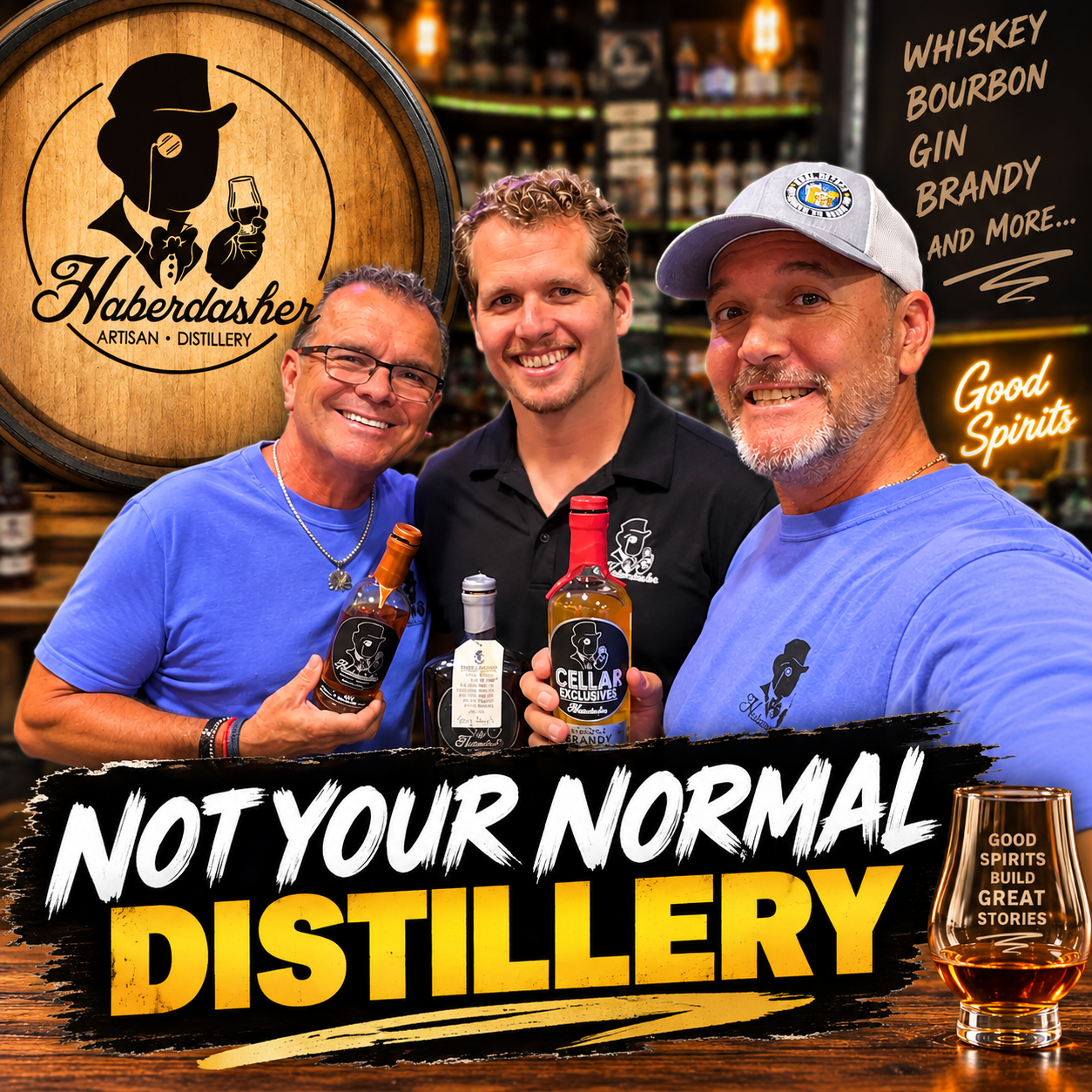
[00:00:11] Speaker A: But this guy here is a new face. Sir, tell the folks who you are. My name is Brooks Bemis. I'm the owner and distiller at Haberdasher Artisan Distillery in Franklin, Indiana. You'll notice
[00:00:23] Speaker B: your titties all the time.
[00:00:25] Speaker A: You'll notice we're wearing some haberdasher distillery gear, compliments of Brooks. Thanks so much.
[00:00:31] Speaker B: Thank you.
[00:00:32] Speaker A: All right, well, welcome to the show. The weird part about today is I'm not drinking a beer and you're not drinking a tequila. I'm going to do the best I
[00:00:42] Speaker B: can to not drink tequila.
[00:00:43] Speaker A: However, we are loaded with beverages. So before we get into the interview stuff, we're going to go through each
[00:00:51] Speaker B: of these drinks today.
[00:00:52] Speaker A: So what are we starting with, Brooks? So we're starting with. So we're an artisan distiller, so we produce. We distill everything at Haberdasher Distillery. This is our new mate. So this is what comes right off the still, people we found at the tasting room, which is in downtown Franklin, Open Wednesday through Saturday.
This is our new make. This is 100% rye. So all our new makes, all spirits come right off the still crystal clear, certainly all of ours. This is 100% rye. So all our new makes are the product of a single mash cook. So this is all. All rye. No corn, no barley. It's grassy, it's mellow, it's peppery. This is northern rye. So this is the rye grain used here is from the Dakotas and southern Canada. It's from one of the large grain elevators.
This is 58.3%, so that's kind of a hard one to start on. These guys are pros, though. So you'll be all right. I don't know.
[00:01:44] Speaker B: You should throw up. These guys.
[00:01:45] Speaker A: No, not these.
[00:01:46] Speaker B: Choked up on a 14 beer, easy.
[00:01:49] Speaker A: Well, cheers to you and to you. Thanks for. In here, Brooks. And there.
[00:01:54] Speaker B: Here we go.
[00:02:01] Speaker A: Burns more than a beer would.
[00:02:03] Speaker B: Got a nice sweetness to it. It does. You're right. Grassy. You're right.
Almost like a.
Like a hay.
[00:02:11] Speaker A: Yeah, absolutely.
[00:02:12] Speaker B: Very dry grass.
[00:02:13] Speaker A: Absolutely. Fancy surprise is one of those grains synonymous kind of with grass. And you think about a grass, a rye grain, it looks more like grass. It's closer to a grass, of course, than a corn. So rye, a lot of times we found it. It drinks nicer right off the still. And a lot of times we'll bottle our rye at a younger agent. So there's the pepper.
[00:02:34] Speaker B: I was looking. There it is.
[00:02:36] Speaker A: I got that earlier.
[00:02:37] Speaker B: I didn't on the first one.
[00:02:39] Speaker A: Pepper, for whatever reason, is something I noticed easily.
It really affects my throat.
[00:02:45] Speaker B: Fruit. It's really weird, but shoving a finger in there, sure.
[00:02:50] Speaker A: It's like shoving a finger in my throat.
All right, Brooks, so a little background here. So I met your wife at a Center Grove football game.
Recognized her as a former TV personality and a Senate Grove grad, which I'm not.
And she said I should interview you because, you know, you own this one wonderful company, and I certainly have heard of haberdasher, though I will admit I have not been there.
But she said we should have you on the show, and here we are.
So let's get a little background on you, like, where you from, what was your journey to kind of get to this. Yeah, right on. So I'm from Bartersville, Indiana. Went to Center Grove High School. Lauren and I, high school sweethearts. Oh, yes. Started dating my senior year, and I played football there for coach Eric Moore.
Played football in college, actually, at Franklin College. So she and I both went to Franklin College where she studied journalism and she was on WRTV. She was on the news for 10 years. She. She was an anchor for years before she finally left that industry. We have two little ones. They're seven and four now, but excellent news. Industry was tough with. With little ones. There's. There's really two hard schedules. You're either working into the. Into the night or you're working first thing in the morning, three or four in the morning. So.
So yeah, we live in kind of Bargainville, Greenwood area now, right by Center Grove High School. And we, we both kind of. Since after college, we. We kind of both got into spirits, got into whiskey, and we started putting on tastings for friends. And every time we would visit a brewery or distillery, we'd think, how cool would be to work at this place. How cool would it be to own a place like this? And luckily in Indiana, and I think it was 2012, we got the Indiana Artisan Distillers permit, which allows us to.
To produce up to a certain amount of spirits for a very small amount of money. It kind of cuts some of the red tape to where you can have an artisan distillery and sell bottles, sell spirits by the glass, go to festivals and pour samples. So luckily that changed. And then we just. Before we had kids one summer, the. Before we had kids is an important thing because after we had Kids, it's like, what did we do? What are we thinking? And we give them back.
Well, so, so it was a hobby business for the first four and a half years. So I worked my full time job and then in 2022. So we, we started the distillery in 17 and I didn't leave that job until 22. Opened the tasting room in 23. But we're just spirits enthusiasts. We thought it'd be a, a fun thing to do with free time at first and eventually became a full time gig. I don't have a distilling background. I never worked at a distillery. Everything was kind of just learned through the Internet, self taught, a lot of trial and error. So those nights and weekends, some, some early mornings and late nights when I was trying to work that day job and try to learn how to make all this stuff and, but it was a lot of fun and I'm happy to be doing it now. We're still, we're still learning every day, but I'm, I get to go to a distillery every day. So that's pretty cool. Not bad.
[00:05:42] Speaker B: That's awesome.
[00:05:42] Speaker A: Do you have a science background of any kind that, you know, I don't know, kind of led you this direction? I shouldn't say this, but my last chemistry class was junior year of high school and I, I, I came, came away with a C. Excellent. So, but I studied business management and marketing in college. I did okay. And my opinion, but I, I've, I've found that, you know, running the business, the, the chemistry, the science, you can learn it, the business sense. I'm kind of glad I studied business because, because I think it's maybe easier to earn the X's and O's of how, how to run the still. What I'm smelling for training my palate and the business sense, I kind of have that. So you kind of have one or the other. I guess I could have studied biology or chemistry.
[00:06:22] Speaker B: Well, the first one was good, but I guess we'll see how the rest of it.
[00:06:26] Speaker A: Oh man, you're fast.
[00:06:30] Speaker B: These are the jokes every, I mean it's all chemistry. Like the whole thing is science and chemistry. It's pretty.
[00:06:36] Speaker A: You know what's amazing though about distilling is it's not as complicated as I initially would have thought.
You know, distilling it is a physical process separating alcohol from water. Essentially.
The distilling process can kind of be as complicated as you want to make it. There's established ways to make whiskey where I could take you guys in the distillery and I could teach you Tomorrow, in 24 hours, you'd be like, I understand how this all works. Now, making it consistently and making it the best quality possible is one thing, but it's honestly not rocket science. It's. It's just attention to detail, focus, patience.
It's things that. That most people can do because I'm not a genius. So if I can do it, it can be done.
[00:07:14] Speaker B: That's awesome.
[00:07:15] Speaker A: So this right here, this is our weeded mash bill.
[00:07:18] Speaker B: Bourbon.
[00:07:18] Speaker A: So bourbon's our number one selling bottle. Limoncello, Actually, believe it or not, I should have brought limoncello. It's closely catching bourbon. So you lemon cello fan?
[00:07:27] Speaker B: No, not at all.
[00:07:28] Speaker A: I may have gotten really?
[00:07:32] Speaker B: I drink that number one selling spirit.
[00:07:36] Speaker A: I stick on that one.
Not number one in my household.
[00:07:39] Speaker B: Well, I'm just talking about the nation.
[00:07:42] Speaker A: Oh, tequila gotten that big?
[00:07:45] Speaker B: Oh, yeah. Tequila's number one selling spirit for the last two years. Actually, it is the only spirit right now that is continuing to grow in sales where all others have dropped in sales.
[00:07:53] Speaker A: No kidding.
[00:07:54] Speaker B: You can usually tell when you go to the total wine and walk into each spirits aisle and you'll go, oh, the vodka is a little smaller and the rum aisle is a little smaller. And bourbon aisles, it's about the same. The tequila aisle is now two aisles.
[00:08:08] Speaker A: No kidding.
[00:08:09] Speaker B: Yeah. So craft spirits for the tequila world are still growing.
Overall, tequila is growing like 6 to 8%, but the big brands are down like 40 and 50%. So I just tells you it's the traditional brands that are really carrying the weight in the tequila world.
[00:08:23] Speaker A: Wow, interesting.
[00:08:23] Speaker B: I don't even talk about Mezcal. Mezcal's still growing in double digits.
[00:08:27] Speaker A: No kidding. It's not as good.
[00:08:29] Speaker B: Just saying. I'm actually really.
[00:08:31] Speaker A: Are we coming over to the Mezcal?
[00:08:32] Speaker B: There's some sools and Mezcals and riceas that are just winning me over.
[00:08:37] Speaker A: Now, which of these, and I apologize
[00:08:39] Speaker B: if you already said that.
[00:08:40] Speaker A: Which of these was like the first one that you made? So technically the new make. So when we first ran our still In August of 2018, we became the first active distillery in Johnson county since the Civil war era.
So that was the first thing to come off the still. The first thing we actually bottled was the bourbon, the hop factory, which we'll get to in a minute, which is distilled IPA beer and our gins. We kind of started everything and we did a Kickstarter pre order party in 2020 before we opened the tasting room as kind of a hey, we've been working on some ST stuff for three years, so we kind of released it all. But I really, I was too excited. I should have probably honed in on one thing, but I was too excited to try my hand at gin. So we kind of started bourbon, gin, rye.
All right. Off the bat. And just kind of tried to learn it all as we went.
The big boy, heavier, whatever you need.
So we try to manipulate all the variables we can. I was telling them earlier to try and make the most palatable flavor, flavor friendly spirit at a young age. Because we know we're a small distillery, we don't have 6, 8, 10, 12 years to age the product. So we do use smaller oak. We do seller aging for a more nuanced flavor profile. Some of the barrel aging experience, we make really clean cuts off of our pot stills.
And we also. Everything down from the yeast strains we use to the grain bills we select are to try and make a nice palatable spirit at 16 to 24 months.
We're hoping to grow those age statements, but this is, this is, I believe a 16. 16 months. We did mash bill 58 corn 28th
[00:10:12] Speaker B: week and first use barrels.
[00:10:15] Speaker A: Yes, sir.
[00:10:16] Speaker B: Yeah.
[00:10:16] Speaker A: Newly charred. Always newly charred on bourbon and rye.
[00:10:19] Speaker B: What char level.
[00:10:20] Speaker A: This says on the tag, this is char force. This is only a 15 gallon barrel. Entered at 108, came out at 192.
[00:10:27] Speaker B: So, yeah, that's a lot of color for 16 months.
[00:10:29] Speaker A: Yeah. So we use 15, 15 25s and 30s.
We've tried some tens. 10 for us has been too small.
I really like 25s the best. Some of my favorites have been 25s, but there's definitely a peak maturation. You really have to watch those smaller casts because it, it can go zero to 60 really quickly.
[00:10:47] Speaker B: Yeah. And you're doing it in a cellar instead of like a open rig house.
[00:10:50] Speaker A: Yes. Which at first worried me because I thought, oh, man, in. In only 16 months, we're not going to get enough extraction. But I've actually found, I think it creates a more pallet friendly spirit because if you're only going to age it for a year, year and a half over extraction, if you're out in the. Out in a cargo container out in Texas and you're getting up to 120 degrees, I almost think it takes too much out too quickly. Yeah. So I kind of like the cellar aging. And we do a lot of our spirits like this brandy and this hop factory and our gin. And used oak. I love used oak because I love protecting the integrity of the distillates. I mean, that's. That's what we're doing. That's whole. Our whole part of it is the distilling. So I love to protect that. So cellar aging is great for that. And of course, used oak is great for that. The more nuanced oak, you still get the.
[00:11:33] Speaker B: You. You get the nose of this right through it. There's nice barrel notes to it. There's a lot of.
I'm going to say it wrong. I say anise. Some people say anise. Yeah. But licorice, that in a taste.
[00:11:46] Speaker A: Yeah.
[00:11:47] Speaker B: It's also a. I say fennel like a fennel note.
[00:11:52] Speaker A: You know, I can see that.
You know what fennel tastes like something I don't have. Fennel's one of the botanicals used in. In absinthe. It's kind of got almost like in the dill category.
[00:12:04] Speaker B: Y. I see that kind of in the clove.
[00:12:07] Speaker A: We always get clove. Our spirits are always really heavy on the baking spice. I think a lot of that is the small barrels. We always get a lot of all spice and I get that thing.
[00:12:17] Speaker B: So there's like a doughy, yeasty note in there. Sure. As well.
Any of these, Brian?
No. Tell me you don't smell them like a bready note.
[00:12:28] Speaker A: As soon as you. I don't smell a bready note.
[00:12:31] Speaker B: You don't really? I don't wow. You.
[00:12:32] Speaker A: You.
[00:12:34] Speaker B: Well, like his.
[00:12:36] Speaker A: Get this activated. Give me a.
[00:12:37] Speaker B: His pallet is around four months old.
[00:12:40] Speaker A: That's correct.
[00:12:41] Speaker B: Yeah.
I would tell the different flavors of jelly beans. Like, if you eat the jelly beans, can you tell the different flavors of the jelly beans? No. Okay.
[00:12:50] Speaker A: That oftentimes, no. And licorice?
[00:12:52] Speaker B: Yes. But the others. Well, licorice is a really strong.
That's a standout.
[00:12:57] Speaker A: Just, you know, throwing it out there.
So outside of your location in Franklin, are these available in stores around the state? Not really. So we. We're self distributed and we. But we sell 90% of our spirits in house.
We've got a nice thriving tasting room right now in downtown Franklin inside the historic garment factory building.
Very cool building. It is. It's a beaut. And so we. We sell most of our product there and we pour a lot of it. We sell about the same amount that we pour and a couple select restaurants and bars around town. But that's just. That's about it for us right now. We're getting ready to expand into a new space with food and beer and wine and everything. But talk about that. Yeah. So we're going to be 5xing our output, which will be nice. I've got a massive pot still that's been in storage for two years that I can't wait to use.
And we're going to be able to move more product through distribution. You'll be able to find it at retailers and that kind of thing. So in a way, it's nice to. People have to come out for it. But also it's a lot of people even in Franklin still haven't heard of us, because you're not going to see us on every bar. You're not going to see us in total.
[00:14:05] Speaker B: So where does the name come from?
[00:14:08] Speaker A: So.
[00:14:08] Speaker B: Because I. I thought we were gonna have to wear hats during this one.
[00:14:11] Speaker A: Should have brought top hats.
So the historic garment factory in Franklin, as far back as the 1920s, was a clothing factory. They made everything from underwear to World War II fatigues to the jerseys from the movie Hoosiers was stitched in the garment factory. So I didn't know what a haberdashery was. I was looking up names that had to do with clothing back in the 1920s. And, you know, haberdasheries were Harry Truman on the haberdashery. It was where they sold a lot of men's hats and ties and when men used to dress up to go to a ball game or to go anywhere, you know, back around the turn of the century. And they still have haberdasheries.
[00:14:44] Speaker B: Yeah.
[00:14:44] Speaker A: And I just thought it was a fun sticky word. I wanted everything is, you know, Bemis Brothers and John Smith distillery, and it's easy to forget. So I wanted a sticky word and a massive logo to where on a wall like this, you can see, wait, that's a haberdasher bottle, you know.
[00:15:01] Speaker B: Yeah.
[00:15:02] Speaker A: So I like that.
[00:15:03] Speaker B: It's better than using the name of an underwear maker versus the hat.
[00:15:06] Speaker A: We were going to call it Underwear distillers, but I, for the longest time, got confused when people say they went to the garment factory for dinner.
[00:15:15] Speaker B: Like, wait, what? We have some socks.
[00:15:18] Speaker A: Yeah. And I've. I've hosted the Center Grove gala there. And it's like Garment factory, really? But it's got food and drinks and no clothing.
[00:15:27] Speaker B: Well, we don't make garments in America anymore. Garments are made overseas.
Yeah, I like this one.
[00:15:34] Speaker A: Right on. So Old fashioned is our number one selling cocktail. So the weeded bourbon is great. In an Old Fashioned, we use weeded bourbon brought down to 100 proof.
[00:15:44] Speaker B: Some.
[00:15:44] Speaker A: Some rich Demerara sugar, a couple different types of bitters on a big cube. And that. That's our number one cocktail. So every month. It did get passed up one fall by the pumpkin spice old fashioned. Oh, that's ready to come back. I bet it is.
When you say it's getting ready. Like, what's. What's the date on that? Because we're mid September, we're in the month.
[00:16:04] Speaker B: Definitely can start talking about.
[00:16:06] Speaker A: Yeah, we allowed now? We're allowed by the end of September. Definitely. We do a house.
[00:16:10] Speaker B: We have to check our man card to speak about it on the show.
[00:16:12] Speaker A: That's true. Yeah. We've already said it too many times. Yeah.
[00:16:15] Speaker B: If we say it one more time, like, the headless Horseman's gonna bust murder us.
My favorite cocktail is tequila in a glass.
[00:16:24] Speaker A: Interesting. Yeah.
[00:16:25] Speaker B: How do you make.
[00:16:28] Speaker A: He's done a video about that.
[00:16:29] Speaker B: There's a video. You can watch it on YouTube. A tasty tequila with bread. How to pour a cocktail.
All right, what's next?
[00:16:34] Speaker A: Very cool. All right, where to go next? Let's go. Brandy. This is kind of dialing it back to something a little lighter. But our friends over at Mallow Run, Johnson County's first winery, about two miles away from where I grew up, kind of. Kind of rural Bartersville.
So Mallow Run, they create a whiskey or whiskey, a wine called Brianna from the varietal. They actually grow there at Mallow Run. So this is not just the wine that they, like, brought in the juice or something. This is Johnson County, Indiana, grown grapes, pressed and fermented by Malaron Double Pot, distilled, aged and used bourbon barrels by us. And this is single barrel, too. This is my favorite barrel. This is brought down to 92 proof, but this is massive. Strawberries, bananas, yogurt. Our kids are obsessed with strawberry banana yogurt. And that's all I can smell when I drink.
[00:17:22] Speaker B: Do you have them drink it to go to.
[00:17:24] Speaker A: I was gonna say that they taste tested, you know, when they're. Are you having trouble sleeping?
[00:17:27] Speaker B: Try this. So. So brandy is just fermented or distilled wine.
[00:17:33] Speaker A: Distilled wine. Correct. Yeah.
[00:17:35] Speaker B: So if we did it in Peru, it would be Pisco. Yeah.
[00:17:39] Speaker A: Oh, interesting.
[00:17:41] Speaker B: Peru. And maybe Chile. And Chile also has a D. Chili.
[00:17:44] Speaker A: Yeah.
So, yeah. Any fruit? I mean, there's banana brandy, you know,
[00:17:49] Speaker B: but this would be great.
So it's great Brandy. Yeah.
[00:17:52] Speaker A: So that's what most of the world's brandy is.
[00:17:54] Speaker B: Grape brandy, an apple brandy that would be. That turns into Calvados. Correct.
[00:17:59] Speaker A: Well, Calvados is a Region, kind of like champagne.
[00:18:02] Speaker B: Okay.
[00:18:02] Speaker A: So if it's distilled in a certain area of France, it's Calvados. It's got to meet a couple requirements, too. They can actually use some pears in Calvados, but, like, they make apple brandy in the US And. And there's also apple Jack, which I.
Is. Is a kind of a different product.
[00:18:16] Speaker B: Serum.
No. So you could pour it on cereal. If you're drunk, you put it on your cereal.
[00:18:21] Speaker A: Yeah. I'll have.
[00:18:22] Speaker B: I'll let you taste some tequila aged and Calvado Sparrows before you tonight.
[00:18:26] Speaker A: All right. I would love that. Thank you.
[00:18:28] Speaker B: And mushe.
[00:18:30] Speaker A: Mushe.
[00:18:31] Speaker B: It's a Japanese plum wine.
So they age this tequila in these Japanese plum wine barrels.
[00:18:37] Speaker A: It's ridiculous. No kidding.
[00:18:38] Speaker B: Interesting.
I like the nose on this. Yeah, you're right. I do get banana.
[00:18:44] Speaker A: It's banana, but it's almost like banana runts or like banana candy. You remember once.
[00:18:48] Speaker B: Oh, yeah.
[00:18:50] Speaker A: Banana ones are the worst. They were most candy flavors of bananas.
[00:18:53] Speaker B: The worst.
[00:18:54] Speaker A: Laffy Taffy. Throw them out. Yeah, Banana taffy.
[00:18:57] Speaker B: There you go. How'd you do it? Laffy tap.
[00:19:00] Speaker A: I love chewy candy, bro.
[00:19:01] Speaker B: Teaching, like the second grade.
[00:19:03] Speaker A: Gummy bears. Laffy Taffy, Skittles, Starburst. Can you tell the flavor? Gummy worms? Sometimes.
[00:19:09] Speaker B: Most of the time not.
[00:19:10] Speaker A: No. Sometimes I can, and sometimes I do test myself.
[00:19:13] Speaker B: That one was red, correct?
Clearly no. Soft.
Using a bourbon barrel for this?
[00:19:24] Speaker A: Yes, sir.
[00:19:24] Speaker B: Are you using one of your barrels that you've already dressed in? Exchanging the bar char? Just dumping it.
[00:19:30] Speaker A: Nope.
[00:19:31] Speaker B: And redoing it?
[00:19:31] Speaker A: Nope. We've never done any recharring or anything. We've bought some. Some recharge barrels. But the good thing about making. We make a lot of different products that are. We have a single malt I should have brought that's real smoky and peppery. And the nice thing about doing lots of different products is we can reuse the barrels. You know, a lot of times gin will be the last stop, because after they've held gin, they've got a lot of interesting flavors. But then we're doing a gym single mall right now.
[00:19:53] Speaker B: We've done.
[00:19:53] Speaker A: We make a product similar to absinthe, which, if I knew you like absinthe, I would rock. But we do an absinthe finish on a couple of our.
[00:19:59] Speaker B: I don't know that I've ever had an absinthe.
[00:20:01] Speaker A: Oh, really?
[00:20:01] Speaker B: Oh, gosh.
[00:20:02] Speaker A: Next time. Yeah, it's one of those I have.
[00:20:04] Speaker B: I think it's a hallucinative Stay away from this.
[00:20:07] Speaker A: It's also a show in Vegas.
[00:20:10] Speaker B: I'll be there in a couple of days.
[00:20:12] Speaker A: Go see Absence. Good one.
[00:20:13] Speaker B: Should I?
[00:20:14] Speaker A: Yeah.
[00:20:14] Speaker B: Is it one of those nudie shows? I know you go to a lot of the N shows.
[00:20:17] Speaker A: We do occasionally go to those. I'm not gonna lie. But no, that one is not. It's kind of a.
I don't know, kind of a comical circus sort of show.
[00:20:26] Speaker B: A comical circuit. Yes, Correct. Lots of clowns and jumpers.
[00:20:29] Speaker A: There are a few clowns, but there's. You know, there's.
[00:20:31] Speaker B: I know you sang last night at Bruno Mars. Did you juggle when you were there?
[00:20:34] Speaker A: I did not juggle for Bruno.
[00:20:35] Speaker B: No. But what about when you're at the Absolute Place?
[00:20:38] Speaker A: No, I did not.
[00:20:39] Speaker B: Do you get really hammered? Were you in Vegas?
[00:20:41] Speaker A: I have.
[00:20:41] Speaker B: Okay.
I.
[00:20:43] Speaker A: Not all the time.
[00:20:43] Speaker B: I mean, I haven't been there since, like, 2012.
[00:20:47] Speaker A: So he's going next week?
[00:20:49] Speaker B: Yeah.
[00:20:49] Speaker A: I leave Wednesday, week after to. To Vegas to interview Sammy Hagar. No way.
[00:20:55] Speaker B: Do you know who he is?
[00:20:55] Speaker A: Oh, yeah.
[00:20:56] Speaker B: Are you serious? Because you're like, what, 30? What?
[00:20:59] Speaker A: 36.
[00:20:59] Speaker B: So a 36 year old that knows who Sami Hagar is. Item. Yeah, yeah. Most people look at me and go, yeah, yeah. Like, it's Guy Fieri's partner. Like, oh, I know Guy.
All right. Yeah.
[00:21:10] Speaker A: So they're gonna talk tequila. Right on. And then next month, we're going together down to Mexico for Sammy's birthday bash. That's that Brad's gone to for years. Okay.
[00:21:19] Speaker B: Wow.
[00:21:21] Speaker A: And so we're gonna spend a week in.
Right on.
[00:21:25] Speaker B: Yeah.
[00:21:25] Speaker A: Very cool. Not bad, right? Awesome. Not bad.
[00:21:27] Speaker B: A couple days ago, I was in Guadalajara and Tequila, and two weeks before that, I was in Guadalajara and around us. So, yeah. So a lot of trips.
[00:21:35] Speaker A: He gets around. Dang.
[00:21:36] Speaker B: Mexico's fun. Yeah.
[00:21:38] Speaker A: Okay.
[00:21:39] Speaker B: I like that. I like the brandy. That was good.
[00:21:40] Speaker A: Yeah, that was good.
[00:21:41] Speaker B: I actually like. I like that better than the brandy Bourbon. I would drink the bourbon over the brandy.
[00:21:46] Speaker A: All right, so this is my favorite product we make. It's. It's one of those. Got to try it when you stop by, anytime someone's in from out of state or out of town, I'm like, before you leave, make sure you try it.
This is IPA beer from Oak and Barrel Brewing Company in Greenwood that we bring in. Bottle ready, Ready to go in a bottle. IPA beer. And we run it through our still twice. We distill it twice. Because if you think about it, a whiskey like this bourbon was Essentially beer, they call it distiller's beer in the industry, but fermented grains is beer. So we're essentially always making beer when we make whiskey. So a company in California called Charbet, that's one of our big inspirations, kind of out in wine country. About 20 years ago they, 25 years ago they had an idea to distill an IPA beer that's actually been, excuse me, hopped and basically bottle ready created beer because normally we're not adding hops, of course, which, which have these certain aromatics and everything.
And they distilled it. I tried it, long story short, it was amazing. I thought if I ever started distillery, less than a year later, of course we started distillery, of course. And so Quan Casey, the owner of brewing, second oldest brewery in Indiana behind Broad River Brew Pub, talked to him. He's one of the owners of the garment factory, he's one of my landlords.
And we distilled a little bit of all his beers to try and see which one yielded the most interesting spirit. And the IPA just with that hop profile, yielded the greatest spirit. So this is double pot distilled, brought off the second distillation, about 150 proof, but really flavorful. And the cool thing about it is, unlike you would think a bitter beer like an IPA would be almost undrinkable when you condense it all the way down because 15 ounces of beer grades 1 ounce of spirit. But the cool thing about distillation is only certain things are going to actually, sorry, could I talk any more about letting you try it?
Sometimes at tastings I'll be talking, talking, talking and people are just kind of looking at their glass.
Pre pour. Yeah, there you go. Yeah, I always pre pour.
Smart.
So. So anyway, only certain things vaporize and so a lot of the lighter, more aromatic floral components of the hops and the more all come over through the distillation and most of that bitterness stays behind. So this distilled beer is actually really creamy, really sweet. It's got peaches, orange peel and 100 proof aged minimum of one year. And used bourbon barrels. We do have a single barrel cast strength version, which I love.
So this is Hop Factory. It's a unique one, really tasty.
This was actually agent consecutive used bourbon barrels. So it's kind of like a double barrel.
That's why it's a little denser.
Real nice.
[00:24:23] Speaker B: You get a floral, I get an earthy note to it. But the root, the smell when you walk into a. A barrel room.
[00:24:30] Speaker A: Oh yeah.
[00:24:31] Speaker B: You get that musty like alcohol barrel, caramel note.
[00:24:35] Speaker A: Yeah.
[00:24:35] Speaker B: That's the very first nose I get off of this at the bottom of the glass.
[00:24:38] Speaker A: So those of you who've seen the show, all eight of you, you know I do not care for IPA beers,
[00:24:46] Speaker B: so I think that's why dogs lick their butts, because they accidentally drank an ipa. There you go.
[00:24:51] Speaker A: In my opinion, the majority of the IPAs all taste the same, and I don't like it.
So when you brought this and started describing as an ipa, I'm like, but I'm very interested.
You said it's not. Doesn't taste like the beer.
[00:25:07] Speaker B: What do you smell at the top of the glass? Because it smells different than the.
The bottom of the glass. And that all I can smell at
[00:25:13] Speaker A: the top is peaches.
[00:25:14] Speaker B: Okay.
[00:25:15] Speaker A: And once. Once that got in my brain. I don't know if I'm broken now. It's all I can smell. But I get peaches and cream and orange peel.
[00:25:22] Speaker B: I got a fruit and I got like an orange zest. Like a orange orange zest.
But there's a note there that I cannot.
[00:25:29] Speaker A: So we actually get. We named the single barrel of this chocolate orange. Like those whack and unwrap oranges. Because I. There's a. Also a cocoa quality in there somewhere.
[00:25:40] Speaker B: There's a definitely, like on the bottom corner of this glass, you get like a little dark cacao.
[00:25:44] Speaker A: Yeah.
Kind of drier. Very specific description.
Corner of this glass.
[00:25:52] Speaker B: So everything smells different. Whatever you drink, smell around this glass, it's going to smell. Most people.
No, for all people that can smell.
Do you agree? Like when you smell across the glass.
[00:26:03] Speaker A: Yeah, makes sense.
[00:26:04] Speaker B: So smell across that glass. It's going to smell.
[00:26:08] Speaker A: You know, that's. That definitely smells different than this.
[00:26:10] Speaker B: Yeah. When you so smell. Smell the four corners and across that glass and tell me that it's not going to smell different in every place.
[00:26:17] Speaker A: Bizarre conversation.
Anyway, it's definitely different than getting into the glass. Yeah, I could definitely agree that.
[00:26:23] Speaker B: And that's. That's the thing that.
So in the SO classes and learning to smell different wines, one of the things we have to do along with tequila is every place on the glass is bringing you different aromas based on the weight of what that aroma is. So usually in tequila, you're going to get more minerality at the bottom, more floral at the top and that. That's what I. I got more fruity at the top, but I got like, earthy barrel notes at the bottom.
[00:26:48] Speaker A: No kidding.
[00:26:48] Speaker B: Okay.
[00:26:49] Speaker A: Interesting.
[00:26:49] Speaker B: Sorry.
[00:26:50] Speaker A: This guy.
I don't Know if it's because we're on our fourth beverage here, but this is significantly softer than the others, at least on my throat. Goes down more smooth, soft.
And the scent I get at first is like syrup.
Oddly enough.
I just.
[00:27:11] Speaker B: There's like a million.
[00:27:12] Speaker A: I know. It's funny you say that because the cast strength version of this, if you think about it, cereal grains. Right, Right. Okay, so. So you're going to grain cereal grains, fruits. I always get Fruity Pebbles. You ever had Fruity Pebbles? Yeah, I only said that on this. You know, I like chewy candies, fruity cereal. Think Fruity Pebbles when you smell.
[00:27:30] Speaker B: Yeah, I do get Fruity Pebbles on the nose that you say that. It's amazing how you can plant something. Yeah, Fruity Pebbles and Fruit Loops are. They're.
[00:27:38] Speaker A: Yeah, they're probably coming out of the same factory.
[00:27:40] Speaker B: Yeah, they're. They're. They're cousins that wed in Kentucky.
[00:27:44] Speaker A: One is Kellogg Rose Post. Are those two different.
[00:27:47] Speaker B: Okay. They both have big foreheads.
[00:27:49] Speaker A: That's great. Super.
[00:27:51] Speaker B: Isn't that a genetic thing that happens when you marry too close to your cousins?
[00:27:55] Speaker A: I. I truly do not know.
[00:27:57] Speaker B: You got an awful pretty mouth.
A kid had a big forehead.
[00:28:01] Speaker A: Oh, good.
[00:28:02] Speaker B: Remember that show?
Yes. What was it called?
[00:28:05] Speaker A: Deliverance.
[00:28:06] Speaker B: Who are the famous people in it?
[00:28:08] Speaker A: I may be 36. Burt Reynolds. Yes, Reynolds. Ned bait.
[00:28:14] Speaker B: Those are the two that I was thinking of.
[00:28:17] Speaker A: I can't think of the third one.
[00:28:19] Speaker B: There's a third famous person? Yeah, Sally Fields.
[00:28:21] Speaker A: It was three guys, right? I can't think of the other.
[00:28:25] Speaker B: Ed Norton.
[00:28:27] Speaker A: I'm a little early. Yes.
[00:28:31] Speaker B: Yes.
[00:28:32] Speaker A: Well played. Nice job, everybody. Thanks for playing along.
[00:28:35] Speaker B: Movie references go good in podcasts.
[00:28:37] Speaker A: They do, yeah. All right, so you mentioned it at a quick glance that you're opening a new place. We're expanding the business. So. So let's. Let's talk about how you're shifting, what brought it about, and for those who live in Franklin, what's happened? Yeah, so we, as I mentioned, we're an artisan distiller right now, so we can only serve our spirits at our tasting room. So anything you drink that's alcoholic in our tasting room is either going to be a cocktail or flight of our spirits.
We wanted to expand a little bit into more food, become more family friendly. You know, like I said, I've got a wife and a 7 and 44 year old. So I always think of places that, you know, we're looking for a place that we could bring the kids and we just want to be able to cast a wider net, appeal to a wider audience. So we are going to have beer and wine, and we want to have potentially some other spirits just for cocktail making. But it'll primarily be mostly our spirits. But really the food was the big element. Tequila, if you want.
[00:29:34] Speaker B: I have some agave.
[00:29:35] Speaker A: I know. I'm glad I learned that.
[00:29:37] Speaker B: We may need a Paloma and a margarita on you.
[00:29:39] Speaker A: Yeah, I like them.
[00:29:40] Speaker B: All right. Sorry.
[00:29:41] Speaker A: Sorry to interrupt. Yeah, yeah, no problem at all. But we just. We kind of wanted to expand in the kind of. The other half of that is, as I mentioned, our production space is not a heck of a lot bigger than this little area we're filming this in right now. So we're in. It's 300 square feet. It's extremely tight. And we love making these products and we're very fortunate. We have a great group of people that follow the distillery and come into the tasting room. And we want to be able to make more so that we can kind of spread that further and like I said earlier, get into some.
Some retailers and with some wholesalers. So we need more production space. So we're gonna. We're gonna be able to just really grow with food tours, production space. And that said, this new space isn't. Isn't monstrous. It's where the Richard's brick oven pizza used to be in Franklin, right on Main street in Wayne street, due south of the courthouse.
Can't miss it. We're gonna have outdoor. It's over an acre lot that we're gonna be on, so we're gonna have the potential to do some outdoor activities. And outdoor in Franklin is the place to be.
[00:30:35] Speaker B: There's not a Franklin and Wayne. I mean, that was that, like, almost
[00:30:38] Speaker A: rhymes, like Main and Wayne.
[00:30:40] Speaker B: Yeah, yeah, that's like. Yeah, that's like an Eminem song. Sure. Yeah.
[00:30:45] Speaker A: But yeah, they're Franklin in the summer and spring. Summer, Fall.
[00:30:50] Speaker B: Really?
[00:30:50] Speaker A: Their outdoor scene is fantastic. Oh, the farmers market and then the. The concert series and everything.
[00:30:56] Speaker B: Absolutely.
[00:30:56] Speaker A: You got the first Friday, sir. Yeah, they do a.
[00:30:59] Speaker B: They have a whole amphitheater there.
[00:31:02] Speaker A: Back hubler.com amphitheater and they. They have a summer concert series and they do stuff there all the time.
[00:31:10] Speaker B: This is going to sound weird, but I just got to experience something I haven't experienced in five years of being completely gluten free. Oh. Oh. I burped and it tasted like beer.
[00:31:20] Speaker A: Hey, I like that. How weird is that?
[00:31:22] Speaker B: There you go.
[00:31:23] Speaker A: Sorry. Okay, so back to your.
What, so you're gonna be doing food there as well, yeah, yeah, we're working right now actually on. We've been doing some tastings and sourcing kitchen equipment and everything. We're working on some permits right now in the building. We've started the build out and we're wanting to do a complimentary food to these spirits now. We have kind of a broad spectrum of spirits, but we want to do a little bit of our fruit and a little bit of maybe elevated kind of comfort food. Maybe like a really good juicy fried chicken, some good sandwiches, keep it nice and simple. Some good appetizers, some bacon, some meat, I think. Are we doing brick oven pizzas? Because it's already in there. Yeah, it's not. Now if you want to have somebody
[00:32:05] Speaker B: come down and taste some things and
[00:32:07] Speaker A: tell you nothing, I will bring my wife. Yeah, yeah. Because she. That is for she will power.
[00:32:12] Speaker B: Brian will be able to say, I'm full.
[00:32:15] Speaker A: Tasted good.
So, yeah, we're just looking to compliment the spirits and. But. But we want it to be a place where we can kind of meet everybody's need. We can be for the spirits enthusiast, which is kind of who we appeal to now. You know, I'm a spirits geek. We try to make as many new things as possible. If you come into the distillery twice a month, there's probably something new every time you come in.
[00:32:35] Speaker B: That's cool.
[00:32:36] Speaker A: So we want to keep appealing to those people and keep. But also people that are in town for the farmers market with their kids on a Saturday and they're just like, I just want a cold drink and some good food. Perfect for that too. In the next three. In the next three to six months, we should be getting pretty close on that. So. Cool. So follow us on socials, please, and we'll.
[00:32:55] Speaker B: How did you go from this idea, right, like, to me to being able to financially put this thing all together. Like I look at. Okay, what would it take for me to do a tequila brand? It'd be very easy. I could do a tequila brand for maybe 500 grand. But then to actually bring that to market, I need a few million dollars to bring that to market.
And that's going to a distillery that already has all the stuff. Right. So what's that look like to go, okay, I'm going to create my own distillery.
[00:33:23] Speaker A: Like, how did you put that together
[00:33:24] Speaker B: financially, be able to tie all those things together?
[00:33:26] Speaker A: Do you know that song One Piece at a Time by.
[00:33:32] Speaker B: Pennywise?
[00:33:33] Speaker A: No.
My grandfather's favorite singer. I'm an idiot. One of the highwaymen, Johnny Cash. Anyway, one. One Piece at A time basically so self funded, not wealthy people.
My wife and I were our mid-20s when we started this and we got the distilling, we got the permits in 2017. We bought a small still, spent a couple grand.
[00:33:55] Speaker B: What's a small still?
[00:33:56] Speaker A: 30 gallon still. 7, 500.
[00:33:58] Speaker B: That is a small still.
[00:33:59] Speaker A: Yeah, we still use that. That's our spirit still. That's your still right now.
We could hold it and pass it around. Right now.
[00:34:06] Speaker B: I was just. We, we actually visited La Rohena too where they make Cuervo and they had 1650,000 liter stills.
So we couldn't fit one of those in here.
[00:34:17] Speaker A: They're too tall. That was. So when we fill a barrel, it's like a big moment. Like, oh, we, you know, hammer the bung in. Like we filled a barrel. I was reading a book the other day about the Stitzel Weller distillery, which is like this famous.
They filled a barrel off their column still every 4.3 seconds.
[00:34:33] Speaker B: Yeah.
[00:34:33] Speaker A: And I think like, oh my gosh, it took us like two weeks to do that.
[00:34:36] Speaker B: Did you realize the taste quality from the pot still versus the column still?
[00:34:40] Speaker A: I think I would now all things equal now if I was two totally, wildly different products. But pot still and column still is very different. Especially when you're tasting the new make, the distillate. What a column still does and what a pot still does. Very different.
But we use pot stills. I love pot stills. I. I love pot still spirits and I think they're much better when you're gonna have an a hundred percent more floral notes. So many notes. And you can cut them super clean. Whereas you're kind of at the mercy of a column still. And when you're only going to age one to two years, you can cut a pastel as clean as you like.
But pastels are also cheaper. And running a continuous still, you need some massive fermenters, a massive mash ton, which we couldn't afford at the time. So we're still running kind of a pilot distillery. And when I say we're expanding, we're really expanding into the size of most distillery start.
[00:35:27] Speaker B: Sure.
[00:35:27] Speaker A: So it's really not like we're going to be in like 50 states or anything. When we expand, we might just be like around surrounding counties.
[00:35:34] Speaker B: How many leaders go into fermentation?
[00:35:36] Speaker A: We do most America. So I don't do leaders.
Sorry.
[00:35:41] Speaker B: Everything. Everything.
[00:35:42] Speaker A: I know, I'm just kidding.
[00:35:43] Speaker B: That's funny.
[00:35:43] Speaker A: I'm just kidding you.
115 gallons.
[00:35:47] Speaker B: Okay.
[00:35:47] Speaker A: So that would be what, like 400 yeah.
[00:35:49] Speaker B: And are you doing stainless steel?
[00:35:52] Speaker A: Yeah, state. Well, we do a stainless and we do poly ferment.
[00:35:54] Speaker B: Okay.
[00:35:55] Speaker A: I haven't found a major difference. I think geometry probably matters more than. At least for my fermentations. Seems like geometry matters more than actual the raw material. But we do kind of a semi open ferment. It's not airlocked, but it's not open. Okay. We're in a building that's also got a commercial kitchen. So there's yeast and things around and I don't want to. Unlike a lot of tequilas, I don't. I don't want natural yeast getting all up in my fermentation.
[00:36:20] Speaker B: So did you temperature controlled fermentation as well? Are you just doing.
[00:36:23] Speaker A: Well, we have, we. We have a jacket on our fermenters that we use only in rare occasions. Keep it cooler. Hot to keep it cooler.
[00:36:31] Speaker B: Okay.
[00:36:31] Speaker A: So we like to ferment between 75 and 85 degrees. Three to four to six days.
[00:36:35] Speaker B: Oh, I was gonna say three to four days. So four to six.
[00:36:37] Speaker A: We go a little longer. The yeast strain we use, we use a French east strain called USW6 for most of our whiskeys, which, it's kind of more expensive, but it's a little lower on the temperature scale than most. A lot of distilleries in Kentucky, they want to ferment at like 90 degrees and ferment like two and a half days. Run it. Yeah, yeah, because they're just like, let's run it. Turn over that fermenter two and a half times a week. Whereas, you know, we'll sometimes ferment up to like seven days.
[00:37:01] Speaker B: Have you ever tried to go malolactic on anything?
[00:37:04] Speaker A: No, I. That's an interesting thought. I did forget to pitch yeast one time and I was in the shower at home and I was like thinking about the day and I was like, I never put the yeast in today. And I was like, I kind of wonder what it's going to be like when I get there in the morning.
[00:37:17] Speaker B: See, it would kind of be cool to do one where you just went wild. Just let it go.
[00:37:21] Speaker A: Yeah. And then.
[00:37:23] Speaker B: And then let it go. Completely malolactic. And see how that changes the profile but also changes the mouthfeel of what you have.
[00:37:31] Speaker A: Yeah, that would be interesting.
[00:37:33] Speaker B: But we do it in wines. You do in tequilas. You always do it in Mezcal, so. Yeah. I don't know that anybody's ever done a Malalite. I mean, I've never.
Johnny Research.
[00:37:41] Speaker A: There's so many science over here, there's so many things I want to try. The only problem is we have such a broad line. This is only a snapshot of our line. We have a really broad line to be so small. And I'm always like, oh my gosh. If we don't make lemon cello, we're out. If we don't make bourbon, we're gonna run out. So I've got all these things I
[00:37:58] Speaker B: think you can knock down a little 14 day mile. Lactic fermentation.
[00:38:01] Speaker A: Yeah, maybe. Yeah. We might have to figure something else. Wow. As far as getting it going one piece at a time. Yeah. That's our barrel aged gin. So that's triple distilled. No neutral spirits. We don't source a neutral spirit. Basically grain alcohol. We make our own base spirit that's kind of like a light whiskey. Like an okay light whiskey that's got some body and some texture. So we call our gens the whiskey drinkers. Gin. It's kind of a gateway gin. If you're a whiskey drinker, you don't know if you like gin, you've only tried. Not a gin drinker.
I mean, if you're Die Hard, we do use quite a bit of juniper. So if you're Die Hard, no gin, no juniper.
[00:38:35] Speaker B: Here's the only thing that I have with you is my wife.
High school sweethearts as well.
[00:38:40] Speaker A: Right.
[00:38:40] Speaker B: On four proms. Not because either this got held back with different schools. Okay. So we've been together a long time and we've maybe had a couple of arguments, but never a fight.
Like never four hours of walking, yelling at each other across the road, leaving the Breeders cup after drinking gin drinks all day long, and then not even really having any conversation other than getting to the motor home, packing it all up at 2 in the morning, and driving home without speaking.
And that was because of Jen. So I've only had a couple of sips of gin since then. And she's not allowed to touch Jen.
She can't even wash, like appliances with gin. She can't touch it at all.
[00:39:26] Speaker A: Can you watch Ryan Reynolds movie?
[00:39:28] Speaker B: No, we're not allowed. Because he has a gin company. Correct. Yeah.
It leaves us deadpool.
[00:39:32] Speaker A: That's unfortunate.
[00:39:35] Speaker B: Okay. But it does smell like gin. I've never had an aged gin.
[00:39:38] Speaker A: Yeah, Barrel aged gin. It's a great. It's very full. Yeah. So we use over a dozen botanicals here. I like a lot of roots. We use angelica root, orris root. I like a real earthy spice. It's got some spice 100 fruit. Earthy spice is a good way to describe that.
[00:39:53] Speaker B: There's a really cool fruit note, like
[00:39:55] Speaker A: a lot of citrus. So lime peel, lemon peel.
[00:39:57] Speaker B: Yeah, pick up that. Lime and lemon.
[00:40:00] Speaker A: Yeah, definitely.
[00:40:01] Speaker B: I'm not lying.
[00:40:02] Speaker A: I really do notice a lot.
[00:40:03] Speaker B: You really did smell it.
[00:40:04] Speaker A: I did, yeah.
[00:40:05] Speaker B: It's because there's a lot of smells in this one.
[00:40:06] Speaker A: There's a whole. My goodness.
[00:40:08] Speaker B: Yeah.
[00:40:08] Speaker A: Let's try the different.
[00:40:09] Speaker B: This is like the opposite of a. Of a.
Of a gym. Has lots of smells, but they're all good.
[00:40:18] Speaker A: Excellent. Yeah, that's.
You know what?
[00:40:21] Speaker B: Just smell around the glass. Just like we were talking. This is smell at the bottom and then smell up here at the top.
Smells different, doesn't it?
[00:40:34] Speaker A: It's not as strong at the top.
[00:40:36] Speaker B: Correct.
[00:40:37] Speaker A: Yeah, that makes sense.
Awesome.
[00:40:40] Speaker B: That's why I use one of these glasses to smell this.
[00:40:44] Speaker A: A brandy sniff.
[00:40:44] Speaker B: Dry.
These actually came from nom. 1414 in Iran. Les Mexico, where you make a lot of fantastic tickets.
Got permission to bring a few home
[00:40:55] Speaker A: or shove some in the back?
[00:40:57] Speaker B: No, no, I had permission. I wanted the ones that had 14 14s on them, but there wasn't anything that I could.
[00:41:02] Speaker A: All right, Brooks, we've talked a lot about company, the business, where you're all headed.
What did we lead off? Anything?
I don't know. I mean, our tasting room. I just.
[00:41:14] Speaker B: I.
[00:41:14] Speaker A: You know, if it's all right to plug that.
[00:41:16] Speaker B: Absolutely.
[00:41:17] Speaker A: Our tasting room is open in downtown Franklin Wednesday through Saturday.
[00:41:20] Speaker B: Check our hours.
[00:41:21] Speaker A: Check us out on social media with lots of different cocktails. We do classics like French 75, old fashioned whiskey sour. But we have great bartenders, a great staff. We do a lot of interesting things with our spirits. So the fact that we're an artisan distiller and we can't so serve other alcohols. Like, we can't serve wine, can't serve beer. We can't serve other cordials. We have to get creative with our cocktails because, you know, I. I can't put chartreuse or an amaro in a cocktail. So our limoncello, like I said, one of our big sellers.
So we have a lot of interesting cocktails. Guaranteed to try some stuff that you've never tried before. Definitely. We've got stuff there that isn't here
[00:41:57] Speaker B: in front of us.
[00:41:58] Speaker A: You should make a Pisco Source, baby. It's definitely Quinn's off. This one is great with. If you guys ever drink Aperol, this. This hot factory. Goes great with, like, any Italian course. Come on, man. Campari.
Get out of here.
[00:42:13] Speaker B: I have some apparel over there.
That's the other.
[00:42:16] Speaker A: Yeah, real bitter. I'm in for the limoncello.
[00:42:19] Speaker B: Yeah. Both of those are just like.
[00:42:21] Speaker A: Yeah, yeah. I would just say follow us on Social if you're interested.
We just sell everything in house. We're just, we're still learning.
We're, we're just, just happy to be able to do it. And we love our products, love our customers, and we always got something new. Can you one more time, dates that you're open, hours, things like that? Yeah. Wednesday, Thursday, Friday, 3 to 9pm in the tasting room is limited food, but it's cocktails, flights, tastings, lots of different cocktails. It's a real chill, light music, loungey. We got some couches, a great bar area, a really chill. People kind of seem to come back. Even people that aren't king spirits enthusiasts. Just kind of for the atmosphere. Just a chill place. And Saturday, noon to 9. Thank you.
[00:43:02] Speaker B: Can people see your barrel room too?
[00:43:03] Speaker A: Yeah, especially if I'm there. So really the distilling area is encased in glass right next to the bar. So you cannot. It'd be like if right behind here somebody's running still and. And then our barrel room's downstairs. That's. That would be only if I was there, which I'm almost always there.
[00:43:18] Speaker B: Sure.
[00:43:18] Speaker A: And we've got a cool little barrel room down there in the cellar where we've got our single malts and our gins and our bourbons and everything aging. So. And I'd love to come see the distillery when me and my degenerate drunk friends show up.
Tastings, what does it cost? Like, what does that include?
So typically when it's tastings, it can be a private tasting. So we do little or no cost private tasting. So if you, if you email us or you send us a private message on social media, it costs basically the cost of your flight. And I'll take you through all like, kind of like we just did. Like, here's how we make this. I'll tell you everything you want to know because that's the funnest part of it for me is getting to taste it with, with the customers. But all our bartenders are knowledgeable and any of our flights, like we've got curated flights like my picks, you know, our bartenders picks and everything. And all our bartenders are pretty good. And we can take you through and explain to you, hey, this was made in this fashion and age in this barrel for this length of time. And I like to think that we're A distillery for the enthusiast, people that really want to learn more. But that said, if people just want to sit and have a drink and enjoy themselves, you know, that's absolutely. We let that happen as well.
[00:44:27] Speaker B: So.
[00:44:27] Speaker A: Awesome. I promise you, we will be there. I'm probably gonna reach out and get a little tasting going. All right, my friends, I want to
[00:44:33] Speaker B: come down and taste. I want to taste the fermentation, like, day one, day four, day six, then taste it off the.
[00:44:39] Speaker A: I love tasting it. It doesn't. You know, when I first started distilling it, it didn't taste like I expected. I expected it to taste more like whiskey. But our. Our ferment.
[00:44:47] Speaker B: I don't know how.
[00:44:47] Speaker A: Tequila. I'd love to try a tequila ferment, but like the. This weeded bourbon, it's like a. A really tangy white wine.
Not what I expected at all.
[00:44:58] Speaker B: Some. Some of them are kind of vinegary, and then others they're very, like, brown, sugary, sweet. Like, it's really crazy. No. So you've probably heard of people playing music during fermentation.
[00:45:08] Speaker A: I frame it during aging, not during fermentation.
[00:45:10] Speaker B: So. So champagne is all fermented with the Mozart method. Music is played during fermentation.
[00:45:15] Speaker A: No kidding.
[00:45:16] Speaker B: A lot of tequila brands will play music during fermentation. I actually have some brands that will tell you that this was aged with blues music, and this was aged with Mozart, and the end product tasted different. Okay.
[00:45:28] Speaker A: That's pretty wild.
[00:45:28] Speaker B: So think. I want you to try this. So, you know, when you look at your open tanks, and the yeast is all moving around, and, you know, sometimes the yeast may be coming from that side of the tank, and you have stainless steel tanks, right? Yeah. So take out a coin or a key or something and tap on the tank and just tap on it for a while. And what you'll notice is the fermentation that's moving over here, it'll turn, and it'll move from where you're tapping on that barrel. It's a. It's a living organism.
[00:45:52] Speaker A: It is, Right.
[00:45:53] Speaker B: That yeast is in there alive, eating those sugars or.
And pooping out with that alcohol. Yeah. So if you think about playing music while you're fermenting, those vibrations are changing how that yeast is reacting.
[00:46:08] Speaker A: It makes sense.
[00:46:09] Speaker B: So you should make like, a Metallica bourbon and then turn around and do another with classical music and see if you can taste the difference in that product based on a quiet distillery. A Metallica distillery. Maybe a Johnny Cash distillery.
[00:46:25] Speaker A: Yeah.
[00:46:26] Speaker B: And a Mozart distillery. And see if it changes your end product because there's a lot of people in the telo world and the champagne world that believe it actually affects.
[00:46:34] Speaker A: No kidding.
[00:46:35] Speaker B: How you're. How you're in.
[00:46:36] Speaker A: And we've got small fermenters, so if you put a nice sound system next to them, it's going to rock. That.
[00:46:40] Speaker B: It's going to rock.
[00:46:41] Speaker A: If you had a 20,000 gallon fermenter,
[00:46:43] Speaker B: it may be harder. But dude, I'm in rooms that have 100,000 liter, 600,000 liter fermenters playing loud.
[00:46:51] Speaker A: That kind of volume. That's crazy.
[00:46:53] Speaker B: Yeah.
[00:46:54] Speaker A: Learned a lot on this. Yeah, you have. All right, quick question.
You, I don't know, got into a business that you knew nothing about. It really was a hobby, and you have turned this into a growing business. So, A, congratulations. Thank you.
[00:47:10] Speaker B: No doubt.
[00:47:10] Speaker A: B, for the people out there, whether they are teenagers, people in their 20s, people in their 50s like us, who are thinking, I've got this idea, but it's really just kind of a hobby.
But, man, I feel like this could be something. What, what advice do you have to people who are kind of in that situation? My advice would be to stick with what brings money in as long as you can until you've got that hobby as far as you can. Because I think back on when I first got into whiskey. Trust me, I would have loved to just leave my day. I, I liked my career that I was at. I mean, I didn't dis. I've always loved work, but I could have.
[00:47:50] Speaker B: You.
[00:47:50] Speaker A: You wouldn't have had to talk me into leaving right when I got into whiskey. But, you know, I wrote it out until I was like, okay, this. I just physically can't do it anymore. And then, and then I felt like I was already pretty far on this distillery when I was able to turn the switch. So that would be my thing is keep pursuing it because I can tell you I took a massive pay cut and I'm still taking a massive pay cut since we started this. But I can't wait for Monday morning. And that's, you know, I'm very thankful for that. I thank the Lord for that every day that I get to do something cool pool like this. Because a lot of people don't. A lot of people work 60 hours a week their entire lives and doing something that they don't love. So I'm thankful for every day I get to do this. And I think it's worth pursuing that passion and, and not everybody has a passion that they, not everybody can be a rock star, you know, if your passion is playing the guitar. But a passion like this, that there is room for if you.
If you do it hard enough and you do it smart, I would say.
And when you do pursue something similar to this, the slow growth, I'm definitely happy for considering, like we were talking about earlier with the market contracting.
You know, I'm glad that I.
I could have. I've had a lot of people approach me about investment since we started and which I'm. I'm happy with, and I. I appreciate.
I could have brought on a ton of money three years ago and built a massive place and done a lot of things, and now with the market contracting, I'm like, I'm glad I didn't. Yeah, it's one thing to be ambitious, but you got to kind of take it one step at a time, so. Awesome. Well, congratulations to you.
[00:49:18] Speaker B: No doubt.
[00:49:18] Speaker A: Everybody out there. Head on down to Franklin, Indiana, visit the haberdasher distillery, empty this back. Well, I. I poured another one of each.
[00:49:26] Speaker B: I mean, I had to. This is.
[00:49:28] Speaker A: And thank you for watching Indiana Success Happy Hour. We'll see you next time.
[00:49:32] Speaker B: Cheers. Cheers.